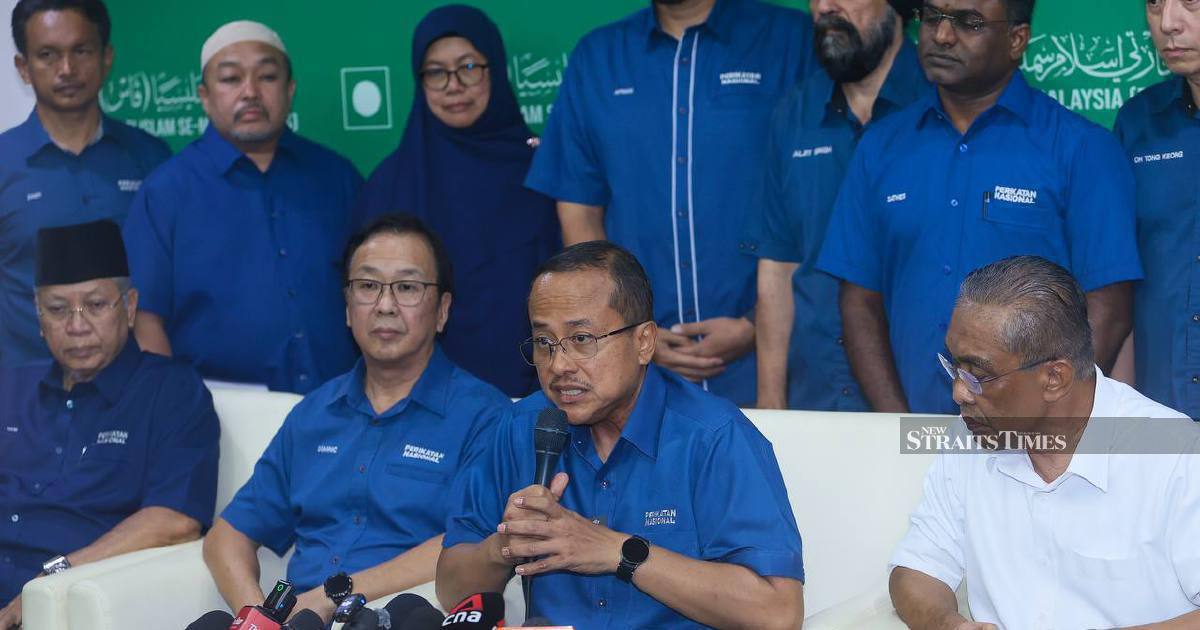
Perikatan Nasional moved to strengthen its coalition structure on Tuesday night by formally welcoming two additional political parties into its fold, according to an announcement by PN chairman Datuk Seri Dr Ahmad Samsuri Mokhtar. The expansion came as the coalition held an unscheduled emergency meeting of its Supreme Council, signalling ongoing efforts to consolidate opposition forces ahead of future electoral contests.
The coalition's decision to accept new members represents a strategic pivot as PN seeks to broaden its political base and enhance its representation across different demographic and geographical constituencies. By incorporating additional parties, PN aims to strengthen its organizational infrastructure and present a more unified front in national politics. The specific identities of the two newly admitted parties were not immediately disclosed in Samsuri's initial statement, leaving room for speculation about which political organizations have joined the coalition.
However, the expansion was not without complications. Despite the successful admission of the new members, the Supreme Council deferred critical discussions regarding the Wawasan initiative and related branding concerns. These matters, which carry significant implications for how PN presents itself to the electorate, were deliberately postponed to a future gathering. This decision suggests that while there is consensus around coalition enlargement, deeper disagreements persist over the coalition's long-term vision and public identity.
Wawasan, in the Malaysian political context, typically refers to strategic frameworks and policy directions that define a coalition's core ideology and objectives. The deferral of these discussions indicates that PN's constituent parties have not yet resolved fundamental questions about the coalition's direction and the values it represents. Such disagreements, often concealed in public statements, frequently emerge when disparate political groups attempt to forge unified positions on transformative agendas.
The timing of the emergency meeting itself warrants attention. Unscheduled Supreme Council sessions typically signal urgent matters requiring immediate attention, whether internal conflicts, external political developments, or strategic opportunities. The urgency suggests that PN leadership felt compelled to act quickly on the party admission question, even if other issues remained contentious.
For Malaysian observers, PN's expansion strategy reflects a broader pattern of coalition-building that has defined Malaysian politics since the 2018 general election. The opposition movement remains fragmented across multiple political vehicles, and consolidation efforts—whether successful or incomplete—shape the nation's electoral landscape. PN's decision to admit new parties demonstrates its intent to position itself as an increasingly comprehensive political force capable of governing at both federal and state levels.
The postponement of Wawasan discussions, however, reveals the structural challenges that plague such coalitions. When diverse political parties unite primarily around electoral calculations rather than shared ideological foundations, maintaining cohesion becomes increasingly difficult. The gap between public unity and private disagreements often widens over time, particularly when fundamental questions about governance philosophy and policy direction remain unresolved.
Samsuri's statement that the logo issue would also remain unaddressed reflects similar tensions. Coalition symbols and branding carry substantial weight in Malaysian politics, shaping voter perceptions and party identification. Disagreements over visual identity often mask deeper conflicts about which parties carry greater influence within the alliance and whose values should be prominently featured in its public presentation.
Looking forward, PN faces the challenge of converting this expansion into genuine political momentum. Two additional parties do not automatically translate into increased electoral support or improved governance capacity. Success will depend on whether PN can develop coherent policy positions and maintain internal discipline across its now-broader membership base. The deferred discussions about Wawasan and logo design will eventually demand resolution, and how PN navigates those conversations will significantly influence its effectiveness as a political force.
For regional observers, PN's evolution reflects Southeast Asia's broader pattern of fluid political coalitions and strategic realignments. Malaysian politics continues to demonstrate how rapid party mergers, dissolutions, and alliance shifts reshape the institutional landscape. This instability creates both opportunities and risks for governance, as coalitions built primarily for electoral advantage may lack the durability required for sustained policy implementation.
The coalition's next Supreme Council meeting will likely revisit the unresolved issues surrounding Wawasan and branding. These deferred conversations will prove crucial in determining whether PN can consolidate its newly expanded membership into a coherent political movement or whether it risks fragmenting under internal pressures. The coming weeks and months will reveal whether this expansion represents genuine coalition strengthening or merely a tactical adjustment with limited long-term consequence.

