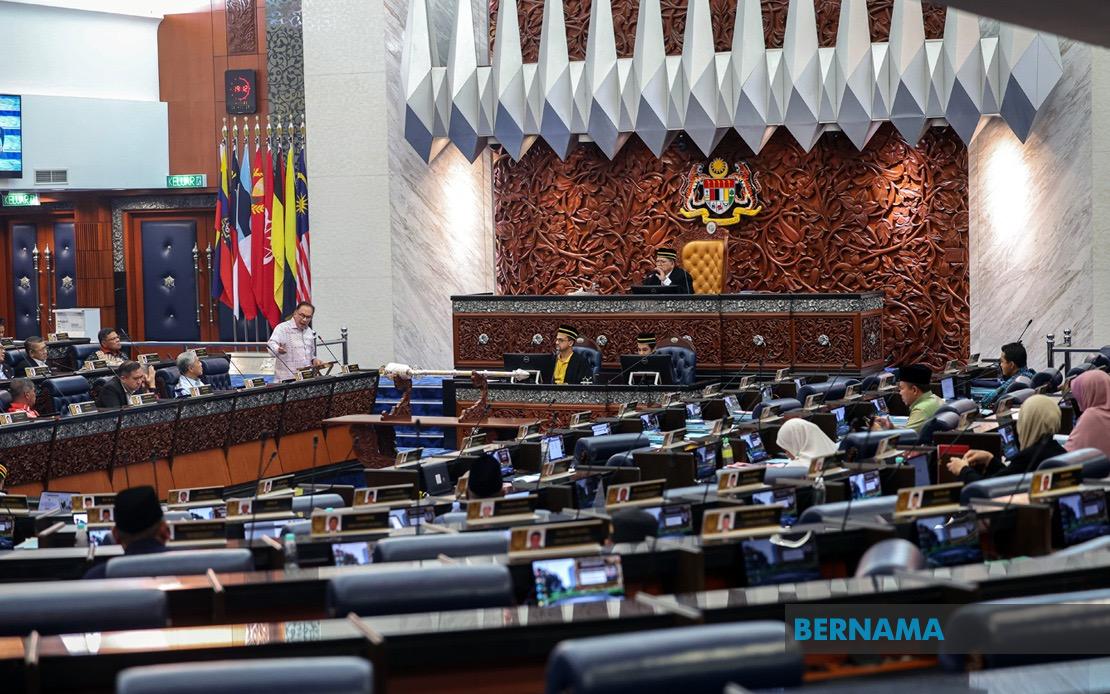
The People's Income Initiative (IPR) has delivered tangible results for nearly 7,800 Malaysian households since its inception almost three years ago, according to a statement from the Economy Ministry issued through Parliament this week. The announcement underscores the government's commitment to complementing its existing poverty reduction framework with targeted interventions designed to strengthen household resilience and economic participation among vulnerable segments of the population.
Designed as a multifaceted response to interconnected socioeconomic challenges, the IPR programme tackles three core objectives simultaneously: enhancing food security for participating families, generating sustainable employment pathways, and reducing the acute financial strain that many households face in their daily lives. By targeting these dimensions in concert, the initiative reflects a recognition that poverty and income vulnerability are rarely solved by single-sector interventions. Instead, comprehensive approaches that address immediate needs while building longer-term capacity have proven more effective in shifting households toward economic self-sufficiency.
Among the most compelling indicators of programme success is the income trajectory documented for participants. The Economy Ministry noted that some households have managed to generate monthly earnings surpassing RM2,000, a threshold that marks a meaningful transition away from poverty conditions. For context, Malaysia's official poverty line varies by region and household size, but these income gains suggest that the IPR is facilitating genuine economic mobility rather than merely providing temporary relief. This distinction matters critically for assessing whether the programme creates durable change or manages symptoms without addressing root causes.
The question posed by Wan Ahmad Fayhsal Wan Ahmad Kamal, the Machang Member of Parliament representing Perikatan Nasional, sought clarity on both the IPR's quantifiable achievements and the broader ecosystem supporting poverty-alleviation policy. His inquiry reflects parliamentary scrutiny of how federal resources translate into concrete household improvements, a concern that resonates across Malaysia's political spectrum. The fact that the government was prepared to furnish detailed metrics suggests confidence in the programme's direction, though the relatively modest household count over three years also invites questions about scalability and resource allocation.
Integral to the IPR's operational architecture is the integration with PADU, Malaysia's centralized databank for poverty and household information. The Economy Ministry disclosed that 204 government agencies are now conducting continuous data sharing and integration with PADU, substantially expanding the platform's utility across the public sector. This institutional embedding reflects a strategic shift toward evidence-based social policy, where information flows enable better targeting and coordination. Rather than relying on fragmented eligibility assessments, multiple agencies can now access consistent, updated household data to identify beneficiaries and monitor outcomes.
The data-sharing framework underpinning PADU has grown considerably, with 27 applications from government entities already approved for full implementation as of June 2026. These approved applications span a diverse portfolio of programmes and policies designed to enhance public service delivery and advance citizen well-being. Beyond immediate programme administration, PADU also facilitates service digitisation and innovation, enabling agencies to streamline processes and reduce bureaucratic friction. Furthermore, the shared data infrastructure supports rigorous studies and research initiatives that can generate insights for future policy refinement.
For Malaysian policymakers and observers, the IPR results offer both encouraging signals and unresolved questions. The fact that 7,787 households have benefitted represents real improvement in the lives of families who might otherwise lack income-generating opportunities or stable access to food. Yet the number also invites reflection on coverage and demand. Malaysia's demographic statistics suggest a substantially larger pool of households meeting poverty criteria, raising the possibility that either demand for the programme has been constrained by awareness or accessibility challenges, or that current operational capacity limits the number of participants the system can effectively manage.
The programme's emphasis on job creation rather than cash transfers alone distinguishes it within Malaysia's social protection landscape. By coupling income support with employment opportunities, the IPR seeks to build participant agency and skills development alongside immediate financial relief. This approach aligns with international evidence suggesting that employment-linked interventions often produce stronger long-term outcomes than unconditional income support, though implementation quality and labour market conditions determine whether such programmes deliver meaningful work or simply shuffle recipients between precarious arrangements.
From a Southeast Asian perspective, Malaysia's experience with integrated poverty data systems and targeted income initiatives offers comparative lessons. Regional neighbours grappling with similar challenges of informal employment, rural-urban migration, and inadequate social safety nets can observe how PADU's coordination mechanisms function in practice. The transparency of reporting metrics like household count and participant income ranges also establishes a benchmark for accountability that other nations might emulate or adapt.
Looking forward, the sustainability of the IPR depends on sustained funding, continuous programme refinement based on participant feedback, and institutional commitment across multiple agencies. The strong participation from government entities in PADU suggests that systemic support exists. However, monitoring how household incomes evolve beyond the initial RM2,000 threshold—and whether participants sustain livelihoods independently after programme exit—will be crucial for understanding whether the initiative truly transforms poverty trajectories or provides temporary respite. Future parliamentary inquiries might productively examine participant retention rates, income stability, and pathways to mainstream employment as the programme matures.

