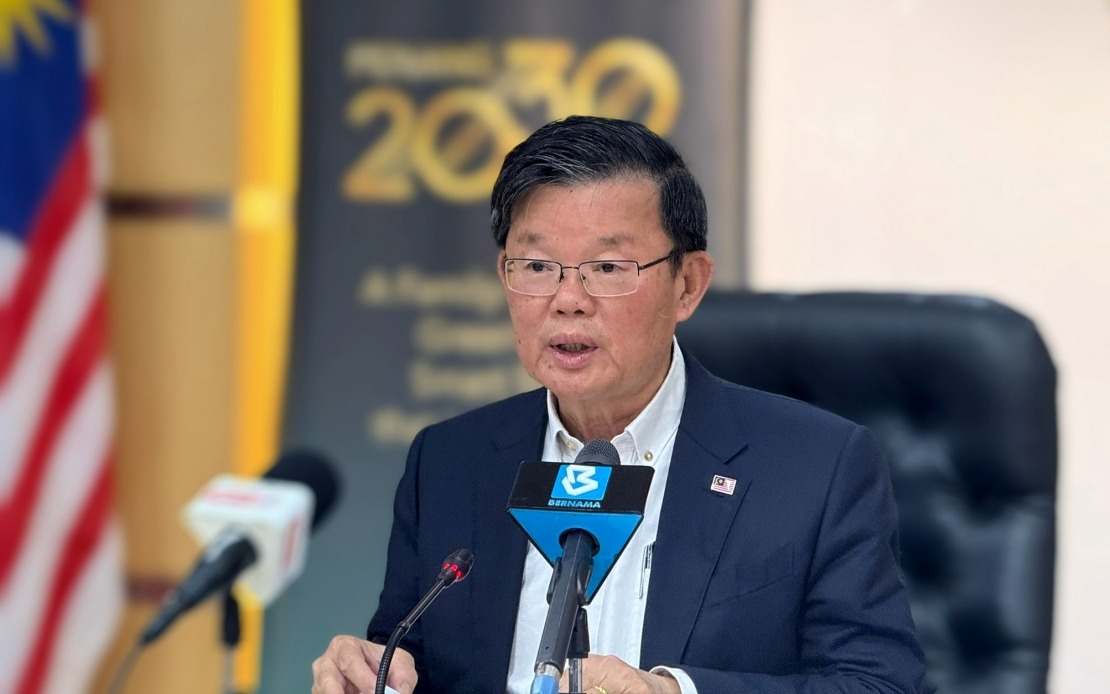
Penang's Pakatan Harapan coalition is entering a critical phase of strategic refinement as it prepares for the nation's next general election. Chow Kon Yeow, the state chapter chairman and Penang Chief Minister, announced that all PH subcommittees operating within the state have been tasked with holding meetings and submitting detailed progress reports by the first week of August. This structured approach signals the coalition's intention to conduct a thorough examination of its organisational readiness and electoral prospects well before the official campaign period begins.
The timing of this directive reflects a methodical approach to campaign preparation that extends beyond mere administrative formality. By requiring substantive progress reports from various party wings and functional units, the PH leadership aims to create a comprehensive snapshot of the coalition's current operational capabilities, membership engagement levels, and grassroots presence across Penang's multiple constituencies. Such internal auditing serves a dual purpose: identifying bottlenecks that may hamper campaign effectiveness while simultaneously recognising areas where the coalition has built genuine competitive advantages that warrant strengthening.
Chow emphasised that the review process would encompass multiple dimensions of the coalition's political machinery. The assessment will examine both structural weaknesses that require urgent remedial attention and organisational strengths that form the foundation of PH's electoral strategy. By explicitly welcoming external feedback and perspectives from party members and stakeholders, the coalition signals an openness to constructive criticism—a potentially important confidence-building measure at a time when internal party dynamics across Malaysia's political landscape have occasionally proved volatile.
The underlying strategic objective is to position Penang's PH as a cohesive, responsive political force capable of retaining voter confidence. The coalition's messaging emphasises continuity and improvement rather than radical restructuring, suggesting that party strategists believe the fundamentals of their 2023 electoral coalition remain sound. This conservative approach to internal reform reflects the delicate balance required when managing a multi-party coalition, where excessive change might provoke friction between Democratic Action Party (DAP), People's Justice Party (PKR), and National Trust Party (Amanah) components.
Penang's political landscape took shape dramatically in the 2023 state election, when the Unity Government coalition secured 29 of 40 contested seats through a combination of overwhelming DAP dominance—which won all 19 seats it fielded—alongside PKR's seven seats, Amanah's single seat, and Barisan Nasional's two seats. This configuration granted PH and its partners a commanding majority that theoretically provides substantial room for manoeuvre, yet the very lopsidedness of DAP's performance creates its own strategic complications. Any erosion of DAP support, particularly in urban constituencies where the party has traditionally dominated, could significantly alter the coalition's overall prospects.
Chow's contemporaneous assurances regarding the stability of Penang's Unity Government carry particular significance given recent patterns of coalition instability visible elsewhere in Malaysia. He affirmed that cooperation among PH's constituent parties and their BN partners continues without friction, that no participating organisation has unilaterally initiated new strategic directions, and that the overall working arrangement remains secure. Such explicit reassurances, though offered in measured language, implicitly acknowledge the fragility that can characterise multi-party administrations when broader national political currents shift or when individual coalition members perceive advantage in repositioning themselves.
The distinction between state-level stability and national-level electoral prospects deserves analytical attention. Penang's Unity Government has operated effectively at the state administration level, delivering basic governance services and pursuing developmental projects that maintain public satisfaction. However, the mechanics of preparing for a national general election operate according to somewhat different calculus. National elections involve contests across all thirteen states, federal territories, and hundreds of parliamentary constituencies, creating coordination challenges that exceed those involved in managing a single state administration.
From a broader Malaysian perspective, Penang's PH strategy carries significance that extends beyond the state's borders. Penang remains one of Malaysia's most politically competitive regions and a bellwether for national political sentiment, particularly among urban, educated, and middle-class voters. The coalition's performance in Penang has historically influenced perceptions of its viability at the national level. Should PH successfully retain Penang's 29 seats or expand further in the next general election, it would substantially strengthen arguments that the national coalition retains genuine grassroots momentum. Conversely, any significant slippage would raise questions about the durability of the national government's political base.
The coalition's emphasis on addressing weaknesses while consolidating strengths reflects standard electoral campaign doctrine, yet the execution matters enormously. The early August reporting deadline creates a structured feedback mechanism that should, in theory, force party apparatus at various levels to confront performance gaps honestly rather than allowing complacency to develop. For Malaysian political observers, such internal discipline—when it genuinely translates into organisational improvement rather than merely cosmetic adjustment—often distinguishes campaigns that achieve their objectives from those that fall short despite seemingly favourable starting positions.
The strategic positioning Penang's PH is adopting also responds to the broader regional context of Southeast Asian politics. The coalition operates within an environment where incumbent administrations face mounting pressure from multiple quarters: opposition parties seeking to exploit any governance failures, civil society expecting responsive administration, and media scrutiny of decision-making processes. By conducting systematic internal reviews and soliciting feedback, PH implicitly signals that it views electoral competition as requiring continuous organisational adaptation rather than relying on past achievements.
For Malaysian voters and political analysts monitoring the state's direction, the announcements from Chow represent the opening phase of what will likely be an intensifying campaign cycle over the coming months. The coalition's willingness to engage in structured self-assessment, maintain internal discipline among diverse coalition partners, and transparently acknowledge the importance of campaign preparation suggests a political force taking its electoral challenge seriously. Whether these preparations ultimately translate into electoral success will depend substantially on broader economic conditions, national political dynamics beyond Penang's control, and the effectiveness of opposition parties in presenting compelling alternative visions.

