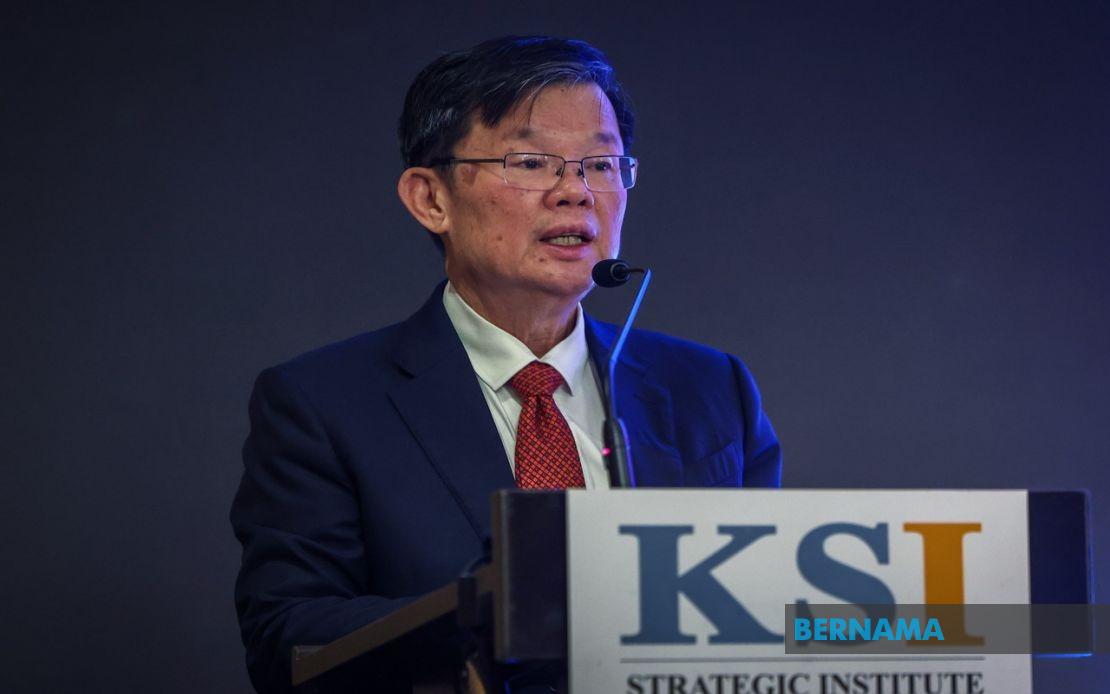
Penang's Pakatan Harapan coalition aims to significantly expand its roster of women candidates for the next state election, though party leadership acknowledges that locating qualified and enthusiastic female aspirants continues to pose a persistent obstacle. Speaking at the World Women Economic and Business Summit 2026 here on June 15, coalition chairman Chow Kon Yeow outlined the political grouping's aspirations while candidly addressing the practical constraints that have slowed progress toward gender parity in electoral contests.
The Penang Chief Minister underscored that the coalition remains anchored to a longstanding benchmark of securing at least 30 per cent women's participation in politics and decision-making roles. However, he acknowledged that this objective cannot be realised simply through declarations of intent. The bottleneck, Chow explained, stems not from a shortage of capable women but rather from insufficient numbers willing to navigate the demanding and often daunting terrain of electoral candidacy. Without a robust pipeline of candidates prepared to put their names forward, he stressed, the party cannot meaningfully expand female representation regardless of its commitment level.
At the national level, Malaysia's political landscape continues to lag substantially behind the 30 per cent target established in 2009. Current figures paint a stark picture of underrepresentation: women comprise only 13.5 per cent of Members of Parliament and just 12 per cent of state assemblypersons across the country. These numbers, now more than a decade into the initiative, suggest that aspiration alone has proven insufficient to catalyse meaningful systemic change. For regional observers, the persistent gap underscores how entrenched gender barriers remain within Malaysia's political institutions, despite rhetorical commitments to inclusivity.
Chow's remarks come at a critical juncture for Penang politics, with state elections likely on the horizon. The coalition's candour about recruitment difficulties stands in contrast to more optimistic public positioning from some political counterparts and reflects a pragmatic assessment of the challenge. Women have achieved substantial advances in Malaysia's professional and academic sectors—education, business, engineering, and public administration all feature significant female participation—yet political candidacy represents a distinctly different proposition. The barriers extending into the political arena, Chow suggested, are qualitatively different from those encountered in conventional career advancement.
The distinct pressures and obstacles confronting prospective women politicians warrant particular scrutiny. Beyond the generic demands placed on all candidates—fundraising, door-to-door campaigning, media exposure—women often confront additional stressors rooted in cultural expectations, family obligations, and ingrained scepticism about female leadership capability. In the Malaysian context, where traditional gender roles retain considerable social influence, these compounding pressures deter many otherwise qualified women from entering the electoral arena. The reluctance Chow identified is therefore not necessarily indicative of capability shortfall but rather reflects rational risk calculations by women assessing the personal and professional toll of political involvement.
During his formal address at the summit, Chow articulated a comprehensive framework for accelerating progress toward gender parity in political representation. Political parties, he suggested, should institutionalise the 30 per cent target within their formal candidate selection procedures, moving beyond voluntary commitments to structural mandates. This approach would embed equity considerations directly into nomination processes, preventing the 30 per cent goal from being perpetually displaced by competing priorities during candidate identification and vetting.
Beyond candidate recruitment, Chow identified additional mechanisms requiring attention and investment. Ensuring proportionate female representation on party decision-making committees would enhance women's influence over strategic direction and resource allocation. Strengthening access to mentoring programmes and financial resources for aspiring women leaders would address capacity gaps and provide practical support for political neophytes navigating unfamiliar institutional terrain. These interventions, collectively, target the structural and cultural impediments that currently restrict women's political participation.
The Penang coalition's approach reflects broader recognition within Southeast Asian progressive political movements that gender equity in representation requires deliberate, multifaceted intervention. Simply waiting for sufficient women candidates to emerge organically has demonstrably failed to produce results commensurate with national population demographics. The Malaysian experience, mirrored in various forms across the region, illustrates how political institutions can inadvertently perpetuate historical exclusions even when leadership explicitly supports inclusion.
For Malaysian voters and political observers, the significance of Chow's statement extends beyond Penang's particular electoral calculations. As one of Malaysia's more politically competitive and forward-thinking states, Penang's approach to gender representation often presages shifts in broader national discourse. Penang PH's acknowledgement of both commitment and constraint offers a more nuanced conversation than partisan rhetoric typically permits—one that recognises women's political underrepresentation as a multidimensional challenge requiring coordination across party structures, cultural attitudes, and resource distribution.
The 30 per cent target itself, now in its second decade, warrants reconsideration regarding timelines and enforcement mechanisms. If Malaysia's most progressive coalitions struggle to consistently recruit women candidates meeting this threshold, the objective may require reformulation—whether through quotas mandated by law, staggered targets with specified deadlines, or alternative approaches entirely. Penang's honest engagement with these constraints provides valuable empirical grounding for such conversations at the national level, suggesting that sustainable progress toward gender parity demands more sophisticated solutions than aspirational statements alone.