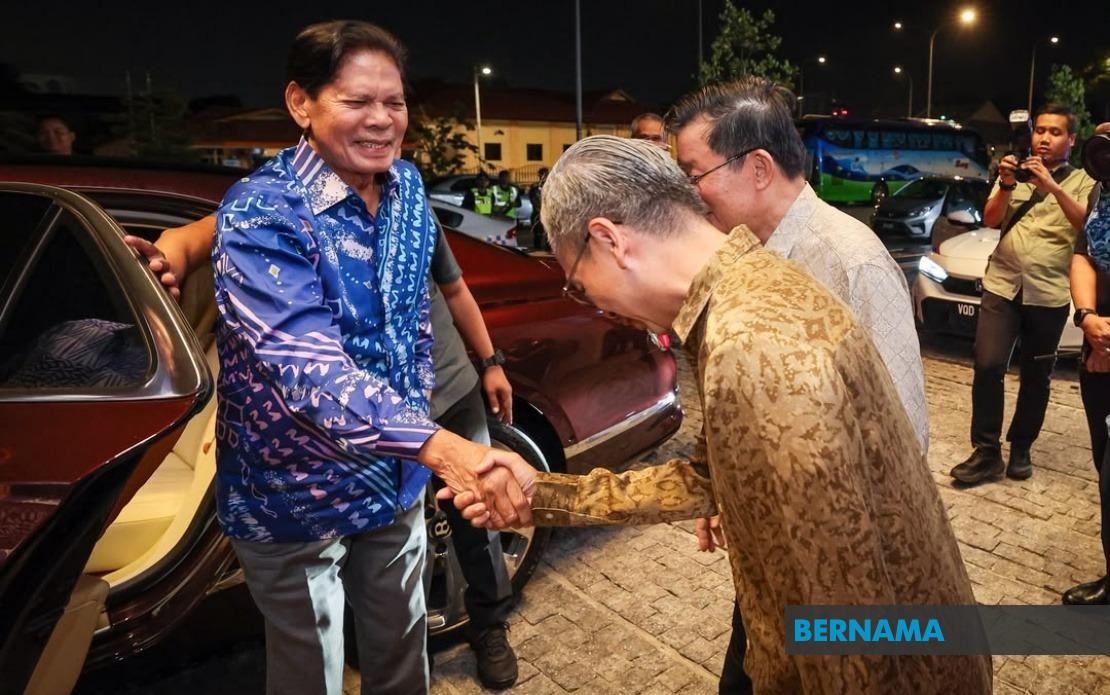
Penang Governor Tun Ramli Ngah Talib hosted a celebratory dinner on June 19 to recognise the contributions of media practitioners from Malaysia and across the ASEAN region, marking the eve of the HAWANA 2026 National Journalists' Day main event. The gathering in Butterworth assembled nearly 350 guests in a festive setting, bringing together journalists, editorial leadership, executives from major media organisations, and state officials to acknowledge the media's essential contribution to national development and democratic discourse.
The dinner preceded the formal opening of HAWANA 2026, scheduled for the following day at the PICCA Convention Centre @ Butterworth Arena, where Prime Minister Datuk Seri Anwar Ibrahim will officiate proceedings. This timing allowed media leaders and practitioners to network and prepare for the three-day conference, which carries the thematic focus of "Media Integrity Strengthens Credibility." The event represents a significant moment for Malaysia's journalism community to reflect on professional standards and the challenges facing news organisations in an increasingly complex information environment.
Penang Chief Minister Chow Kon Yeow joined the Governor in welcoming guests, alongside Communications Minister Datuk Fahmi Fadzil and other senior government figures. The ministerial presence highlighted the government's recognition of journalism's role in governance and public communication. International representation underscored the regional significance of the occasion, with delegates attending from Timor-Leste, including Secretary of State for Social Communication Expedito Loro Dias Ximenes and officials from the Timorese news agency TATOLI. This cross-border participation reflects growing cooperation among ASEAN media communities and shared professional interests across the region.
The dinner welcomed leadership from Malaysia's major news organisations, representing the full spectrum of the country's media landscape. Media Prima Bhd's New Straits Times group sent its Group Editor Farrah Naz Karim, whilst Sin Chew Daily's Editor-in-Chief Chan Aun Kuang, Star Media Group's Chief Content Officer Datin Paduka Esther Ng Sek Yee, Daily Express Sabah's Chief Editor Datuk Sardahthisa James, and Astro Awani's Editor-in-Chief Zaiful Mohd Ariffin were among those recognised. The breadth of representation illustrated both the diversity of Malaysia's media sector and the occasion's importance across print, digital, and broadcast platforms.
Bernama, the national news agency, played a central coordinating role through its Chairman Datuk Seri Wong Chun Wai and CEO Datin Paduka Nur-ul Afida Kamaludin, who chairs the HAWANA 2026 Working Committee. This agency leadership reinforced Bernama's position as the implementing partner for an event organised under the Communications Ministry's oversight. The involvement of international news delegates—including representatives from Indonesia's ANTARA news agency and the Indonesia-Malaysia Friendship Association—demonstrated how HAWANA has evolved as a platform for meaningful dialogue among regional media professionals beyond national borders.
The recognition of media practitioners comes amid broader global concerns about journalism's sustainability and credibility. Malaysia faces similar pressures to other countries, with questions about how traditional news organisations adapt to digital disruption whilst maintaining editorial standards. The conference theme directly addresses this tension, acknowledging that integrity in reporting remains fundamental to public trust and democratic functioning. For Malaysian readers, this messaging carries particular relevance as the country navigates complex political transitions and social divisions where accurate, responsible journalism becomes even more critical.
Across Southeast Asia, the HAWANA gathering takes on additional significance given regional challenges to press freedom and media independence. Countries including Timor-Leste continue developing their media institutions, whilst established media markets across ASEAN grapple with misinformation, political polarisation, and changing audience behaviours. By convening practitioners from multiple countries and inviting international participation, HAWANA 2026 positions itself as a space where regional journalists can share experiences, discuss best practices, and strengthen professional networks that transcend national boundaries.
The three-day conference attracted approximately 1,000 media practitioners from Malaysia and several ASEAN nations, indicating substantial professional interest in the proceedings. This attendance reflects recognition among journalists and editors that the conference offers valuable opportunities to engage with peers on emerging issues affecting the industry. The scale of participation demonstrates that despite broader structural challenges facing newsrooms—including budget pressures and staffing difficulties—Malaysian journalists remain committed to professional development and collective reflection on their industry's future.
Parallel to the conference, organisers launched the RIUH Pi HAWANA Carnival at the same venue, expected to draw around 30,000 visitors over three days. This public-facing component features more than 24 local creative product brands, 20 food and beverage vendors, and 16 stage performances including established acts such as Exist, Bunkface, Masdo, and Chelsea Ng, with free admission. The carnival approach serves multiple purposes: it makes the celebration accessible to the general public, showcases creative industries that intersect with media and communications, and creates a festive atmosphere that reinforces public engagement with journalism and media literacy.
The Communications Ministry's decision to emphasise both professional development and public engagement reflects a strategic approach to strengthening the media ecosystem. By bringing together practitioners for serious dialogue whilst simultaneously inviting public participation in carnival activities, HAWANA 2026 acknowledges that media's credibility depends on both internal professional standards and external public confidence. For Malaysian society, this dual focus matters significantly, as journalism serves as a crucial institution for holding power accountable, informing citizens about issues affecting their lives, and facilitating democratic debate across diverse communities.
The dinner's guest list—spanning government officials, media executives, veteran journalists, and international colleagues—embodied the collaborative spirit intended for the conference. Such networking moments often prove as valuable as formal sessions, enabling informal conversations where practitioners can discuss shared challenges, exchange ideas about emerging trends, and build relationships that may lead to future cooperation. For Malaysia's media community, which operates within a relatively compact professional network, such occasions strengthen institutional ties and reinforce collective commitment to journalistic standards.
Looking forward, HAWANA 2026 provides an opportunity for Malaysian and regional journalists to consider how their profession adapts to technological change, political pressure, and shifting audience expectations. The focus on integrity and credibility suggests organisers understand that journalism's future depends not on defending traditional models unchanged, but on demonstrating that media institutions can evolve whilst maintaining core principles of accuracy, fairness, and public service. For Malaysian readers seeking reliable information in an increasingly complex media landscape, the investment in professional reflection and industry strengthening represented by HAWANA 2026 carries direct relevance to the quality of news they ultimately receive.

