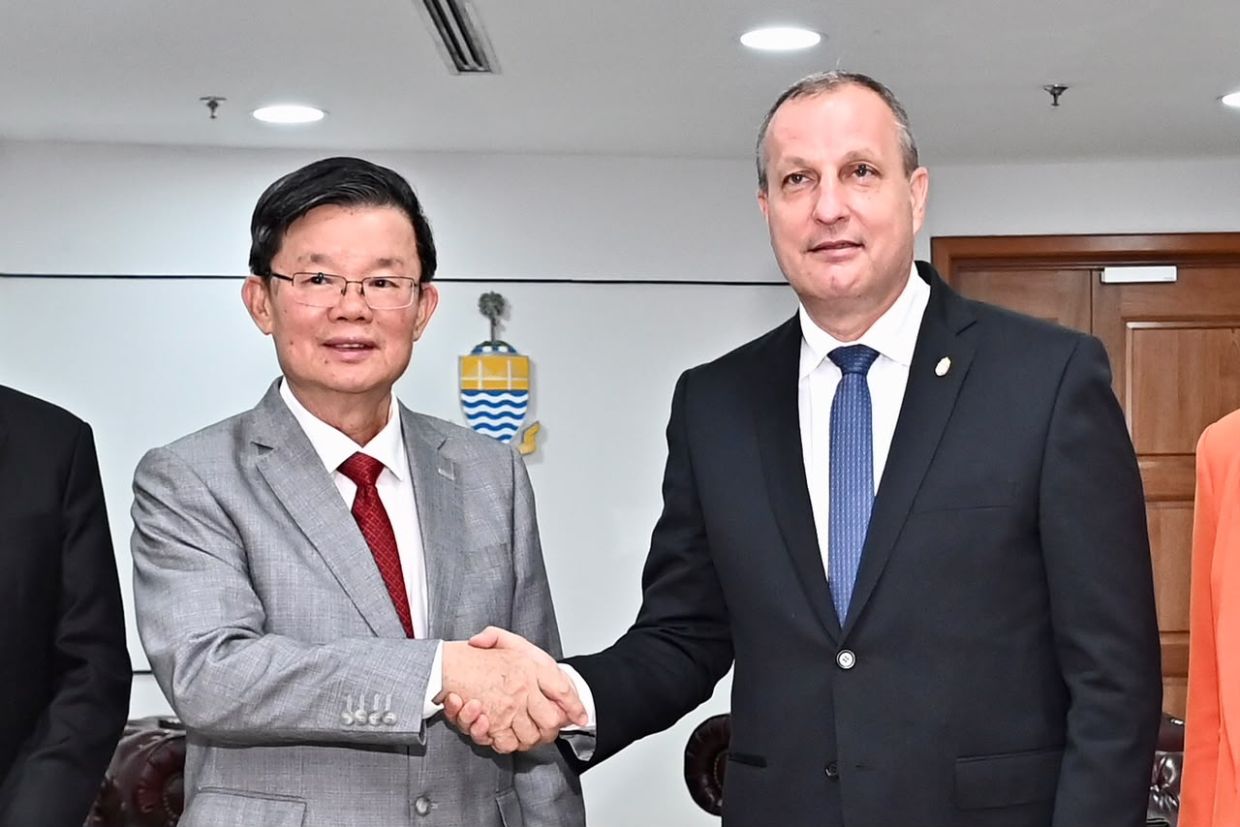
Penang is positioning itself to expand its international engagement by establishing a more robust partnership with Hungary, one of Central Europe's most influential economies. Chief Minister Chow Kon Yeow held substantive talks with Hungarian Ambassador to Malaysia Dr Sándor Sipos and his accompanying delegation, exploring concrete opportunities for collaboration that align with both jurisdictions' development priorities. The discussions represent Penang's strategic effort to diversify its international partnerships beyond traditional regional partners and tap into European expertise in critical sectors.
The scope of proposed cooperation spans multiple strategic domains that directly address Penang's long-term development goals. Higher education emerged as a primary focus area, reflecting both regions' commitment to building human capital and fostering knowledge exchange. Technological innovation was positioned as another key pillar, with both parties recognising the potential for joint research initiatives and industry collaboration. Water management and green technology initiatives featured prominently in discussions, reflecting the escalating global emphasis on environmental sustainability and resource security—issues of particular relevance to Malaysia's peninsula geography and climate vulnerabilities. Heritage conservation and cultural preservation were also included, acknowledging that balanced development must protect irreplaceable historical and cultural assets.
Chow highlighted Hungary's position as a European leader in multiple technical and scientific domains, suggesting that knowledge transfer could yield substantial benefits for Penang's economic diversification and innovation ecosystem. The Chief Minister emphasised that Penang and Hungary share philosophical alignment on pursuing sustainable development without compromising cultural preservation, a positioning that could strengthen people-to-people connections beyond government-to-government relations. His remarks suggest Penang views this partnership not merely as transactional but as foundational to reshaping the state's international profile.
The scholarship programme emerged as a particularly valuable component of the proposed cooperation framework. Hungary currently provides 40 fully funded annual scholarships to Malaysian students, with Ambassador Sipos actively encouraging broader participation from Penang's student population. This educational pipeline represents more than academic opportunity; it creates lasting networks of alumni who may later facilitate business partnerships, research collaborations, or technology transfer between the two regions. Sipos's explicit welcome of applications from Penang-based students signals Hungarian interest in building a dedicated constituency within Malaysia's most economically dynamic state.
Chow's appreciation of the Hungarian scholarship initiative underscores Penang's recognition that talent development through international exposure has become essential for competing in knowledge-driven sectors. The Chief Minister framed educational and talent exchanges as critical bridges for fostering cooperation, positioning them as foundational investments that generate returns across multiple dimensions of bilateral relations. This approach reflects broader regional trends where Southeast Asian economies increasingly seek reciprocal relationships with developed nations that prioritise mutual skill-building rather than one-directional investment.
Beyond the Chief Minister's engagement, the Hungarian delegation conducted courtesy calls on state executive councillors Goh Choon Aik and Gooi Zi Sen, expanding the institutional touchpoints for potential collaboration. These broader-based interactions suggest a systematic approach to embedding the partnership across multiple government departments and functional areas. The meetings with individual councillors allowed for sector-specific discussions tailored to their respective portfolios, potentially yielding more granular cooperation frameworks than would emerge from high-level summits alone.
Gooi's commitment to conduct further studies on sports cooperation represents an intriguing dimension of the proposed partnership. By tasking the Penang State Sports Council with identifying sports disciplines suitable for bilateral engagement, Penang is exploring soft power dimensions often overlooked in purely economic partnerships. Sports cooperation can serve multiple purposes: elevating local athletic standards through knowledge exchange with Hungarian coaches and sports scientists, creating grassroots connections through youth development programmes, and enhancing Penang's international visibility through participation in bilateral sporting events. This sports dimension could prove particularly valuable for engaging younger demographics in understanding the broader Hungary-Penang relationship.
The emphasis on trade and investment discussions during the delegation's visit reflects Hungary's commercial interests in expanding footprint within Malaysia's most developed state economy. Penang's established position as a manufacturing hub and emerging innovation centre makes it an attractive destination for European investors seeking Southeast Asian expansion platforms. Hungarian companies operating in green technology, pharmaceutical manufacturing, or engineering could potentially find productive opportunities within Penang's industrial ecosystem, creating mutual economic benefits beyond simple knowledge transfer.
Community engagement featured in discussions with state councillors, suggesting that Hungarian officials view relationship-building as requiring grassroots support rather than relying solely on top-level endorsement. Engaging Penang's diverse communities—whether business associations, academic institutions, cultural organisations, or youth groups—creates multiple channels through which the partnership manifests in tangible ways. This multi-stakeholder approach increases likelihood that collaboration initiatives gain traction and sustainability beyond initial diplomatic enthusiasm.
For Malaysia and Southeast Asia more broadly, Penang's deepening ties with Hungary signal the region's expanding diplomatic reach into Europe. As regional economies mature and seek specialised expertise, partnerships with smaller but technologically advanced European nations become increasingly valuable. Hungary's particular strengths in water technology, renewable energy systems, and sustainable urban development offer practical solutions to challenges facing rapidly urbanising Southeast Asian states. The Penang-Hungary partnership could establish a template for other Malaysian states considering similar European engagements.
The partnership also reflects Penang's conscious positioning as Malaysia's gateway to European partnerships rather than defaulting to bilateral engagement at federal level. This subsidiary diplomatic initiative allows Penang to directly shape international relationships supporting its economic agenda. By securing commitments on education scholarships, technological collaboration, and investment discussions, Penang demonstrates agency in building its international profile independent of federal constraints.
Looking forward, the success of this partnership will depend on translating diplomatic goodwill into implemented projects with measurable outcomes. Both parties expressed commitment to converting discussions into concrete collaborative initiatives, but execution remains the true test of partnership durability. Whether Hungarian companies establish research facilities in Penang, whether Hungarian water management expertise finds application in addressing Penang's resource challenges, and whether numbers of Penang students studying in Hungary significantly increase will ultimately determine whether this engagement represents strategic partnership or diplomatic courtesy.
The timing of intensified engagement with Hungary also reflects Penang's broader strategy of diversifying international relationships amid shifting geopolitical configurations in Southeast Asia. By expanding partnerships beyond traditional regional and East Asian partners, Penang strengthens its economic resilience and creates alternative pathways for investment, technology access, and human capital development. This multi-directional international approach increasingly characterises strategies of ambitious subnational economies seeking to maximise opportunities within an interconnected global system.

