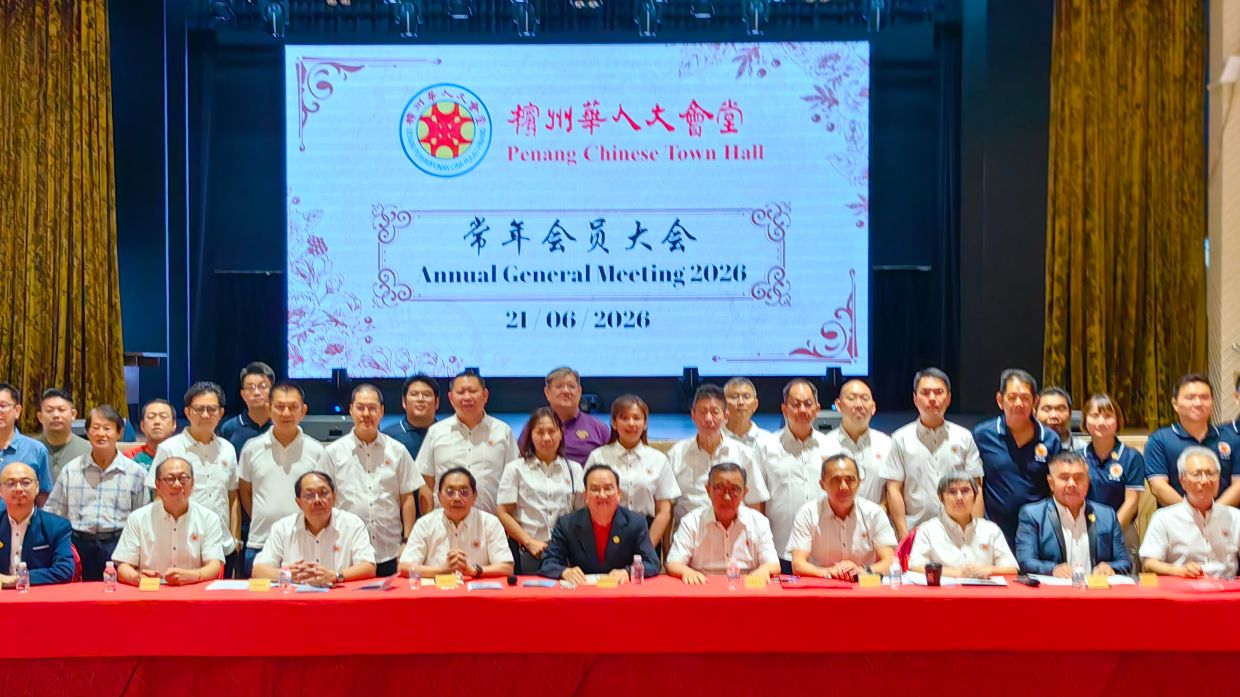
Penang Chinese Town Hall (PCTH) has released its financial results for the year ending December 31, 2025, revealing a healthy organisational position with total income of RM12.61mil against expenditure of RM12.55mil. The slim surplus of RM59,191 demonstrates disciplined financial management, though the modest margin reflects the organisation's primarily redistributive role as a community institution.
The revenue composition reveals PCTH's heavy reliance on philanthropic activity. Donations comprised the lion's share at RM11.24mil, representing nearly 89 per cent of total income. Ancillary revenue streams included rental and maintenance fees generating RM439,671, auditorium rental bringing in RM361,245, and anniversary-related receipts of RM222,498. This diversified but donation-dependent revenue structure underscores the ongoing importance of community support to PCTH's operations, a characteristic typical of established clan and communal halls in Malaysia that serve broader social functions beyond commercial ventures.
On the expenditure side, PCTH's spending patterns closely mirror its income sources. Donations distributed to various causes and recipients accounted for approximately 88.6 per cent of total disbursements at RM11.12mil, a notable decrease from RM12.35mil recorded in 2024. This reduction suggests either tighter gating of donation requests or more selective allocation during the past year. Meanwhile, operational costs climbed modestly, with salaries and allowances rising to RM502,625 from RM452,761 in the previous year, reflecting inflationary pressures on personnel expenses that most Malaysian organisations have experienced.
During PCTH's annual general meeting on June 21, which drew approximately 200 members, chairman Tan Sri Prof Tan Khoon Hai seized the opportunity to address broader civic concerns. He emphasised the importance of electoral participation, particularly as Johor and Negri Sembilan prepare for state elections scheduled within the year. His remarks reflected a growing emphasis among community leaders on voter responsibility and the need for informed decision-making at the ballot box, positioning PCTH as an institution concerned with governance quality beyond its immediate membership.
Tan's electoral commentary focussed on substantive criteria for voter assessment. He advocated that Malaysians evaluate candidates and party platforms based on rational analysis of performance records and policy proposals, specifically singling out the ability to foster national unity, stimulate economic development, and safeguard social cohesion as crucial benchmarks. This framing, delivered by a prominent figure within Malaysia's Chinese community, carries weight given the demographic's traditional emphasis on stability and economic pragmatism, and suggests an institutional perspective that prioritises governance effectiveness over partisan allegiance.
Beyond financial matters, PCTH unveiled a significant infrastructure upgrade with the completion of Ping Zhang Hall's extensive renovation and modernisation programme. The upgraded facility now features contemporary amenities including professional sound systems, advanced lighting infrastructure, and LED display technology, positioning it as a competitive venue for diverse events. The hall's enhanced capacity to host corporate dinners, association celebrations, anniversary gatherings, charity functions, and community events reflects a strategic investment in revenue diversification and relevance to contemporary event management standards, particularly important as community halls compete with purpose-built commercial venues.
Perhaps most ambitiously, Tan announced PCTH's involvement in hosting the 2026 China-Asean Artificial Intelligence Cooperation Forum, scheduled for November in Penang. This regional initiative, organised jointly with technology and business organisations from China and fellow Asean nations, positions Penang explicitly within the region's emerging AI ecosystem. The selection of Penang reflects its established credentials as the "Silicon Valley of the East" and recognised hub for electrical and electronics manufacturing—a foundation that increasingly underpins technology sector development.
The AI forum represents strategic thinking about Penang's regional positioning in rapidly evolving technology markets. By convening experts, business leaders, and industry representatives across Asean to discuss advanced AI technologies, their industrial applications, and cross-border cooperation mechanisms, the forum establishes a high-level dialogue platform that transcends traditional community hall functions. For PCTH, this initiative signals institutional evolution beyond cultural and social services toward economic and technological significance, enhancing its relevance to contemporary policy discussions around Malaysia's digital economy transformation.
Tan's invitation to PCTH members with relevant AI expertise to participate in forum preparations suggests recognition that professional competence and sectoral knowledge, not merely organisational affiliation, determines value in technological forums. This meritocratic orientation contrasts with traditional community hall governance models and indicates adaptive thinking about how established institutions can contribute meaningfully to emerging economic priorities. The forum also implicitly acknowledges Asean's growing collective interest in AI governance, standards development, and regional industrial collaboration—areas where Malaysia and Penang specifically possess strategic opportunities given their manufacturing heritage and geographic position.
The convergence of PCTH's financial consolidation, infrastructure modernisation, and ambitious regional AI initiatives suggests an institution confident in its relevance and future trajectory. While traditional community halls across Malaysia face ongoing questions about modernisation and changing membership patterns, PCTH's strategy of upgrading physical facilities while simultaneously positioning itself within high-level regional technology dialogue offers a template for institutional renewal. The RM12.61mil revenue base, though modest by corporate standards, provides sufficient foundation for such initiatives when channelled strategically.
For Malaysian policymakers and business leaders monitoring technological development and regional cooperation, PCTH's embrace of the AI forum demonstrates how traditional community institutions can catalyse cross-sector dialogue on emerging priorities. Penang's specific historical advantages in electronics and manufacturing, combined with deliberate positioning within regional technology networks, create genuine competitive potential in AI-related industrial applications—an area where Malaysia currently lags regional peers like Singapore and Thailand. PCTH's institutional backing for such initiatives, while symbolic, reflects broader ecosystem support that high-technology development requires.

