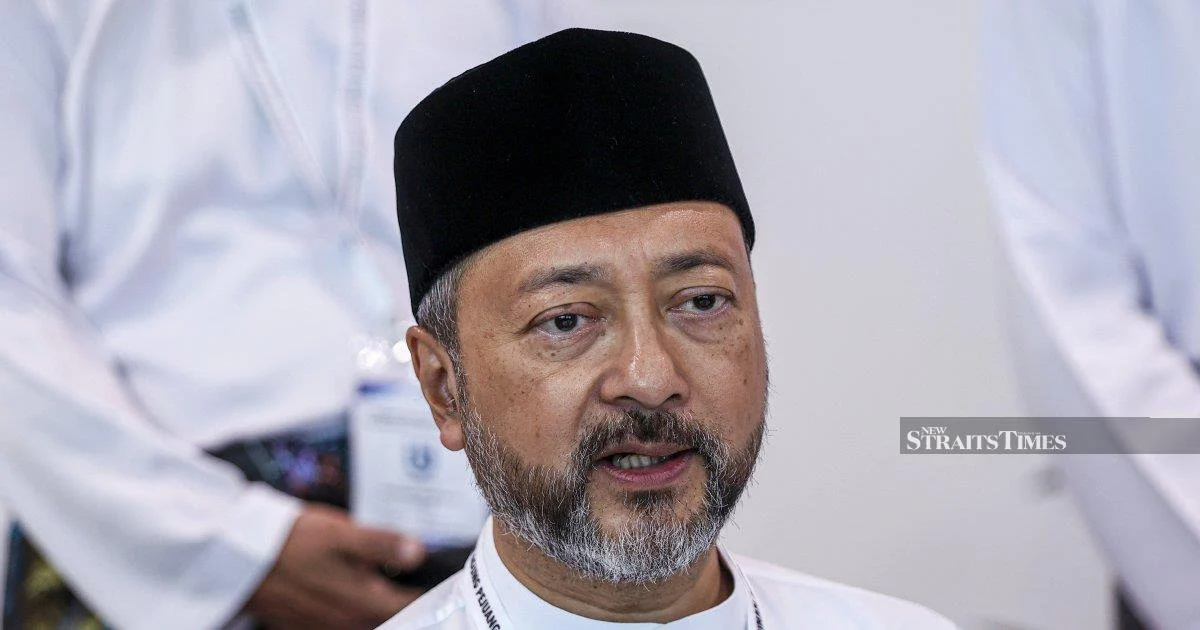
Parti Pejuang Tanah Air (Pejuang) has formally joined Perikatan Nasional, marking what party president Datuk Seri Mukhriz Mahathir characterises as a pivotal moment in Malaysia's fractured opposition landscape. Speaking in Kuala Lumpur, Mukhriz framed the development as part of a larger consolidation effort, suggesting that the move extends beyond simple coalition arithmetic to address what he views as mounting pressures facing the nation.
The admission of Pejuang into the PN bloc fundamentally alters the composition of opposition forces in Malaysia at a time when political realignment remains fluid and consequential. Since its formation in 2020 following the collapse of the Sheraton Move administration, Pejuang has positioned itself as a reformist entity distinct from other established opposition parties. Its integration into PN, which already comprises PAS, Bersatu, Gerakan, and several smaller parties, potentially consolidates a more cohesive counter-narrative to the current federal government's policy direction.
Mukhriz's characterisation of the entry as marking "the beginning" of broader unification efforts carries strategic implications for how the opposition might reorganise itself ahead of the next general election. Such language suggests that Pejuang's formal accession may catalyse further coalition-building conversations among parties currently outside PN, potentially including elements within PKR, Amanah, or even DAP if broader institutional reforms materialise. The distinction between tactical alliance-building and deeper structural unity becomes crucial here, as Malaysian voters have grown increasingly sceptical of coalition arrangements perceived as self-serving rather than principle-driven.
For Malaysian readers across peninsular, Sabah and Sarawak constituencies, Pejuang's move carries tangible implications for how opposition candidates will be fielded in future contests. The party's presence within PN could reshape seat negotiations in states like Selangor, Perak, and Terengganu, where opposition-held territories currently exist alongside PN strongholds. This intra-bloc positioning directly affects how voters experience choice at the ballot box and whether consolidated opposition messaging can effectively counter government narratives on economic management, cost-of-living pressures, and institutional accountability.
Mukhriz's reference to "growing national challenges" remains deliberately broad but reflects tangible anxieties animating Malaysian political discourse. Rising inflation, concerns over government spending efficiency, persistent questions about institutional independence, and unresolved debates over constitutional federalism all weigh heavily on public discourse. Whether a more unified opposition under PN's umbrella can meaningfully differentiate itself from the current administration on these substantive issues remains an open question, particularly given PN's own internal ideological tensions between conservative-Islamist priorities represented by PAS and more technocratic or secular-oriented factions.
The timing of Pejuang's entry into PN also reflects shifting calculations about electoral mathematics. With Bersatu and PAS commanding significant grassroots mobilisation capacity, and with Gerakan's historical organisational infrastructure still partly intact, PN now claims a broader organisational footprint than it possessed previously. This expanded apparatus could prove valuable in marginal constituencies where razor-thin majorities currently determine outcomes. For regional observers, the consolidation of PN's electoral machinery represents a significant development in Southeast Asia's largest democracy.
Historically, Mukhriz's own trajectory illuminates the broader pattern of coalition formation and reformation in contemporary Malaysian politics. As a former Chief Minister of Kedah and son of former Prime Minister Dr Mahathir Mohamad, Mukhriz has navigated multiple party structures and coalitional arrangements. His leadership of Pejuang represents a bid to position himself as an elder statesman capable of bridging ideological divides within the opposition. Whether his personal credibility can translate into sustained institutional cohesion within PN remains a test case for Malaysian opposition politics more broadly.
The question of PN's internal unity presents both opportunities and vulnerabilities. PAS and Bersatu, the coalition's dominant forces, have occasionally pursued competing priorities, particularly on matters of religious policy and federalism. Pejuang's entry introduces another actor into these negotiations. Should the party attempt to moderate certain positions or advocate for secular governance emphases, internal PN tensions could intensify. Conversely, if Pejuang subsumes its own distinctive identity into PN's existing consensus, questions arise about whether meaningful political differentiation from the current government will materialise.
For ordinary Malaysians evaluating opposition alternatives, the practical significance of Pejuang's PN membership depends on how tangibly it translates into constituency-level representation and advocacy. Whether PN's constituent parties develop integrated policy platforms addressing healthcare accessibility, education financing, and social safety nets will largely determine whether voters perceive the coalition as offering substantive alternatives or merely rearranging existing political furniture. The rhetoric of unity, while politically necessary, ultimately requires institutional substance to resonate with electorates fatigued by coalition instability.
Moving forward, Mukhriz's assertion that Pejuang's admission initiates "broader" unification efforts merits close observation. Should additional opposition parties gradually migrate towards PN, Malaysian politics could stabilise around a more binary two-coalition structure. Such polarisation carries both risks and potential benefits for democratic functioning. Greater clarity between government and opposition could improve accountability and policy differentiation, yet narrowed political space could marginalise smaller parties representing distinct constituencies. The trajectory initiated by Pejuang's entry will substantially shape Malaysian electoral competition and governance structures throughout the remainder of this decade.

