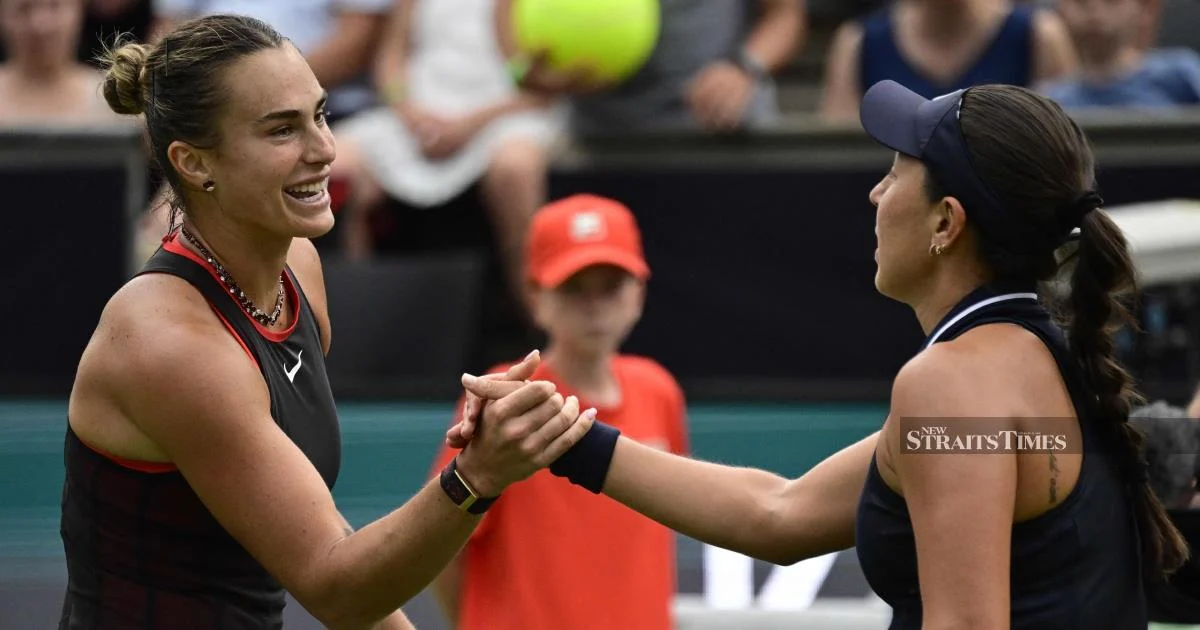
Jessica Pegula has punched her ticket to the Berlin WTA final, dismantling world number one Aryna Sabalenka with a commanding performance that delivered a 6-2, 6-7 (4-7), 6-0 victory in their semi-final encounter. The American's path to the championship match marks her second appearance in this grass-court final, underscoring her growing consistency at this prestigious tournament on the professional women's circuit.
The match unfolded in dramatically contrasting halves, with Pegula establishing early dominance before weathering a fierce second-set challenge from the top-ranked Sabalenka. Her opening set display was particularly telling, as the American broke through Sabalenka's typically formidable serve and dictated rallies from the baseline with precision and aggression. By claiming the first set 6-2, Pegula had signalled her intentions clearly and forced her opponent to elevate her game considerably.
Sabalenka responded in the second set with the competitive intensity that has propelled her to the top of the world rankings. The set proved tightly contested, with both players holding their service games comfortably until the decisive moments arrived. The tiebreak became a battle of nerves and execution, with Sabalenka pushing hard to level the match and extend the encounter. However, Pegula's composure in the crucial moments proved decisive, as she prevailed 7-4 in the tiebreak to maintain her advantage at two sets to love.
The third set represented a complete transformation of the match's momentum and trajectory. Pegula's confidence had clearly built through the opening two sets, and she unleashed a flawless performance to close out proceedings with a 6-0 shutout. Such a decisive final set against the world's best player speaks volumes about her technical preparation and mental fortitude, particularly on grass where serves and service returns carry amplified importance.
For Malaysian and Southeast Asian tennis enthusiasts, Pegula's resurgence represents an important subplot in the broader landscape of elite women's tennis. The American has long been considered a talented but sometimes inconsistent performer on the professional circuit, making her deep runs in major tournaments increasingly noteworthy. Her grass-court prowess, in particular, deserves attention, as this surface represents one of the year's three prestigious grass tournaments and attracts the world's most accomplished players.
Sabalenka's defeat, whilst notable given her ranking and form, reflects the unpredictable nature of professional tennis at the highest levels. The Belarusian has dominated much of the season, but the grass courts of Berlin pose unique challenges that can neutralise even the strongest competitors. The faster, lower-bouncing surface requires different technical adjustments compared to the harder courts where Sabalenka has been most dominant, and this mismatch evidently favoured Pegula's style of play on this occasion.
The context of this victory becomes even more significant when considering Pegula's broader career trajectory. Having invested heavily in professional development and training, the American has gradually worked towards consistency at the highest levels. Victories of this calibre, particularly against the world number one, validate the approach and suggest that she possesses the capability to compete successfully in major tournament environments.
Pegula's final appearance represents another opportunity for the American to claim a significant title. The tournament carries considerable prestige within the WTA calendar, and victory would represent a career milestone. For her opponent in the final, the match will present an opportunity to overcome a player who has clearly studied her game and identified effective tactical approaches.
Looking ahead, Pegula's performance in Berlin carries implications for the broader competitive landscape heading towards the year's remaining major tournaments. As players fine-tune their preparation strategies, the Berlin results offer valuable indicators about form, mental readiness, and tactical adaptability. Pegula's demonstration of all three qualities against the world's top-ranked competitor suggests she possesses the necessary attributes to challenge for titles across multiple surfaces and environments.
The semi-final victory also highlights the depth of American tennis talent on the women's side. With multiple Americans performing at elite levels across different surfaces and tournaments, the sport continues to demonstrate the strength of the United States' tennis infrastructure and talent development systems. Pegula's successful campaign in Berlin contributes to this broader narrative of American competitiveness in international women's tennis.

