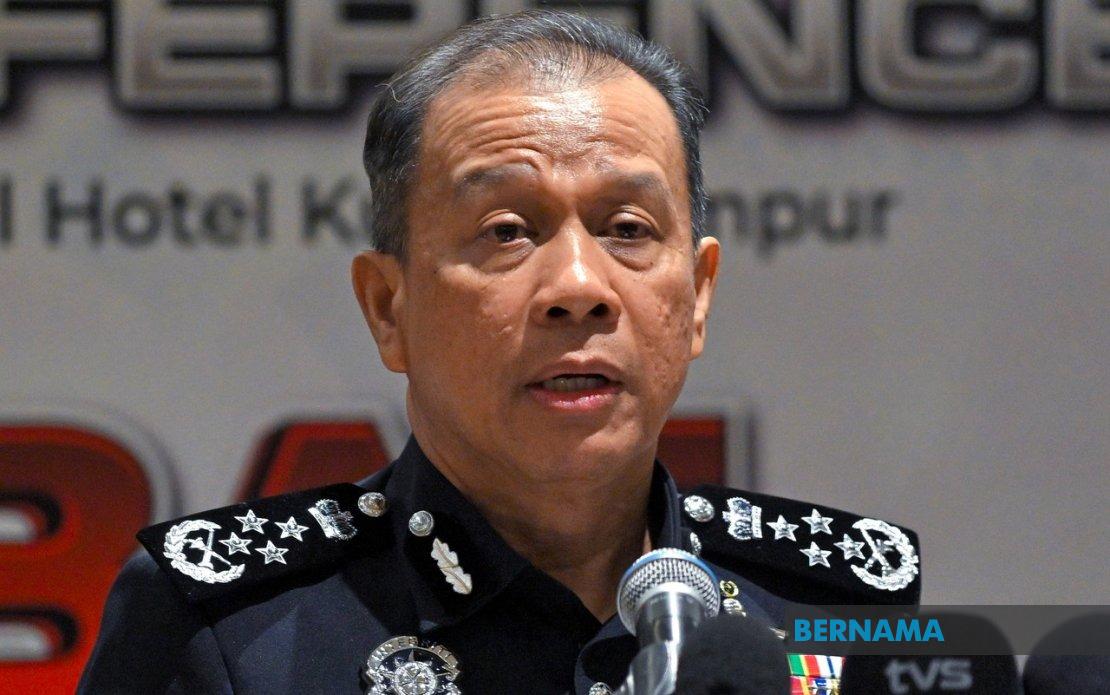
The Royal Malaysia Police has committed to deploying additional personnel within airport aviation security frameworks following a Cabinet decision aimed at fortifying Malaysia's border and transit security infrastructure. Inspector-General of Police Tan Sri Mohd Khalid Ismail outlined the police force's willingness to collaborate with the Home Ministry, Transport Ministry, and allied agencies to operationalise this expansion, which represents a significant structural shift in how Malaysia manages threats at its aviation entry and exit points. The announcement comes in response to evolving security challenges that have exposed vulnerabilities in current screening and monitoring protocols.
The decision to integrate uniformed police into the Aviation Security or AVSEC framework follows an incident involving a Malaysian pilot detained by Indonesian authorities on suspicion of drug trafficking through air transport channels. This case highlighted gaps in detection capabilities and coordination mechanisms between different security bodies operating within Malaysia's aviation ecosystem. Government spokesman Datuk Seri Fahmi Fadzil characterised the police deployment as an immediate corrective measure, signalling that policymakers view the situation with sufficient urgency to warrant rapid implementation rather than prolonged deliberation.
Implementing this expanded security presence requires meticulous coordination across multiple dimensions. Officials are currently mapping out critical parameters including the specific duties assigned to police personnel, which airport terminals and facilities will receive enhanced coverage, the overall personnel requirements needed to sustain operations, clearly delineated zones of responsibility between different agencies, and communication protocols for real-time operational synchronisation. This planning phase is essential because haphazard deployment risks creating overlapping jurisdictions that could paradoxically weaken rather than strengthen security responses. The involvement of Transport Ministry and Home Ministry representatives in these discussions ensures that commercial aviation operations and passenger facilitation remain balanced against security imperatives.
Police leadership articulated a clear strategic rationale for their expanded role within aviation security structures. By stationing trained law enforcement officers alongside existing AVSEC personnel, Malaysian airports will benefit from enhanced intelligence-sharing capabilities, earlier threat identification systems, more coordinated enforcement actions, and faster response mechanisms against suspicious activities or criminal exploitation of aviation infrastructure. The police force's investigative expertise, national intelligence networks, and enforcement authority provide distinct advantages that complement the technical screening and access control functions traditionally managed by civilian security contractors. This layered approach distributes security responsibility across complementary specialisms rather than concentrating it within single agencies.
The modernised security architecture being established will incorporate multiple reinforcing elements beyond police presence alone. Strengthened access control mechanisms will restrict movement within sensitive airport zones, while upgraded screening procedures will apply more rigorous examination standards to passengers, cargo, and personnel. Risk assessment frameworks will enable security teams to identify high-priority individuals or consignments warranting deeper investigation. Enhanced security checks will incorporate both technological systems and human judgment, recognising that sophisticated threats often require pattern recognition and contextual analysis rather than automated detection alone. Critically, this architecture demands genuine cooperation among airports operators, police, customs, immigration authorities, and international partners rather than parallel operations by disconnected agencies.
Muhammad Khalid emphasised that intelligence-driven, integrated security controls represent the contemporary standard for managing aviation risks. Fragmented security systems where different agencies operate independently and share information reluctantly create exploitable gaps that criminal organisations and terrorist networks routinely identify and utilise. By implementing tightly coordinated protocols based on shared intelligence assessments, Malaysian aviation security can significantly strengthen its preventive capabilities, reduce operational vulnerabilities, and eliminate the institutional blindspots that irresponsible actors previously leveraged. This shift reflects international best practices adopted by regional and global aviation hubs facing comparable security pressures.
For Malaysian passengers and the aviation industry, the expanded police presence at airports may initially create marginal delays during peak travel periods as security procedures are reinforced and new personnel develop operational proficiency. However, the long-term security assurances provided by more rigorous screening and enhanced threat detection should outweigh these minor inconveniences. Airlines operating from Malaysian hubs benefit from strengthened security reputations, which influences international carrier partnerships and passenger confidence. The country's position as a regional aviation hub depends substantially on maintaining credible security standards that match or exceed practices at competing regional airports.
International aviation authorities and regional partners will monitor Malaysia's implementation closely. The International Civil Aviation Organisation establishes baseline security standards that member states must meet, and Malaysia's enhanced AVSEC framework will likely be evaluated during periodic compliance assessments. Neighbouring countries including Singapore, Thailand, and Indonesia have implemented comparable police-integrated aviation security models, making Malaysia's approach consistent with regional standards rather than pioneering new territory. This consistency facilitates smoother international cooperation on transnational aviation security matters and mutual recognition of security certifications.
The broader context of this decision reflects Malaysian policymakers' recognition that aviation security cannot be treated as a discrete, isolated function separated from national law enforcement architecture. The drug smuggling incident that precipitated this policy shift demonstrates how criminal networks exploit structural gaps between agencies, jurisdictions, and operational procedures. By embedding police capacity within airport security perimeters, Malaysia is essentially closing previously identified vulnerabilities before they can be systematically exploited. The measure also signals to criminal organisations that Malaysia is serious about disrupting their aviation-based trafficking operations, which may deter some actors from using Malaysian airports and routes.
Implementation timelines remain flexible pending the completion of detailed planning work. Police leadership has avoided specifying deployment dates, suggesting that proper preparation takes precedence over meeting arbitrary deadlines. This measured approach contrasts with premature deployments that could prove ineffective or counterproductive if personnel lack adequate training, clear procedures, or adequate coordination mechanisms. The involvement of multiple government ministries indicates that parliament and key stakeholders have endorsed this direction, removing major bureaucratic obstacles that historically delayed security sector reforms. Cabinet approval provides the executive authority necessary to redeploy police resources without requiring lengthy legislative amendments or procurement processes.
The police force's public commitment to this endeavour carries weight beyond the specific AVSEC initiative. Inspector-General Mohd Khalid's repeated assurances that flight safety and border security will remain paramount priorities, combined with explicit warnings against tolerating criminal misuse of aviation infrastructure, establish clear expectations for implementation quality and institutional dedication. This leadership messaging helps prevent lower-level bureaucratic foot-dragging or half-hearted implementation that sometimes undermines policy initiatives. It also sends signals to international aviation partners that Malaysia's government views aviation security with appropriate seriousness rather than treating it as a secondary administrative function.

