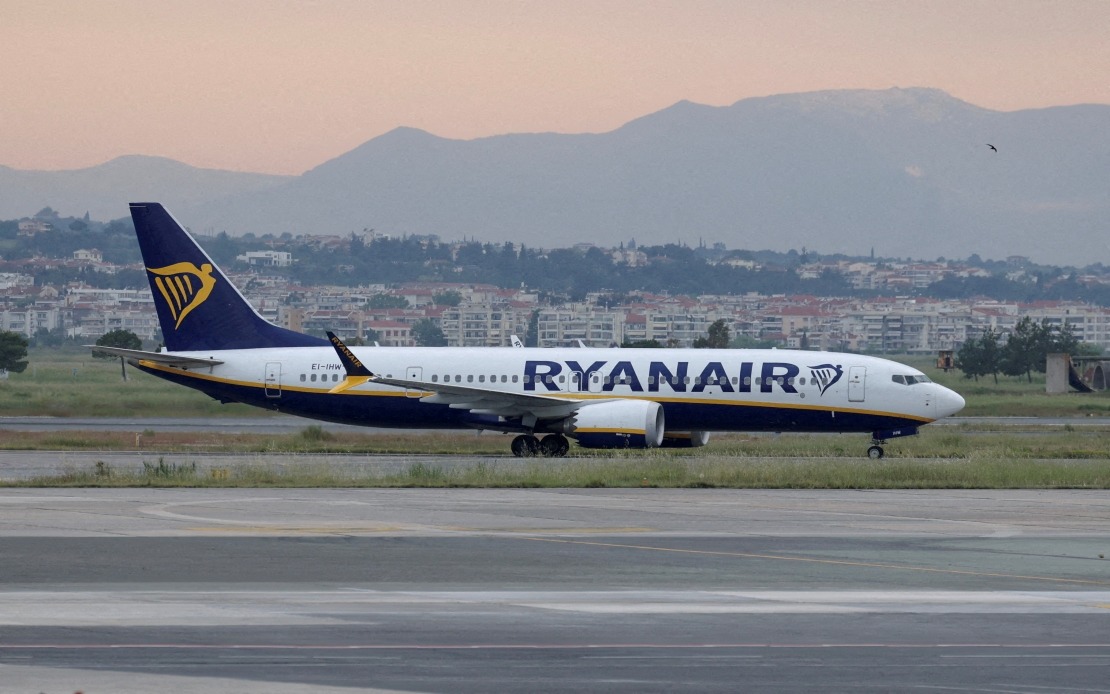
A Ryanair flight departing from Thessaloniki in Greece encountered a serious structural failure on Friday when a cabin window suddenly ruptured, forcing the aircraft to abort its journey to Memmingen in Bavaria and divert back to its point of origin within minutes. The incident, which unfolded shortly after the plane became airborne, left one passenger with injuries and prompted dramatic scenes inside the cabin as oxygen masks deployed automatically and travellers reacted to the emergency.
According to eyewitness accounts provided to news agencies, the rupture occurred with a loud explosive sound that startled passengers aboard the aircraft. The force of the failure was sufficiently violent that it caused injury to a passenger seated near the affected window, with multiple observers describing the severity of the situation. One witness told the Greek broadcaster ERT that the injured passenger's upper body protruded partially through the broken opening, underscoring the hazardous nature of the emergency as it unfolded.
The quick response of fellow passengers proved crucial in preventing what could have become a far more serious outcome. Other travellers seated in proximity to the damaged window managed to physically pull the injured man back into the cabin, an act that may have prevented further harm or complications. The cabin crew's standard emergency procedures simultaneously activated as the pressurization system responded to the breach, resulting in the automatic deployment of oxygen masks throughout the aircraft—a sight that intensified passenger anxiety even as safety systems functioned as designed.
Social media footage and passenger accounts documented the panic that gripped the cabin during the incident, with multiple people screaming as they grappled with the unexpected emergency. The combination of a sudden loud noise, visible structural damage, and the sight of oxygen equipment deploying created a frightening scenario for those aboard. The crew, meanwhile, worked to reassure passengers and manage the situation as the pilot made the decision to initiate an immediate return to Thessaloniki Airport.
The diversion proved mercifully brief. After reversing course, the aircraft completed its return journey to the airport of origin in approximately twenty minutes, allowing the emergency services to respond quickly upon landing. The rapid turnaround prevented the situation from deteriorating further and ensured that medical personnel could attend to the injured passenger without delay.
The injured man, identified as a passenger from Serbia, was transported by emergency responders to a hospital facility in Thessaloniki for treatment and assessment. The extent of his injuries and the nature of the medical intervention required remain not fully detailed in initial reports, though the fact that he could be moved under his own power after the incident suggests injuries, while serious, were not catastrophic.
At the time of reporting, neither Ryanair nor the competent aviation authorities had released formal statements addressing the incident. However, Greek broadcaster ERT confirmed that relevant authorities have initiated an investigation into the window failure. Such inquiries typically examine manufacturing defects, maintenance records, structural integrity, and whether any external factors contributed to the rupture. Given that window failures represent uncommon but potentially catastrophic events in commercial aviation, investigators will likely conduct a thorough examination of the specific pane and its installation.
For Malaysian and Southeast Asian travellers, this incident serves as a reminder of the robustness of aviation safety systems, even when faced with dramatic structural failures. Modern aircraft are engineered with multiple layers of redundancy; the automatic deployment of oxygen masks and the ability to maintain controlled flight despite a window rupture demonstrate these protective mechanisms functioning as intended. Commercial aviation remains statistically the safest form of long-distance transportation available to passengers across the region.
Ryanair operates an extensive network across Europe and has carried millions of passengers safely. While incidents such as window ruptures do occasionally occur in aviation, they remain rare events. The airline's extensive fleet operations mean that incidents typically receive scrutiny from aviation safety bodies across multiple jurisdictions. The investigation into this particular event will likely yield findings relevant to the broader aviation industry regarding component inspection protocols and maintenance scheduling.
The incident also highlights the importance of crew training and passenger cooperation during emergencies. The swift action taken by fellow passengers to prevent the injured man from being pulled further through the opening, combined with the crew's management of the emergency descent and diversion, exemplified the layered approach to aviation safety that protects those aboard commercial aircraft.

