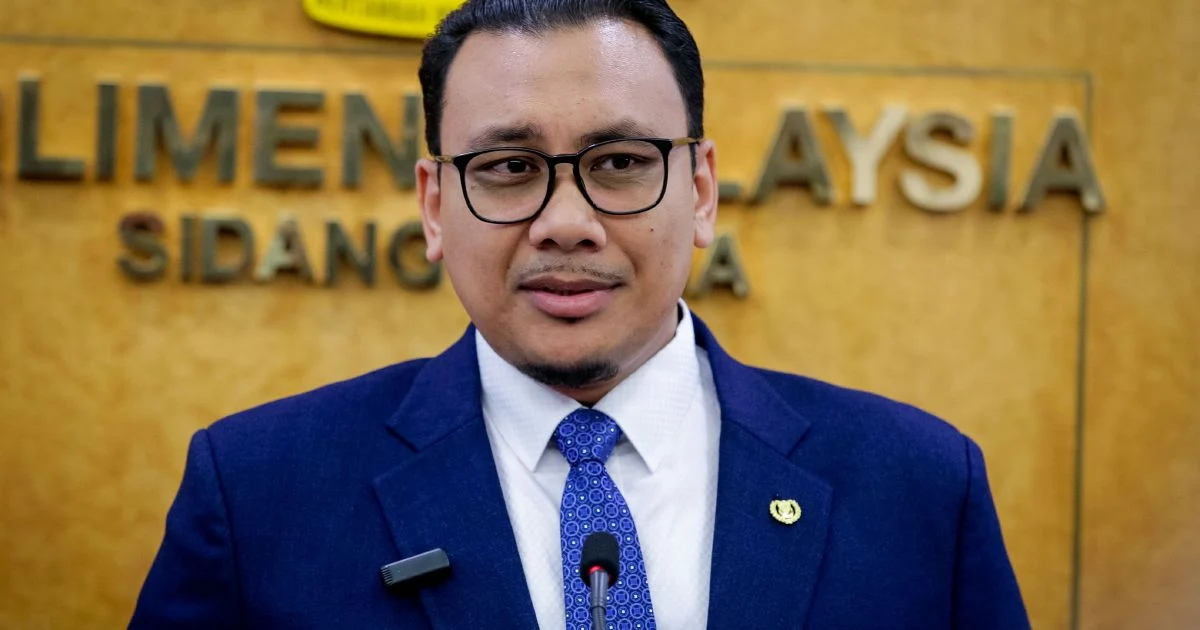
Afnan Hamimi Taib Azamudden, who leads PAS's youth wing, has directed his legal representatives to advance a lawsuit stemming from an online post on Facebook. The incident involves remarks that he contends were personally disparaging toward his father, touching off a fresh round of inter-party tensions within Malaysia's opposition coalition structures.
The decision to escalate the matter to the courts represents an escalation in what has become an increasingly contentious exchange on social media between members of allied political parties. PAS, the Islamic party that holds significant sway in northern Malaysia and increasingly within federal politics, has in recent years become intertwined with Bersatu, the party founded by former Prime Minister Mahathir Mohamad. Yet personal disputes between their members have occasionally erupted into public confrontations, often played out online where restraint is minimal.
The alleged offending post originated from someone affiliated with Bersatu's leadership structure, according to Afnan Hamimi's characterization. Rather than allowing the matter to dissipate through the usual cycles of political apology or mutual recrimination, the PAS Youth chief has chosen to leverage Malaysia's legal system to address what he views as a personal affront to his family's reputation. This decision reflects a broader pattern where Malaysian politicians have increasingly turned to defamation suits to settle political disagreements, a tactic that carries significant implications for political discourse in the country.
The involvement of lawyers suggests this matter has moved beyond the realm of mere social media squabbling into formal legal territory. By instructing counsel to prepare formal action, Afnan Hamimi is signalling that he intends to hold whoever posted the message accountable through the courts rather than through political channels or public statements. This approach carries distinct advantages and risks: it provides a formal mechanism for establishing liability and potentially extracting damages, but it also risks prolonging a dispute that might otherwise fade from public consciousness.
The incident occurs against a backdrop of shifting political alliances within Malaysia. PAS has consolidated its influence since the 2022 general election, positioning itself as kingmaker in various state governments and national coalition negotiations. Bersatu, meanwhile, has experienced turbulent internal divisions and shifting loyalties since its establishment. When members of ostensibly allied parties exchange public barbs, it raises questions about the stability and cohesion of broader political blocs that depend on electoral cooperation.
Facebook remains a primary battleground for political messaging in Malaysia, where both ruling and opposition figures maintain active presences and engage directly with supporters and critics. The platform's relative lack of editorial oversight, combined with its massive user base in Malaysia, has made it fertile ground for everything from policy announcements to personal attacks. That a post on this platform has now triggered formal legal machinery illustrates how the digital and legal spheres of Malaysian politics have become deeply intertwined.
For observers of Malaysian politics, the escalation from social media insult to legal action represents a significant moment. It underscores that personal offences—particularly those involving family members—remain potent political triggers, even within coalition partnerships. The willingness to pursue litigation also signals that figures within PAS view their family honour as sufficiently damaged to warrant the time, expense, and publicity associated with court proceedings. This suggests the original post must have contained material that crossed what Afnan Hamimi considers an unacceptable threshold.
The timing of this announcement also merits consideration. Political temperatures in Malaysia tend to rise and fall with broader events—by-elections, party congresses, coalition negotiations, and policy announcements all create contextual shifts. The decision to move forward with legal action at this particular moment may reflect either a genuine need to act before evidence becomes stale, or a calculated political move to raise Afnan Hamimi's profile within PAS as someone willing to defend his family's interests vigorously.
For the Bersatu leader allegedly responsible for the post, this represents a serious complication. Defamation cases in Malaysia carry the potential for substantial damages awards, and the reputational cost of being sued by a rival party official is considerable. Depending on the specifics of what was posted, the defendant may need to prove the truthfulness of allegations made, or demonstrate that their remarks constitute fair comment on matters of public interest—defences that are not always straightforward to establish.
The broader implications extend to questions about acceptable conduct within coalition politics. When allied parties lack effective mechanisms for resolving disputes between their members, incidents like this tend to escalate rather than de-escalate. Whether PAS and Bersatu leadership structures will attempt to mediate this dispute before it reaches the courts, or allow it to proceed to full litigation, remains unclear. Such internal conflicts, even when resolved through courts, tend to leave residual tensions within political partnerships.
For Malaysian observers, this case will likely serve as another data point in an ongoing conversation about the relationship between political speech, digital platforms, and legal accountability. As social media continues to shape political discourse, disputes that once might have remained confined to backroom discussions increasingly play out in courts, with all the attendant publicity and acrimony that formal legal proceedings entail.