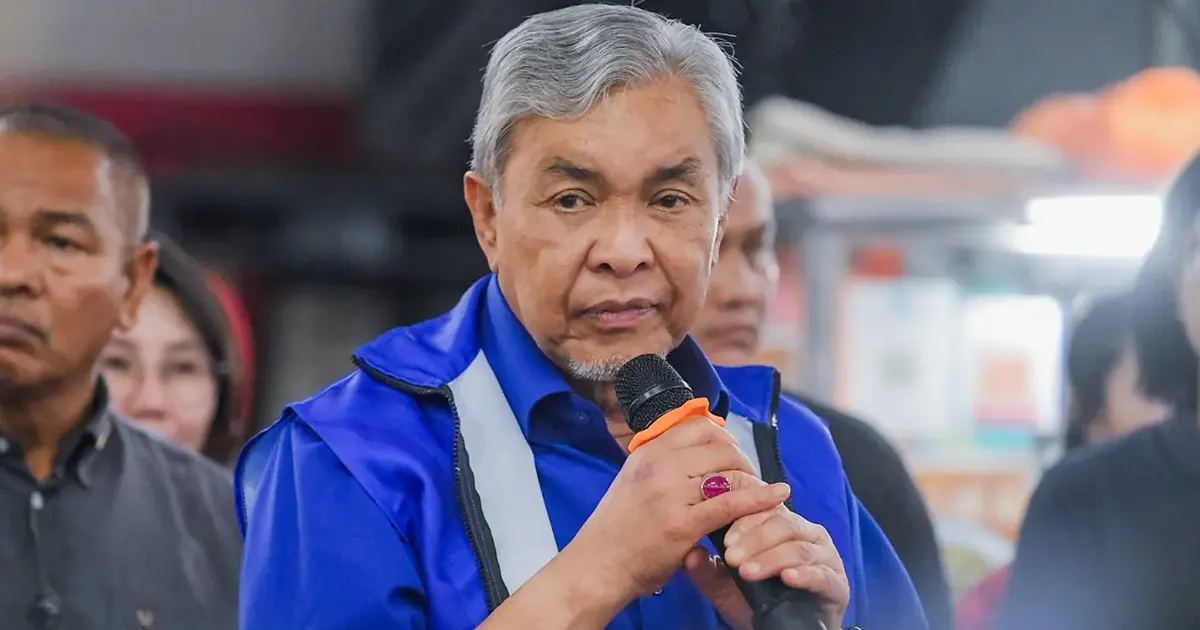
BN chairman Zahid Hamidi has dismissed the notion that PAS's decision to throw support behind BN candidates in the Johor election signals a deeper political understanding between Umno and the Islamist party, insisting the current arrangement does not predetermine any future formal alliance or working relationship. The clarification comes as both parties navigate an increasingly complex political landscape where tactical electoral cooperation does not necessarily translate into structural political partnerships.
Zahid's statement reflects the delicate positioning required of BN, which has historically maintained distance from PAS while simultaneously benefiting from vote-splitting dynamics that can favour the coalition in certain constituencies. The Johor state election represents a unique scenario where PAS has chosen to align its campaigning with BN interests, yet this tactical decision appears driven more by contemporary political calculations than by any grand coalition architecture. Such nuanced electoral coordination between parties that maintain ideological differences and separate political identities has become increasingly common in Malaysian politics, where pragmatism often overrides formal alliance structures.
The BN chairman's remarks underscore a broader pattern in Malaysian politics whereby parties engage in issue-specific or election-specific cooperation without committing to longer-term governance arrangements. This approach allows both Umno and PAS to maintain their distinct political brands and supporter bases while capitalising on mutually beneficial electoral outcomes in particular contests. For PAS, supporting BN candidates in Johor may reflect calculations about the party's standing in the state or broader strategic interests, whereas for BN, securing PAS's non-interference or active support in key marginal seats can be decisive.
The political context in Johor has evolved considerably over recent years, with the state serving as a traditional BN stronghold that has nonetheless witnessed growing competition from other political forces. PAS's positioning in the state election reflects the party's broader reassessment of its electoral strategy across Malaysia, balancing its presence as an independent political force with tactical flexibility in specific electoral contests. This pragmatism contrasts sharply with the more ideologically rigid coalitional politics that characterised earlier decades of Malaysian electoral competition.
Zahid's clarification also addresses potential concerns among Umno members and supporters who might worry that PAS support could lead to deeper institutional entanglement or compromise of party principles. By explicitly stating that current electoral cooperation carries no implications for future alliance structures, the BN chairman reassures party stakeholders that Umno retains full autonomy in determining its political partnerships. This messaging is particularly important for Umno as it continues to rebuild its internal cohesion following earlier periods of internal fragmentation and factional disputes.
The dynamics at play in Johor reflect broader challenges facing Malaysian political parties in an era of volatility and shifting voter allegiances. Electoral cooperation between parties with fundamentally different political philosophies and voter demographics requires careful management to avoid creating impressions of deeper alignment that neither party may actually support. Zahid's statements thus serve a dual purpose: assuring PAS that BN values its current support while simultaneously signalling to Umno members that such cooperation remains tactical rather than strategic.
For Southeast Asian observers, the Johor situation illustrates how established coalition structures are evolving across the region. Rather than formal pre-election alliances that characterise some neighbouring democracies, Malaysian parties increasingly engage in fluid, issue-specific cooperation that allows greater flexibility. This approach reflects both the fragmented nature of Malaysia's political landscape and the need for parties to maintain distinct identities in an increasingly competitive electoral environment where voter volatility has become a defining characteristic.
The implications extend beyond the immediate Johor election, signalling to political analysts that Malaysian coalition politics cannot be assumed or projected into future elections. Each electoral contest may generate different alignments based on specific circumstances, local dynamics, and party calculations at that moment. This unpredictability presents both challenges and opportunities for political strategists across the region who attempt to forecast Malaysian electoral outcomes based on formal alliance structures or recent cooperation patterns.
Zahid's position also reflects practical realities of Malaysian governance, where even parties within formal coalitions sometimes pursue separate interests or fail to cooperate fully. The BN chairman's emphasis that PAS support in Johor carries no future implications is thus consistent with how Malaysian political coalitions actually function in practice—often marked by conditional cooperation rather than ironclad commitments. This realistic assessment of political relationships may ultimately prove more durable and defensible than claims of permanent alliance structures in an environment where voter preferences and party fortunes shift rapidly.
Looking ahead, the Johor election will likely demonstrate whether tactical cooperation between ideologically distinct parties can generate electoral dividends without creating expectations of broader institutional partnership. The outcome may inform how both Umno and PAS approach similar situations in other state elections or in future federal contests, potentially establishing new templates for pragmatic political cooperation in Malaysian electoral competition. Ultimately, Zahid's clarification allows both parties to benefit from current cooperation while retaining complete freedom to chart independent courses in subsequent political contests.

