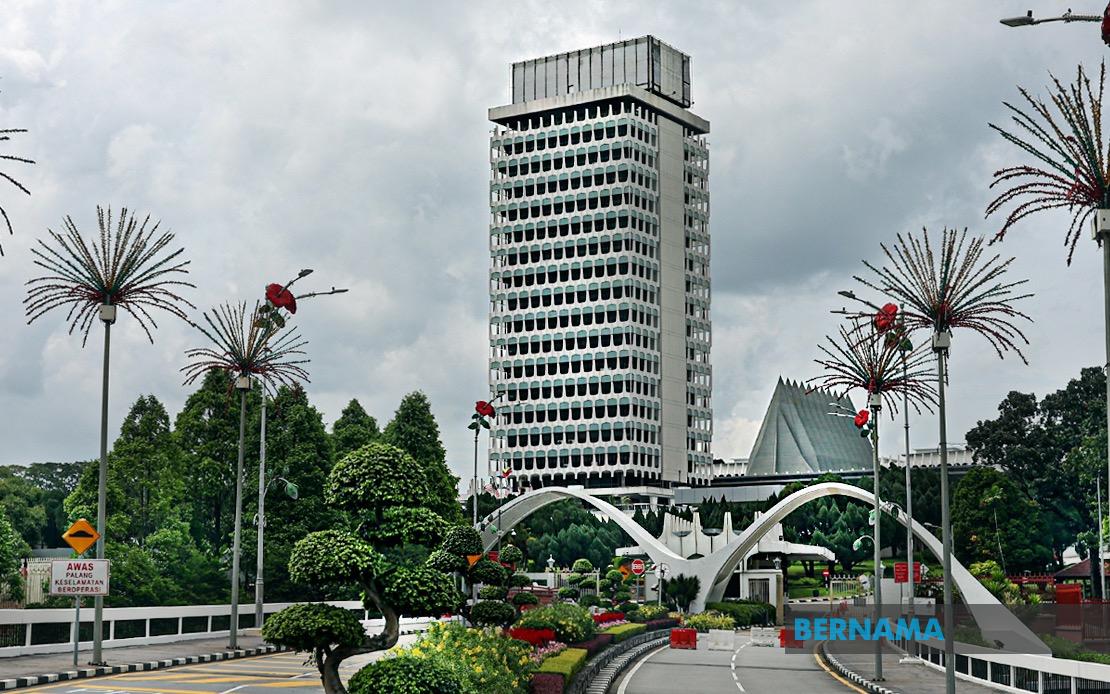
The third week of Malaysia's Dewan Rakyat sitting proved substantive, with lawmakers progressing competition law amendments while grappling with contentious issues spanning human rights, economic policy, and national security. The chamber saw the successful passage of the Competition (Amendment) Bill 2026 and the Competition Commission (Amendment) Bill 2026, dual legislative measures designed to fortify the nation's ability to tackle anti-competitive behaviour in an increasingly complex digital marketplace. These reforms respond to evolving commercial practices that traditional regulatory frameworks struggle to address, positioning Malaysia's competition regime more squarely in line with contemporary regional and global standards.
The agricultural sector received particular legislative attention when lawmakers tabled the Control of Padi and Rice (Amendment) Bill 2026 for its first reading. This measure represents a significant tightening of rules governing padi and rice production and trade, introducing substantially harsher financial penalties to discourage industry malpractice. The bill raises maximum fines to RM1 million, a dramatic escalation intended to deter fraud, adulteration, and quality breaches that compromise Malaysia's food security apparatus. Given the strategic importance of domestic rice production and the nation's vulnerability to global supply disruptions, particularly relevant for a country balancing self-sufficiency with import reliance, this legislative push signals government determination to safeguard agricultural integrity.
Parallel to legislative business, parliament devoted considerable time to scrutinising the Human Rights Commission of Malaysia's 2024 annual report, with the motion and subsequent debate drawing MPs' attention to systemic human rights concerns. This debate mechanism, relatively formal compared to ordinary parliamentary exchanges, allowed lawmakers to lodge focused recommendations addressing gaps and shortcomings in SUHAKAM's oversight capacity. The exercise reflects parliament's role as a forum where human rights advocates can amplify institutional critique, though critics question whether such parliamentary exercises translate into substantive policy change or remain largely performative.
Prime Minister Datuk Seri Anwar Ibrahim's ministerial question time statement attempted to clarify government intentions on two sensitive fronts: MSME financing and press freedom. Regarding business support, he reaffirmed commitment to pressuring financial institutions to expedite and improve their processing of lending applications from micro, small and medium enterprises, emphasising that policy support must translate into practical access to capital. This messaging responds to longstanding MSME complaints that financing remains constrained despite government rhetoric about supporting this economically vital sector, which collectively employs millions and drives economic dynamism outside major urban centres.
The press freedom controversy, however, dominated parliamentary discourse and wider media attention. Malaysia's recent decline in the Reporters Without Borders World Press Freedom Index troubled observers concerned about shrinking democratic space. Anwar attributed the downgrade partly to enforcement actions against several media organisations, attempting to reframe such actions as narrowly targeted rather than systematically repressive. He insisted that restrictions focus exclusively on content touching religion, race, and royal institutions alongside national security matters, claiming the government does not intend general suppression of press freedom or political dissent. This distinction, however, generated scepticism given that content restrictions framed as protecting institutional sensitivities or security can easily extend to suppress legitimate journalism.
Significantly, Anwar announced that complaints against journalists employed by recognised media organisations will no longer automatically trigger government investigations or enforcement proceedings. Instead, such complaints must first be channelled through the Malaysian Media Council, a self-regulatory body comprising industry representatives. This procedural reform aims to create institutional buffers against arbitrary state action, though critics question whether the MMM possesses sufficient independence and enforcement power to genuinely shield journalists from political pressure. The announcement suggests government acknowledgment that heavy-handed direct enforcement against media workers damages the administration's democratic credentials, particularly among Southeast Asian peers and international observers.
Parliamentary committees presented substantive reports addressing two significant policy domains. The Special Select Committee on Health advanced recommendations concerning organ donation and transplantation systems, areas where Malaysia has previously struggled with low donation rates and inequitable access to organs. Simultaneously, the committee examining women, children and community development flagged alarming upward trends in abuse and violence across a six-year period since 2020, prompting lawmakers to consider strengthening protective mechanisms and support services. These committee recommendations, whilst non-binding, carry political weight and often influence subsequent policy development.
Defence and security matters surfaced through discussions of maritime capability, specifically the process of selecting a replacement missile system for the Naval Strike Missile platforms currently equipping Malaysia's Littoral Combat Ships. This acquisition decision involves substantial expenditure and reflects broader strategic choices about naval deterrence in contested waters. Concurrently, enforcement actions targeting vape products suspected of containing synthetic drugs drew parliamentary focus, illustrating mounting government concern about emerging substance abuse pathways, particularly among youth. These discussions underscore how parliament serves as a space where diverse security and public health concerns receive legislative scrutiny.
Financial accountability dominated discussion when Deputy Finance Minister Liew Chin Tong disclosed that total government liabilities stemming from 1Malaysia Development Berhad—encompassing settled obligations and outstanding debts—reach RM51.4 billion. This staggering figure, arising from the sovereign fund's collapse amid massive fraud, continues shaping Malaysia's fiscal constraints and represents ongoing costs of the previous administration's governance failures. The revelation, made within parliament where financial accountability ostensibly holds greatest weight, reminds lawmakers and citizens alike that historical mismanagement continues consuming resources that might otherwise address contemporary policy priorities.
Healthcare system modernisation featured in parliamentary exchanges regarding digitalisation of public healthcare facility operations. This discussion reflects broader recognition that Malaysia's public health infrastructure requires technological upgrading to improve efficiency, reduce administrative burden on clinical staff, and enhance patient experience. Such systemic improvements, whilst less dramatic than legislative innovations, fundamentally shape citizens' everyday engagement with public services and represent crucial infrastructure investments.
Dewan Rakyat Speaker Tan Sri Dr Johari Abdul used the occasion to remind members about personal health maintenance following one lawmaker's hospitalisation at the National Heart Institute. This seemingly minor intervention carries symbolic weight, with the Speaker emphasising that parliamentary members themselves remain vulnerable to health crises and should model responsible preventive behaviour. With one week remaining before the Fifth Session's conclusion on July 16, lawmakers prepare for final legislative business and concluding remarks on outstanding matters, setting the stage for substantive parliamentary work continuing into subsequent sessions addressing Malaysia's evolving policy challenges.

