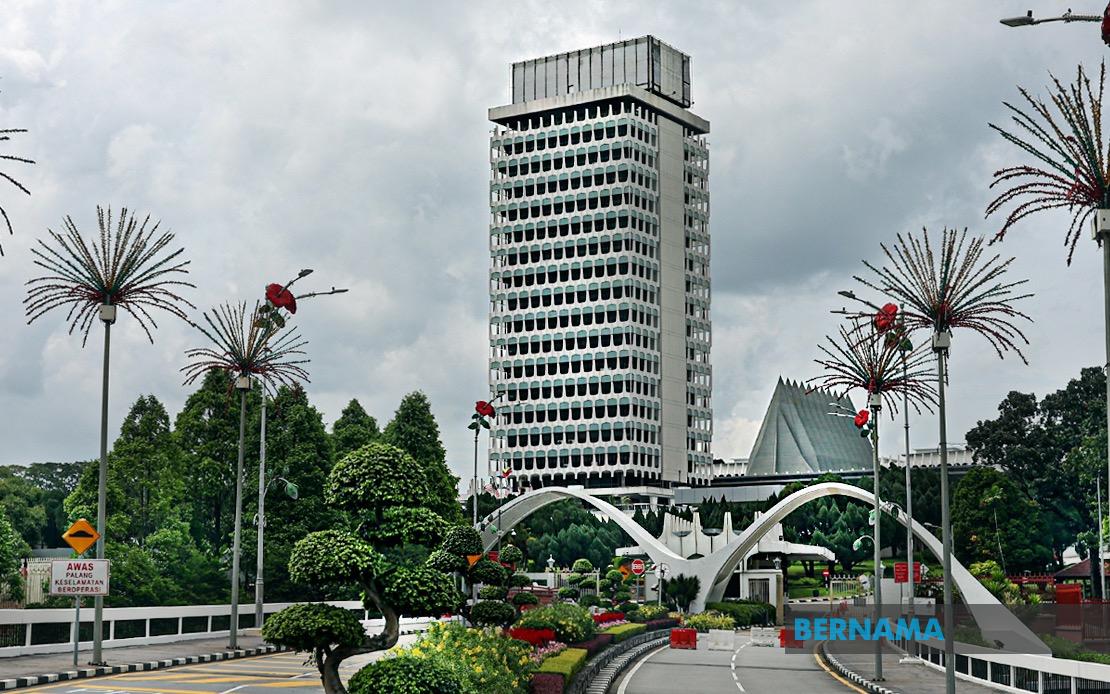
The Dewan Rakyat is set to grapple with three critical policy areas today that carry significant implications for Malaysia's economic development and digital governance landscape. Among the substantive matters scheduled for parliamentary debate are long-term strategies to fortify Johor's water security infrastructure, measures to bolster the Malaysia Competition Commission's investigative capacity in the housing sector, and the regulatory framework guiding age verification implementation for social media users. These discussions underscore the legislature's engagement with interconnected challenges spanning environmental sustainability, consumer protection, and child safety in the digital realm.
Water resource management remains one of Malaysia's most pressing infrastructure concerns, particularly given the nation's rapid urbanisation and competing demands from industrial, agricultural, and residential sectors. Suhaizan Kaiat, representing the Pulai constituency under the Pakatan Harapan coalition, will pose detailed questions to the Energy Transition and Water Transformation Minister regarding the government's comprehensive vision for expanding Johor's water-holding capacity. The inquiry encompasses multiple infrastructure dimensions, including dam construction, water treatment facility development, and the integration of recycled water systems to accommodate escalating consumption patterns. For Malaysian households and businesses, especially those in Johor—the nation's second-largest state by population—the adequacy of water supply directly affects economic productivity, property values, and public health. The question reflects growing recognition that Malaysia's current water infrastructure, much of it constructed decades ago, requires substantial capital investment and technological modernisation to serve a population projected to exceed 35 million by 2030.
Johor's water challenges carry regional significance beyond state boundaries. The state supplies treated water to neighbouring Selangor and the Federal Territories, meaning any deficiency cascades across the Klang Valley, Malaysia's economic heartland. Previous droughts have disrupted manufacturing operations and strained public supplies, demonstrating the cascading costs of inadequate infrastructure investment. The parliamentary inquiry signals that water security now commands sustained political attention across party lines, though implementation timelines and funding mechanisms remain contested.
The second major agenda item addresses competition law enforcement in Malaysia's housing market, a sector that has drawn sustained criticism for affordability challenges and alleged anti-competitive conduct. Datuk Seri Ismail Abd. Muttalib, representing Maran under the Perikatan Nasional coalition, will interrogate the Domestic Trade and Cost of Living Minister on the Malaysia Competition Commission's capacity to monitor housing price manipulation and market collusion. His questions probe whether the MyCC possesses adequate statutory powers, investigative resources, and institutional independence to detect and prosecute anti-competitive practices such as coordinated pricing, market division among developers, or exclusive dealing arrangements that disadvantage consumers. This line of questioning reflects substantive debate within Malaysian policymaking circles about whether existing competition frameworks prove sufficiently robust to address housing affordability, where prices in major metropolitan areas have outpaced wage growth by multiples in recent years.
The MyCC, established under the Malaysian Competition Commission Act 2010, operates within a competitive landscape shaped by real estate developer consolidation and information asymmetries favouring incumbent market players. Enhanced investigative powers and enforcement capacity could theoretically improve transparency and contestability, yet empirical evidence from comparable jurisdictions suggests that competition enforcement alone cannot resolve fundamental housing supply constraints. Nevertheless, vigorous parliamentary scrutiny of the MyCC's housing market oversight creates political pressure for institutional accountability and may catalyse administrative reforms improving case investigation timelines and evidentiary standards.
The third substantive parliamentary matter concerns digital rights and child protection in an era of ubiquitous social media consumption. Syahredzan Johan, the Bangi representative under Pakatan Harapan, will examine the government's rationale for mandating age verification on social media platforms and will seek clarification on data protection safeguards surrounding implementation. His questions address a fundamental tension in digital governance: how regulators can verify user age to shield minors from harmful content while minimising surveillance, data collection, and privacy intrusions. The Communications Ministry's response will illuminate Malaysia's evolving position on digital rights relative to comparable democracies like Australia, which has recently legislated social media age restrictions, and the European Union, which has implemented the Digital Services Act with prescriptive platform accountability requirements.
Age verification mechanisms typically necessitate that platforms collect identity documentation or biometric data, creating centralized databases vulnerable to breach, misuse, or government overreach. The parliamentary inquiry reflects growing Malaysian civil society scrutiny of whether age restrictions genuinely protect children or primarily serve platform business interests by collecting additional personal data. Responses from the Communications Ministry will indicate whether Malaysia's regulatory approach emphasises transparent, privacy-minimal verification or relies on more invasive identity confirmation requiring submission of government identification.
These three parliamentary topics collectively illustrate the breadth of governance challenges confronting Malaysia's legislature: essential infrastructure requiring massive capital commitment, consumer protection in highly concentrated markets, and digital rights in an interconnected economy. The 16-day parliamentary session extending until July 16 provides opportunity for substantive committee engagement and legislative scrutiny, though the capacity of parliament to translate inquiry into binding policy outcomes depends upon executive responsiveness and alignment with broader government priorities. For Malaysian constituents, the calibre of parliamentary questioning and ministerial accountability demonstrated during these sittings will substantially shape governance outcomes across water security, housing affordability, and digital protection domains.

