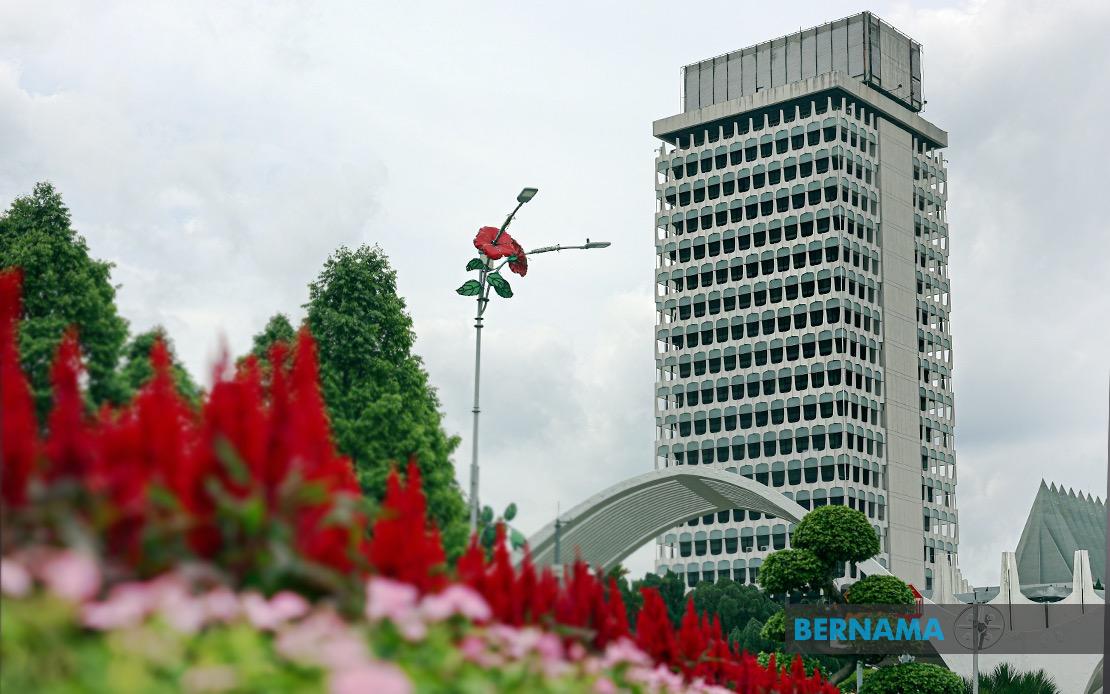
Parliament reconvenes today with several high-profile matters commanding lawmakers' attention, ranging from the long-running 1MDB scandal to the country's ambitious energy transformation agenda and pressing social welfare concerns. The Dewan Rakyat's order paper reflects ongoing parliamentary oversight of major government initiatives and unresolved financial obligations that continue to shape public debate more than a decade after the scandal first emerged.
Chong Chieng Jen, the Stampin MP from the Pakatan Harapan coalition, will interrogate the Finance Minister on the outstanding 1MDB debt burden during the Questions for Oral Answers segment. His line of inquiry extends beyond merely quantifying how much remains unpaid to examining the tangible recovery efforts undertaken thus far. The legislator has specifically requested clarification on the total value of misappropriated 1MDB funds and assets that authorities have managed to recover to date—a metric that provides crucial insight into the government's success in clawing back assets allegedly siphoned from the sovereign wealth fund through an international financial scandal that tarnished Malaysia's international reputation.
The 1MDB question remains perpetually sensitive in Malaysian politics because it touches on governance accountability, financial prudence, and the extent to which previous administrations were held responsible for one of the world's largest embezzlement cases. Tracking both the remaining debt obligations and the recovery progress offers Parliament and the public a concrete measure of closure and justice. Understanding which assets have been successfully returned, whether through legal proceedings or international cooperation, demonstrates the practical effectiveness of Malaysia's recovery mechanisms in an increasingly complex global financial landscape.
On the energy front, Datuk Seri Dr Ronald Kiandee from Beluran, representing the Perikatan Nasional coalition, will probe the Energy Transition and Water Transformation Minister regarding the country's renewable energy trajectory. His questions target the mechanics of cross-sector collaboration and the government's success in converting policy into tangible investment and infrastructure. Specifically, he seeks details on total capital deployed, concrete projects that have reached implementation stage, and the structural or market obstacles impeding faster progress toward Malaysia's renewable capacity targets.
Malaysia's energy transition represents a critical pillar of the government's climate commitments and economic modernisation strategy. The nation has pledged ambitious renewable energy goals amid global pressure to decarbonise and despite the traditional reliance on hydrocarbons. The success of this transition hinges not merely on policy pronouncements but on demonstrable investments materialising into functional generating capacity. For Malaysia and other Southeast Asian economies, the energy transition debate carries profound implications for industrial competitiveness, electricity cost stability, and the ability to attract green manufacturing investment in an increasingly environmentally conscious global market.
Social welfare considerations also feature prominently on today's parliamentary agenda. Fong Kui Lun, the Bukit Bintang member from Pakatan Harapan, will question the Women, Family and Community Development Minister on the documented prevalence of homelessness among elderly citizens and persons with disabilities in urban centres this year. Beyond mere statistical enumeration, his inquiry encompasses the government's strategic response architecture—specifically how the ministry intends to expand shelter capacity, upgrade care facility infrastructure, and scale social intervention mechanisms to accommodate growing numbers of vulnerable populations.
Homelessness among Malaysia's elderly and disabled communities represents an intersection of demographic change, social support gaps, and urbanisation pressures that demands urgent policy attention. As the population ages and medical advances extend lifespans, the cohort of seniors requiring care expands substantially. Simultaneously, the disabled population faces persistent barriers to economic participation and housing access. Urban migration has weakened traditional family support structures that historically cushioned vulnerable groups. Parliament's focus on this dimension of social policy signals recognition that Malaysia's development must encompass not merely economic metrics but genuine improvements in the lived experiences of its most fragile citizens.
The Parliamentary Special Select Committee on Women, Children and Community Development will brief lawmakers on enhancements to the Integrated One Stop Crisis Centre services, reflecting an institutional effort to consolidate and improve delivery of support mechanisms for Malaysians experiencing family violence, child protection crises, and community emergencies. Centralising these services theoretically improves access and responsiveness, though implementation quality ultimately determines whether legislative reform translates into tangible assistance for affected individuals and families.
The sitting will also witness the tabling of the Control of Padi and Rice (Amendment) Bill 2026 for second reading, addressing agricultural regulation at a moment when food security remains a national priority. This legislative initiative suggests ongoing governmental attention to rice production frameworks, potentially encompassing quality standards, farmer protections, and market stability mechanisms that underpin Malaysia's food security strategy.
The current parliamentary session, designated the Second Meeting of the Fifth Session of the 15th Parliament, spans sixteen sitting days through July 16. This extended schedule provides sufficient time for substantial deliberation across multiple substantive topics. The convergence of these distinct yet interconnected matters—financial accountability for past misconduct, forward-looking energy infrastructure commitments, and contemporary social safety nets—illustrates the multifaceted challenge landscape confronting Malaysian policymakers as they navigate legacy issues while simultaneously positioning the nation for sustainable development.

