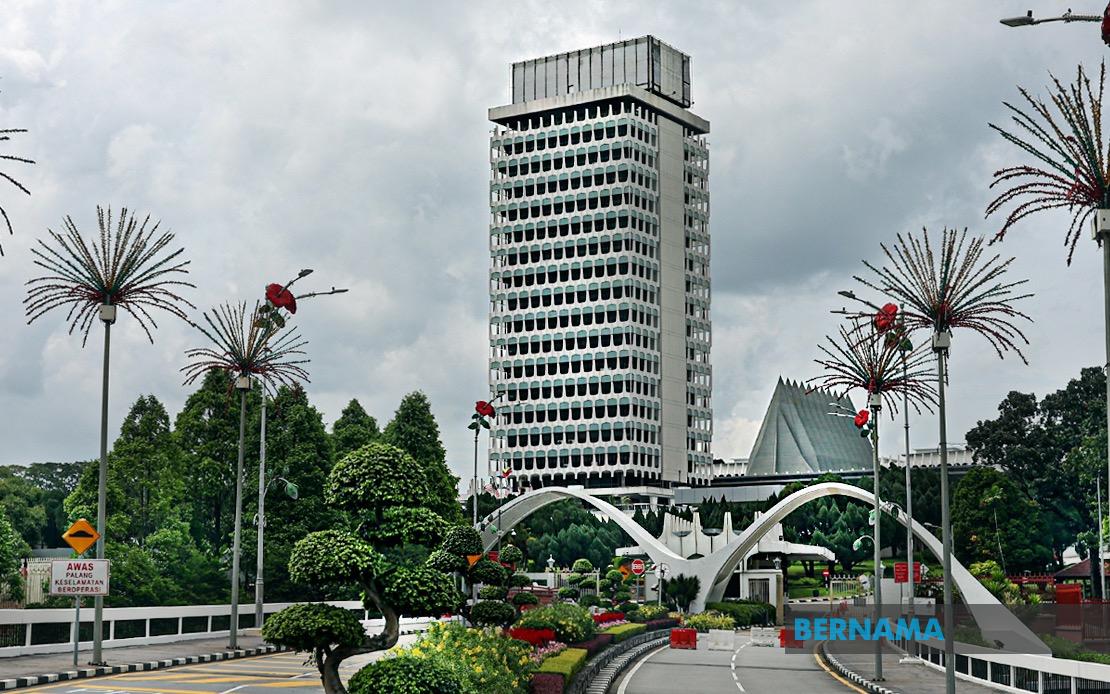
Parliament will reconvene today to scrutinise Malaysia's diplomatic response to a significant agreement between Washington and Tehran aimed at resolving military tensions across West Asia, alongside a domestic review of the government's retail affordability programme. The Dewan Rakyat's agenda reflects the legislature's dual focus on international relations and bread-and-butter economic concerns that directly affect Malaysian consumers and the broader regional stability that underpins Southeast Asian prosperity.
Datak Mohd Isam Mohd Isa, representing the Tampin constituency under the Barisan Nasional coalition, will direct questions to the Foreign Minister during the Question Time session, which commences at 10 am. His inquiry will probe not merely Malaysia's formal position on the proposed accord but also the concrete measures Putrajaya intends to pursue in promoting regional de-escalation. This line of questioning underscores the parliament's expectation that Malaysia, as a substantial Southeast Asian economy and member of the Non-Aligned Movement, should articulate a coherent strategy for maintaining stability in a geopolitical space increasingly fraught with great power competition.
The significance of Malaysia's response to the US-Iran arrangement extends beyond diplomatic protocol. Heightened military activity in West Asia carries ramifications for global oil prices, maritime security along vital shipping lanes that Southeast Asian economies depend upon, and the broader security architecture within which Malaysia operates. Malaysia's positioning—whether towards the interests of Western powers, Iran's regional ambitions, or a principled middle path—will communicate important signals to trading partners, investors, and regional neighbours about the country's diplomatic orientation during an unstable international moment.
Paralleling this international inquiry, lawmakers will examine the operational status of the MADANI Mart initiative, a retail scheme designed to improve consumer access to affordable essential goods. Datuk Rosol Wahid, representing Hulu Terengganu under the Perikatan Nasional banner, will ask the Minister of Domestic Trade and Cost of Living for a comprehensive update encompassing the number of active outlets, pending applications from entrepreneurs seeking to participate, and the demographic profile of business operators involved. This transparency serves both accountability and strategic assessment—determining whether the programme is reaching smaller traders and underserved communities as intended.
The MADANI Mart programme reflects ongoing government efforts to address cost-of-living pressures that have animated Malaysian political discourse and consumer sentiment. Understanding the rollout's trajectory provides insight into the efficacy of the authorities' anti-inflation strategy and whether supply-chain interventions can genuinely ease the burden on household budgets. For Malaysian voters, particularly in lower-income segments, the programme's reach and effectiveness directly influence purchasing power and family finances.
Drug addiction represents another pressing domestic challenge that will receive parliamentary attention. Khoo Poay Tiong, representing the Kota Melaka constituency under the Pakatan Harapan coalition, will seek figures on synthetic drug cases since 2023 and request clarification on government strategies to counter this trend. The specific mention of fentanyl—a potent opioid that has ravaged communities in developed nations—signals growing concern that Malaysia could face similar public health crises if precursor chemicals and illicit supplies proliferate unchecked.
Addressing synthetic drug threats requires coordinated enforcement, rehabilitation capacity, and intelligence-sharing with regional and international partners. Malaysia's drug abuse patterns have historically reflected trafficking routes and production hubs within the broader Asia-Pacific region. Rising synthetic drug prevalence suggests either increased supply flowing through Malaysian ports and borders, or shifting consumption preferences toward more potent, easier-to-conceal narcotics. The parliamentary inquiry thus serves as a formal check on whether law enforcement agencies possess adequate resources and strategic clarity to manage these evolving challenges.
Trade relations with the United States will also feature prominently when Datuk Seri Hamzah Zainudin, a Perikatan Nasional representative from Larut, questions the Minister of Investment, Trade and Industry about implementation progress on the Agreement on Reciprocal Trade between Malaysia and the United States. This bilateral arrangement carries commercial implications for Malaysian exporters and investors seeking American market access, whilst potentially exposing domestic sectors to heightened competition. The status update will indicate whether negotiations have yielded substantive reductions in tariff or regulatory barriers, or whether implementation remains constrained by bureaucratic or political obstacles.
Beyond these specific queries, the parliament will proceed with legislative business including first readings of three bills. The Prisons (Amendment) Bill 2026, Competition (Amendment) Bill 2026, and Competition Commission (Amendment) Bill 2026 represent the government's broader agenda for institutional modernisation. The prisons legislation presumably addresses overcrowding, rehabilitation, or security concerns within Malaysia's correctional system, while the competition-related bills likely reflect efforts to sharpen enforcement powers or update frameworks for an evolving digital economy where market concentration and anti-competitive practices require fresh legal tools.
This confluence of foreign policy scrutiny, consumer protection oversight, drug enforcement accountability, and legislative advancement demonstrates parliament's responsibility to address Malaysia's multifaceted challenges. The questions posed and answers supplied will illuminate government priorities, ministerial competence, and the ruling coalition's capacity to manage both international engagement and domestic welfare—dimensions upon which Malaysian voters ultimately render judgment.

