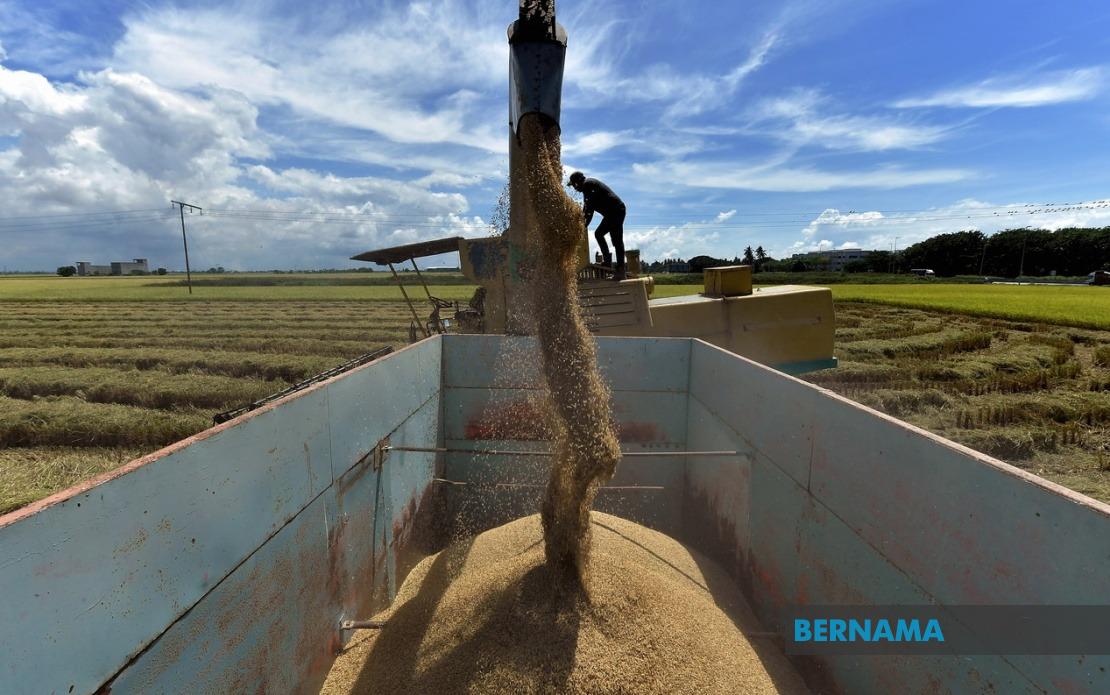
Parliament has given its approval to the Control of Padi and Rice (Amendment) Bill 2026, representing a significant overhaul of regulatory mechanisms governing one of Malaysia's most strategically important agricultural sectors. The legislation cleared the Dewan Rakyat following debate from lawmakers across government and opposition benches, signalling broad recognition that the nation's rice supply chain requires modernised enforcement tools. The Bill addresses longstanding concerns about the adequacy of existing punishments, which legislators from multiple political blocs have identified as insufficient deterrents against large-scale infractions.
Central to the amendments is a dramatic increase in financial penalties designed to reflect contemporary economic realities in the padi and rice industry. Section 22 of the principal Act, previously unchanged since 1994, now imposes maximum fines of RM250,000 against individuals who breach regulations, while corporate entities face potential penalties reaching RM1 million. This recalibration follows three decades during which the regulatory framework remained static, creating an increasingly wide gap between potential illegal profits and the cost of punishment. Deputy Minister of Agriculture and Food Security Datuk Chan Foong Hin explained that enforcement statistics reveal substantial seizures of smuggled rice and illegally diverted domestic supplies, yet historical sentences have failed to match the severity of these offences or the scale of illicit gains.
The rationale underlying these penalty increases extends beyond simple punishment mathematics. Officials contend that criminal networks and unscrupulous traders operating within the multi-billion-ringgit sector have exploited the penalty ceiling, essentially treating modest fines as operational expenses in conducting illegal activities. By elevating the financial consequences, policymakers hope to fundamentally alter the cost-benefit calculation that motivates market manipulation and smuggling operations. Chan characterised the amendments as essential recognition that penalties must now reflect the actual magnitude of economic harm inflicted by misconduct, particularly given the substantial volumes and values of rice products moving through Malaysia's food supply networks annually.
Beyond financial penalties, the legislation encompasses broader protective measures targeting rice farmers and supply chain integrity. The amendments explicitly acknowledge that price manipulation and unfair trading practices undermine the economic viability of padi farming, a sector employing hundreds of thousands of Malaysians and supporting rural livelihoods across peninsular Malaysia and Sabah and Sarawak. By strengthening enforcement capabilities and increasing consequences for breaching traders and processors, the Bill seeks to establish a more balanced marketplace where smallholder farmers are insulated from predatory purchasing practices and artificial price suppression orchestrated by dominant market actors.
During parliamentary debate, opposition and backbench legislators offered complementary suggestions that reflected widespread anxiety about implementation gaps in existing enforcement frameworks. Datuk Idris Ahmad from Perikatan Nasional, representing the Bagan Serai constituency, advocated for the development of explicit prosecution guidelines to standardise how enforcement agencies pursue violations. He further recommended specialised prosecutorial training to equip legal representatives with the expertise necessary to secure sentences proportionate to offence severity. These proposals acknowledge that legislation alone proves insufficient without corresponding investments in institutional capacity and professional expertise among enforcement and judicial personnel.
Parlimentarians from the opposition coalition raised distinct concerns centring on market structure and systemic vulnerabilities within existing supply chain architecture. Tan Hong Pin, the Bakri representative, called for comprehensive review of penalty structures and proposed establishing an independent oversight committee responsible for periodic evaluation of Padiberas Nasional Berhad, commonly known as BERNAS, the state-owned entity managing much of Malaysia's rice procurement and distribution. His suggestion implicitly recognises that cartel behaviour and anti-competitive practices may involve structural arrangements rather than isolated rogue actors, necessitating systemic scrutiny beyond traditional enforcement.
Digitalisation emerged as a critical theme throughout parliamentary discussion, with multiple legislators emphasising that technological solutions could substantially enhance supply chain transparency and responsiveness. Azli Yusof from Shah Alam highlighted the potential of comprehensive digital traceability systems to monitor rice movement from production through retail, enabling rapid identification of leakages, hoarding, and supply disruptions. Building upon this concept, Manndzri Nasib representing Tenggara proposed affixing individual QR codes to rice sacks, creating machine-readable records of stock movements accessible to both enforcement authorities and consumers. Such technologies would dramatically complicate large-scale smuggling and mislabelling schemes while providing real-time visibility into inventory levels and distribution patterns.
These technology-focused proposals reflect growing international trends toward supply chain digitalisation in agricultural commodities, particularly following disruptions highlighted by the COVID-19 pandemic and geopolitical trade complications. For Malaysia, where rice production covers roughly 60 per cent of domestic consumption needs with the remainder sourced through imports, supply chain transparency carries strategic food security implications. Any system reducing leakages and improving distribution efficiency directly enhances the nation's capacity to feed its population reliably, a consideration particularly relevant given potential future trade tensions or regional supply volatility.
The amendments also carry implications for Malaysia's broader agricultural modernisation objectives and regulatory credibility. Legislators recognised that penalty levels unchanged for 32 years had become internationally anomalous, potentially inviting criticism from trading partners and regional forums concerned with food safety standards and market integrity. By substantially raising enforcement consequences, Malaysia signals commitment to combating agricultural crimes and protecting the integrity of its food supply, potentially strengthening the nation's position in regional and international agricultural trade discussions.
Implementation will prove decisive in determining whether the legislation achieves its intended effects. Enforcement agencies must possess adequate resources and personnel to prosecute violations effectively, prosecutors must apply guidelines consistently, and courts must impose sentences reflecting legislative intent. Without concurrent investments in enforcement capacity and prosecutorial expertise, even substantial penalty increases may fail to deter sophisticated actors possessing the resources to navigate legal systems. The coming months will reveal whether government allocations match the apparent parliamentary consensus regarding the urgency of robust rice industry oversight.
For Malaysian consumers, farmers, and food security planners, these amendments represent an acknowledgment that the padi and rice sector requires governance frameworks reflecting its strategic importance and contemporary economic scale. Whether through enhanced penalties, technological solutions, or improved prosecutorial capabilities, policymakers across party lines have recognised that the status quo imposed unacceptable costs on domestic producers and supply chain reliability. The Bill's passage thus signals a turning point in how Malaysia approaches oversight of the industries upon which millions depend for their daily staple and their economic survival.

