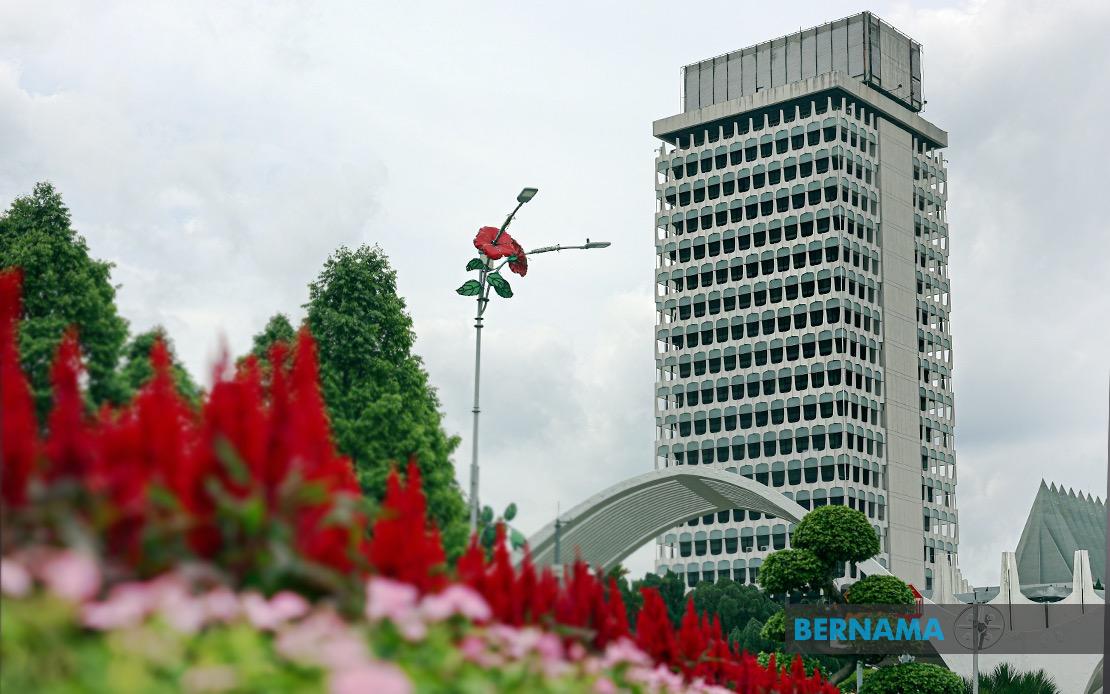
Parliament returns to the legislative chamber on Monday as the Second Meeting of the Fifth Session of the 15th Parliament commences a 16-day schedule extending through July 16, bringing with it renewed efforts to advance constitutional reforms that stalled in the previous sitting. Two constitutional amendment bills previously rejected or deferred will be reintroduced, signalling government determination to pursue structural changes to Malaysia's highest office and judicial administration despite earlier parliamentary setbacks.
The Constitution (Amendment) Bill 2026 represents the government's second attempt to introduce a hard limit on prime ministerial tenure at ten years. During the First Meeting of the Fifth Session, the bill failed to achieve the necessary two-thirds supermajority in the Dewan Rakyat, a significant procedural hurdle that underscores the contentious nature of the proposal. Constitutional amendments in Malaysia require this elevated threshold, a requirement that reflects the framers' intention that fundamental institutional changes should command broad parliamentary consensus rather than simple majority support. The reintroduction of this bill indicates either renewed confidence in securing additional support or a determination to keep the measure alive through repeated parliamentary attempts.
The second constitutional amendment addresses the institutional separation between the Attorney General and Public Prosecutor positions, roles currently held conjointly. This proposal was previously referred to the Parliamentary Special Select Committee for deeper examination rather than proceeding directly to a vote, suggesting some legislators harboured concerns requiring specialist review. The separation of these traditionally combined functions reflects international best practice in many Commonwealth jurisdictions and addresses longstanding questions about potential conflicts of interest in a single individual wielding both prosecutorial discretion and government legal advisory authority. Malaysia's approach to judicial independence and prosecutorial autonomy remains a subject of regional and international attention, making this institutional question particularly significant.
Beyond constitutional matters, the sitting will focus substantially on road transport legislation. The Road Transport Act 1987 (Amendment) Bill, scheduled for tabling on the opening day with debate following, represents a comprehensive intervention in Malaysia's chronic road safety challenges. Transport Minister Anthony Loke characterised the amendments as addressing eleven specific areas through forty-two clauses, with particular emphasis on eliminating illegal street racing, a phenomenon that continues to generate fatal accidents and endanger public safety. The racing culture, particularly involving modified vehicles and organised syndicates colloquially known as "tonto" groups, has prompted increasingly stringent legislative responses as conventional enforcement proves insufficient.
The proposed amendments extend beyond racing prohibitions to encompass strengthened enforcement mechanisms and enhanced compliance frameworks throughout the transport regulatory system. Loke highlighted the dual approach of both tougher sanctions and improved enforcement capacity, reflecting recognition that legislation without effective administration cannot achieve its objectives. For Malaysian commuters and families affected by road accidents, such measures address tangible daily safety concerns that affect mortality and injury rates across the country. The sitting's attention to this legislation reflects parliamentary acknowledgement of transport safety as a substantive policy domain warranting serious legislative effort.
The session occurs against a backdrop of international energy market disruption stemming from Middle Eastern geopolitical tensions. Malaysia's economy depends significantly on stable international energy markets, both as an energy exporter and as a nation whose manufacturing sectors require predictable fuel and electricity costs. Parliamentary discussion of how the West Asia conflict affects energy supply chains and domestic fuel prices will likely intersect with broader cost-of-living debates that dominate public concern. For Malaysian businesses managing supply chains and household budgets stretched by inflation, parliament's engagement with energy security represents more than abstract policy discussion; it connects directly to employment stability and purchasing power.
The Cybercrime Bill 2026 will also feature during the sitting, addressing digital security challenges that have grown exponentially as Malaysia's digital economy expands. Cybersecurity legislation balances legitimate law enforcement needs with privacy protection and freedom of expression, making such bills inherently complex and frequently contentious. The timing of this bill's consideration, alongside transport reform and constitutional amendments, reflects parliament's intention to address multiple policy domains simultaneously despite the sitting's limited duration.
Dewan Rakyat Speaker Tan Sri Johari Abdul issued substantial guidance to parliamentarians regarding conduct standards expected during the sitting. His address emphasised that government and opposition members alike must centre discussions on substantive policy merit rather than political positioning, anchoring debate in facts and evidence while avoiding polemical rhetoric that generates heat without illumination. This reminder proves particularly pertinent given the concurrent Johor State Election, which could tempt some MPs to prioritise electoral campaigning over parliamentary attendance and engagement. Johari specifically cautioned against misusing parliamentary time for state-level political purposes, drawing an institutional boundary between the Dewan Rakyat's federal legislative function and ongoing electoral competition.
The Speaker's emphasis on quality debate reflects institutional concern about parliament's reputation and functionality. Malaysian democracy depends substantially on the Dewan Rakyat serving as a venue where laws undergo serious scrutiny and national issues receive deliberation that ultimately produces better policy outcomes. When parliamentary sessions become dominated by partisan rhetoric disconnected from substantive problem-solving, the institution diminishes as a deliberative body and public confidence in legislative processes erodes. Johari's address constitutes a direct appeal to MPs' professional responsibility and their obligations to constituents who elected them to address concrete concerns including cost-of-living pressures, educational quality, healthcare delivery, employment opportunities, and community welfare.
The coincidence of the federal parliamentary sitting with the Johor State Election creates operational and political complications that Johari addressed directly. MPs representing Johor constituencies or holding state political positions face competing demands for their time and energy, yet Johari insisted that federal parliamentary attendance represents a non-negotiable obligation that supersedes electoral considerations. This institutional insistence reflects recognition that selective attendance by members campaigning elsewhere would compromise the Dewan Rakyat's capacity to function effectively and diminish the legitimacy of any legislation passed during the sitting.
Following the Dewan Rakyat's conclusion on July 16, the Dewan Negara will commence its own ten-day sitting from July 20 through August 4, extending the parliamentary session into late summer. This scheduling ensures that constitutional amendments and other major legislation undergo review and debate across both chambers, with the upper house's smaller membership potentially providing different perspectives on bills already considered in the lower chamber. For legislation failing to achieve the supermajority in the Dewan Rakyat, the senate provides no additional opportunity since constitutional amendments require two-thirds majorities in both chambers, yet the upper house's deliberations on ordinary legislation may produce refinements or amendments enhancing final versions before royal assent.
The session ahead will test parliament's institutional capacity to advance significant legislative reform while maintaining standards for rigorous, evidence-based debate that serves national interest above partisan calculation. The reintroduction of constitutional amendments following previous defeat suggests government determination to persist with transformative institutional change, while transport safety and cybersecurity legislation address pressing contemporary challenges requiring parliamentary attention. For Malaysia's democratic system and the public constituencies these institutions serve, the coming weeks will demonstrate whether parliament functions effectively as a deliberative body capable of producing quality legislation reflecting serious engagement with complex policy challenges.

