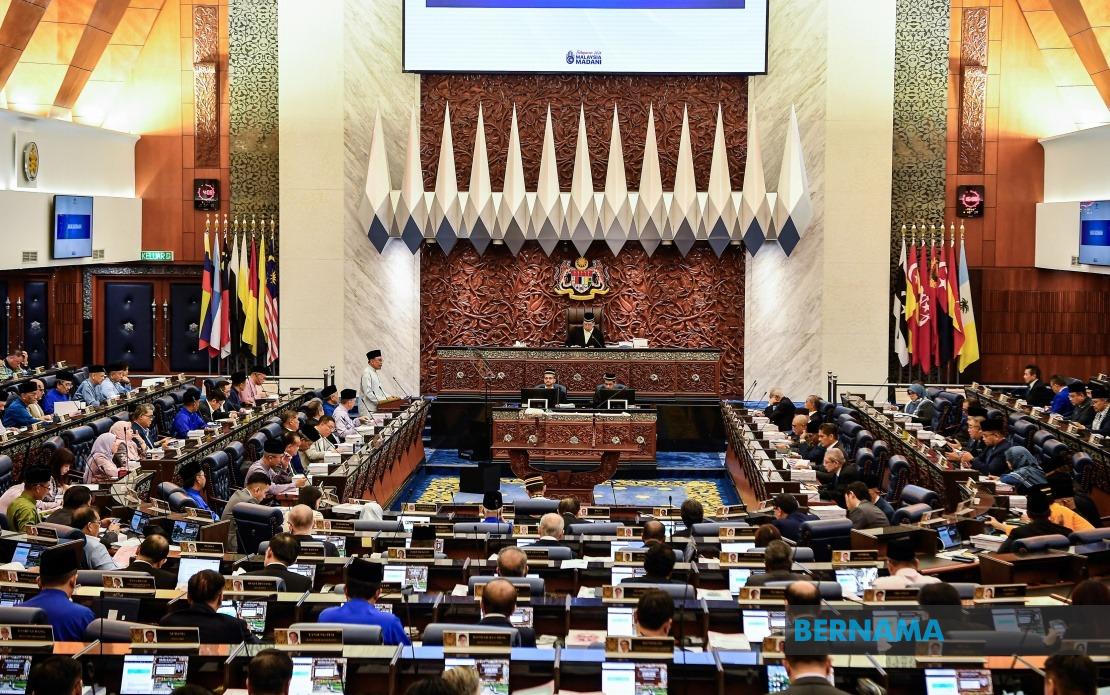
Parliament has formally approved the Cybercrimes Bill 2026 following a parliamentary sitting where lawmakers from both government and opposition benches contributed to the legislative debate. The measure represents a significant step in Malaysia's effort to modernise its digital security laws and address emerging online threats that have grown in sophistication and prevalence across the region. The 61-clause statute focuses on establishing criminal offences and corresponding penalties for activities centred on artificial deepfakes and the distribution of sexually explicit imagery that has been digitally altered using advanced computational methods.
The passage of this legislation comes at a critical juncture when Southeast Asian nations are grappling with the proliferation of synthetic media and non-consensual pornography shared across digital platforms. Malaysia joins a growing number of countries seeking to criminalise such conduct, recognising that existing legal frameworks struggle to encompass the nuances of technology-enabled abuse. The bill encountered substantive parliamentary scrutiny, with 48 members across both sides of the aisle engaging in detailed deliberation before the measure secured approval through a majority voice vote.
Deputy Prime Minister Datuk Seri Dr Ahmad Zahid Hamidi addressed parliamentary concerns during his closing remarks, emphasising that the legislation operates within established constitutional boundaries and does not supersede existing statutes including the Official Secrets Act 1972. This clarification proves essential for observers worried that expansive cybercrime laws might facilitate authoritarian surveillance practices. The government's explicit commitment to maintaining checks and balances signals an attempt to balance security imperatives with citizen protections, a tension that increasingly defines legislation in this policy domain across the Asia-Pacific region.
The bill incorporates layered procedural requirements intended to prevent arbitrary state intrusions into digital systems and personal data repositories. Authorities seeking to access computer systems or extract information must navigate prescribed legal pathways rather than exercising discretionary authority. The framework distinguishes between different categories of state action, each subject to its own evidentiary thresholds and approval mechanisms. This graduated approach reflects international best practices in digital forensics and cybercrime investigation, where transparency and proportionality serve as countervailing forces against potential governmental overreach.
Noticeably, the legislation constrains law enforcement capacity to preserve digital records through data preservation notices. Such notices may be issued only when investigating officers possess reasonable grounds to believe that particular information holds investigative relevance and faces imminent risk of deletion, alteration, or destruction. This requirement prevents the indiscriminate freezing of digital assets and compels authorities to demonstrate targeted necessity rather than blanket precaution. The inclusion of such safeguards suggests parliamentary recognition that unbridled data preservation powers could facilitate mass surveillance and chilling effects on legitimate online expression.
Demanding written notification procedures for data disclosure further constrains state access to digital information held by individuals and entities. The formal requirement to notify data controllers before examining their systems introduces transparency and creates documentary trails that facilitate subsequent judicial review. Such procedural formalism, while potentially slowing investigations, distributes power more equitably between investigating authorities and citizens whose digital assets form the subject of inquiry. For Malaysia's legal and technology communities, these provisions may establish important precedents influencing how future cybersecurity legislation balances competing interests.
The emergence of deepfake technology and synthetic media represents a genuine societal challenge requiring legislative attention. Artificially generated intimate imagery causes documented psychological harm to victims, predominantly women, and can facilitate harassment, extortion, and reputation destruction. Criminalising the creation and distribution of such material acknowledges this harm while establishing deterrents against perpetrators. Malaysia's approach, focusing on non-consensual intimate imagery regardless of whether it is entirely synthetic or merely manipulated, captures both purely artificial constructs and doctored authentic material, providing more comprehensive protection.
The bill arrives amid heightened global concern about deepfakes deployed for political disinformation, financial fraud, and targeted abuse. Southeast Asian democracies face particular vulnerability to malicious synthetic media given the region's large digital populations, varying levels of media literacy, and polarised political environments. By establishing criminal liability for deepfake creation and distribution, Malaysia positions itself alongside regional peers implementing similar protections whilst maintaining legislative restraint. The measure neither criminalises all non-consensual imagery discussion nor prohibits synthetic media for legitimate creative or educational purposes, acknowledging the nuanced boundary between harmful content and permissible expression.
International law enforcement cooperation regarding cybercrimes has expanded substantially, with bilateral and multilateral frameworks enabling cross-border investigation and prosecution. Malaysia's new legislation facilitates such cooperation by establishing domestic offences that align with international standards and treaty obligations. This harmonisation enhances the practical utility of extradition arrangements and mutual legal assistance treaties, enabling regional governments to pursue perpetrators regardless of geographic location. For Malaysian citizens experiencing cross-border digital abuse, clearer legal frameworks in partner nations improve remedial prospects.
Parliamentary approval of this measure reflects broader consensus that digital security legislation has become necessary infrastructure for modern governance. The broad cross-party support evident during parliamentary debate suggests that cybercrime concerns transcend partisan divides. Both government and opposition recognised that deepfakes and non-consensual intimate imagery demand legislative response, even whilst maintaining healthy disagreement on other policy domains. This consensus-building exercise itself constitutes valuable precedent for future technology governance debates where expertise and empirical evidence might override ideological positioning.
The bill's implementation phase will prove critical to evaluating whether legislative intent translates into effective law enforcement practice. Training police and prosecutors in digital forensics, establishing dedicated cybercrime investigation units, and building capacity within judicial hierarchies constitute necessary accompaniments to statutory enactment. Malaysian authorities will need to develop prosecution guidelines, establish evidentiary standards for digital material, and build case law through early court decisions. These implementation challenges often determine whether legislation achieves its remedial objectives or remains dormant statutory text.

