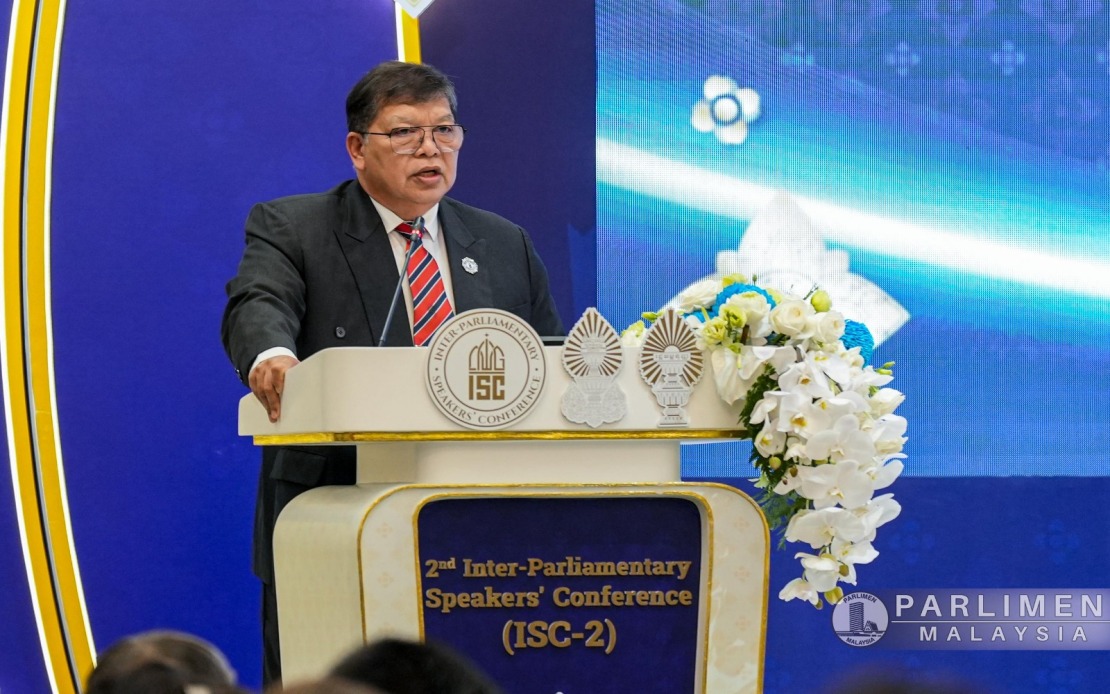
Addressing delegates at the Second Inter-Parliamentary Speakers' Conference in Phnom Penh, Dewan Rakyat Speaker Tan Sri Dr Johari Abdul delivered a stark warning about the accelerating climate emergency, emphasising that world leaders have largely failed to grasp the urgency of the crisis. Speaking on Friday during the three-day gathering that concluded on August 29, Johari articulated a concern that resonates particularly with Southeast Asian nations experiencing increasingly severe weather-related disasters: the climate emergency has transcended environmental borders to become a direct threat to economic stability, public health infrastructure, and the fundamental security of food and energy supplies for millions across the region.
Johari's intervention reflects growing frustration among policymakers that climate change remains conspicuously absent from the priorities of many governments despite mounting evidence of its devastating consequences. He expressed particular disappointment that even within legislatures, many lawmakers lack sufficient understanding of climate science and renewable energy alternatives, questioning why nations continue to fell forests, rely on coal-fired power generation, and neglect proven sustainable technologies like solar, wind, and ocean wave energy. The speaker's comments highlight a critical gap between rhetoric and action, where while political leaders acknowledge climate risks in speeches, substantive policy shifts toward green infrastructure remain sluggish across most regional parliaments.
The timing of Johari's remarks carries particular weight given the humanitarian catastrophe unfolding in Nepal. Just days before the Phnom Penh conference, devastating floods triggered by a catastrophic glacial collapse in the Himalayan mountains killed at least 469 people, with 2,381 remaining missing as of Friday according to The Himalayan Times, including 644 foreign nationals. Several Malaysians remain unaccounted for in the disaster, personalising the crisis for Malaysian audiences and underscoring that climate impacts recognise no borders. The incident vividly demonstrates how climate-driven environmental changes—in this case, the destabilisation of glacial systems—can cascade into sudden, massive loss of life and destruction of livelihoods in vulnerable mountain communities along the Nepal-China border.
Beyond Nepal, the broader Southeast Asian region confronts chronic exposure to climate-related hazards. Countries from mountainous Laos to the island Philippines endure cyclical natural disasters that regularly devastate communities, agricultural systems, and essential infrastructure. The Philippines alone faces approximately twenty typhoons annually, while landlocked nations across the region battle recurring flash floods, landslides, and severe storms that disproportionately afflict rural populations dependent on subsistence agriculture. These recurring crises expose how millions of people across Asia remain acutely vulnerable to environmental shocks, particularly communities already marginalised by poverty and limited access to early-warning systems or disaster preparedness resources.
Johari's proposed solution centres on three interconnected pillars: education, research and development investment, and technological advancement. He argued forcefully that schools must integrate climate science into curricula so future generations understand the interconnected nature of environmental degradation and economic disruption. Simultaneously, governments must substantially increase funding for research institutions developing renewable energy technologies and climate adaptation strategies tailored to regional conditions. The speaker characterised this investment not as altruistic environmental stewardship but as essential economic strategy—nations that lead in clean technology innovation and green infrastructure will secure competitive advantages in twenty-first century energy markets increasingly constrained by carbon pricing and climate regulations.
The speaker pointed to China's long-term strategic investments in green technology as a model demonstrating how systematic national commitment can reshape economic trajectories toward sustainability. Beijing's expansion of electric vehicle manufacturing, development of eco-friendly technologies, and deliberate expansion of urban green spaces represent coordinated state-level action that Johari suggested other regional governments should emulate. However, his framing also hints at competitive anxieties within the region—the implication being that nations failing to invest in green technology risk economic marginalisation as global supply chains and investment capital increasingly flow toward climate-resilient economies.
Johari articulated a crucial but often overlooked dimension of climate politics: the problem of political will and institutional capacity. He acknowledged that identifying climate risks intellectually differs fundamentally from building the political consensus and institutional architecture necessary to implement transformative policies. His observation about the expanding gap between wealthy and disadvantaged nations carries particular relevance for Malaysia and Southeast Asia, where climate impacts fall disproportionately on poor and rural populations lacking resources to adapt independently. This widening inequality, he suggested, demands not merely technical solutions but redistributive global frameworks ensuring that wealthy nations contribute proportionally to supporting climate adaptation in more vulnerable economies.
Cambodian Prime Minister Hun Manet reinforced these concerns days before the parliamentary conference, warning riverine communities along the Mekong River of rising water levels and urging disaster preparedness measures. However, Hun Manet's admission that natural disaster prevention remains impossible without complete protection reflected the resignation that permeates regional climate policy—acceptance that communities must build resilience and response systems rather than prevent disasters entirely. This distinction matters profoundly: whilst prevention would require eliminating the emissions driving climate change, resilience-building represents an interim survival strategy acknowledging that dangerous climate change is already unavoidable. Regional governments simultaneously prepare for escalating climate impacts whilst negotiating international climate agreements seeking to limit further warming.
For Malaysia specifically, Johari's advocacy carries implications across multiple sectors. As a tropical nation with significant forest resources and extensive coastlines vulnerable to sea-level rise, Malaysia faces substantial climate risks requiring coordinated policy responses. The speaker's emphasis on education suggests Malaysian policymakers should accelerate curriculum integration of climate science in secondary and tertiary institutions. His call for R&D investment resonates with Malaysia's aspirations to develop knowledge-intensive industries; climate technology innovation could position Malaysian firms as regional leaders in sustainable solutions for tropical agriculture, renewable energy, and coastal protection systems.
Scientific consensus continues to confirm Johari's warnings, with leading climate researchers documenting accelerating temperature increases, rising sea levels, and shifting precipitation patterns across Asia. These physical changes translate into tangible threats to agricultural productivity, freshwater availability, and coastal infrastructure—consequences directly affecting Malaysia's food security, water resources, and urban development planning. The window for limiting warming to less catastrophic levels narrows annually; climate scientists emphasise that decisions made within this parliamentary decade will largely determine climate conditions experienced by subsequent generations across Southeast Asia.
Johari's intervention at the inter-parliamentary conference represents an attempt to mobilise legislative leadership on climate policy at precisely the moment when technical solutions exist but political implementation lags. His frustration with colleagues' insufficient engagement reflects broader parliamentary challenges in addressing long-term systemic risks requiring immediate action despite political cycles favouring shorter-term concerns. The speaker essentially challenged fellow legislators to exercise what he termed necessary political will—a concept implying that climate action demands prioritisation above competing economic interests and short-term political calculations, a threshold most regional parliaments have yet to meaningfully cross.

