Members of Parliament have voiced strong backing for a thorough and transparent investigation into findings from the Royal Commission of Inquiry on Tabung Haji, underlining the necessity to safeguard the interests of depositors and maintain public faith in Malaysia's pilgrimage fund. The call came during a special parliamentary sitting on August 11 where lawmakers examined the RCI report that was released to the public on July 29, bringing long-simmering governance concerns into the open after years of internal scrutiny.
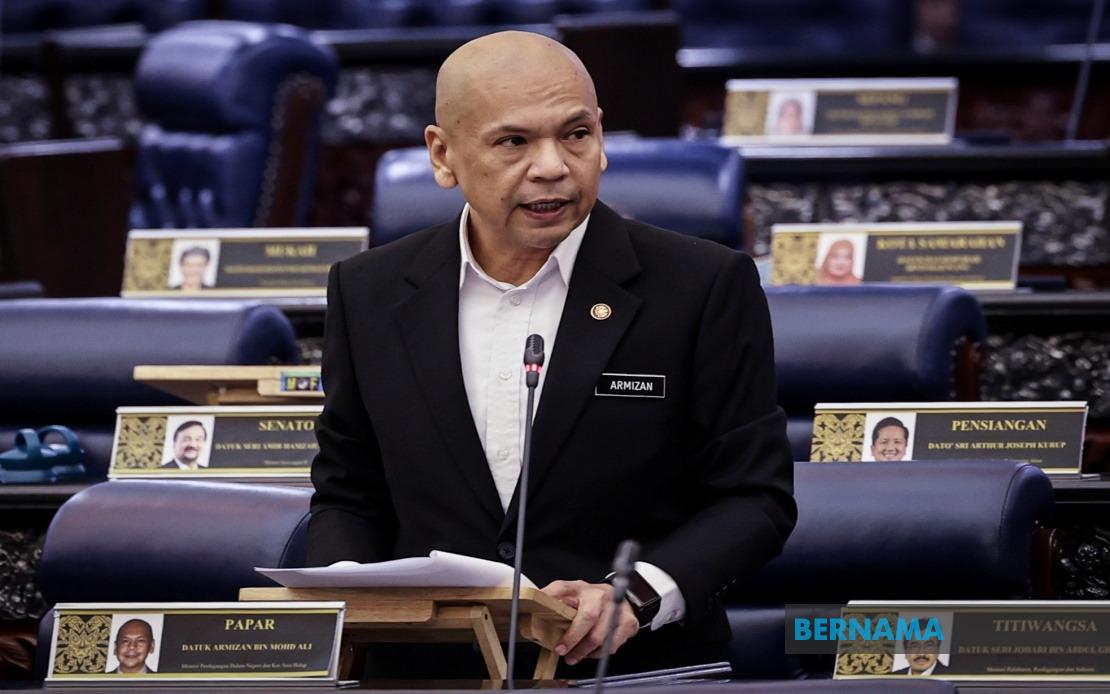
Minister of Domestic Trade and Cost of Living Datuk Armizan Mohd Ali, who also represents Papar, emphasized that any follow-up enforcement action must operate with complete independence and professional rigour. His comments highlighted the stakes involved: the broader public has become a casualty of conflicting narratives surrounding the institution, with multiple actors trading accusations of defamation and slander rather than focusing on substantive accountability. This fog of conflicting claims has left ordinary Malaysians uncertain about what actually transpired and who bears responsibility for the problems that emerged.
Armizan's remarks underscored a critical governance gap that has plagued public discourse on Tabung Haji. When competing versions of events circulate without authoritative clarification, confidence erodes and institutional legitimacy suffers. By anchoring any investigation to clear legal and factual assessment rather than political positioning, authorities can theoretically cut through the noise and establish a credible record. This approach would serve not only the depositors whose savings have been in question, but also the broader Malaysian public whose trust in pilgrimage institutions remains vital for the country's standing as a custodian of Islamic finance.
Beyond immediate investigative action, parliamentarians stressed the importance of systematically implementing the RCI's 25 recommendations for institutional reform. As of late July, Tabung Haji had already begun putting 75 percent of these proposals into practice, signalling a management team eager to demonstrate responsiveness. However, legislators want assurance that each recommendation receives rigorous examination rather than being processed as administrative busywork. This measured implementation approach could meaningfully reshape how the institution operates and recovers from the period between 2014 and 2020 when documented weaknesses in management and investment decisions took root.
The institutional restructuring debate also touched on longstanding questions about ministerial portfolios and board composition. Minister of Women, Family and Community Development Datuk Seri Nancy Shukri advocated for maintaining hajj affairs under the Minister in the Prime Minister's Department (Religious Affairs), while keeping finance and investment matters under the Finance Ministry's purview. Her position reflects a specialization logic: different government agencies bring distinct expertise and can coordinate more efficiently when responsibilities align with their core functions. For Malaysian depositors relying on Tabung Haji's fiscal health, this division of labour theoretically ensures that investment decisions receive proper scrutiny from authorities equipped with financial expertise.
However, the question of political appointments to Tabung Haji's board has proven more contentious, touching on broader governance principles that resonate across Southeast Asian democracies grappling with similar tensions. Nancy's remarks proposed a pragmatic middle ground: political background need not automatically disqualify appointees provided they demonstrate genuine qualifications, relevant experience, and proven integrity. This merit-based framing attempts to sidestep the ideological debate about political versus technocratic governance by focusing on individual suitability. Yet the nuance risks being lost if appointment criteria remain vague or if selection processes lack transparent mechanisms.
To operationalize this principle, legislators are pressing for explicit, codified standards governing board member selection. Such criteria would specify required areas of expertise, establish clear evaluation methodologies, and anchor decisions demonstrably to merit and fitness for role-specific responsibilities. For Malaysian depositors and the broader investing public, transparent selection criteria create accountability checkpoints and signal that governance decisions reflect rational institutional design rather than patronage. This matters particularly for an entity managing funds earmarked for a religious obligation that carries profound significance for Muslim Malaysians.
The RCI report itself, which examined operations during 2014 through 2020, identified systematic weaknesses spanning management practices and investment decision-making. The decision to make findings public represented a departure from the secrecy that traditionally surrounded such inquiries, reflecting growing expectations for institutional transparency. By opening the report to parliamentary debate and public scrutiny, the government created space for lawmakers to interrogate findings and propose remedies in real time. This shift matters for Malaysian governance culture, establishing a precedent that sensitive inquiries into large public institutions need not remain locked away from democratic oversight.
The special parliamentary sitting itself functioned as a pressure valve for accumulated concerns about Tabung Haji's stewardship. MPs used the forum to translate abstract RCI findings into concrete calls for enforcement action, laying down markers about which recommendations deserve priority and how implementation should proceed. This legislative engagement creates political incentives for follow-through: government ministers now face recorded statements about depositor protection and institutional reform, establishing benchmarks against which their performance will be measured.
Armizan's comments about confusion pervading public discussion point to a secondary governance challenge beyond the RCI's original scope. When multiple actors make competing claims without access to authoritative fact-finding, democratic discourse itself suffers. Restoring clarity requires investigation that commands credibility across Malaysia's politically fragmented landscape. If enforcement agencies can establish a clear evidentiary record and explain their findings in accessible language, they help reconstruct the shared understanding necessary for democratic deliberation. This becomes especially important for an institution serving a constituency—Muslim Malaysians saving for hajj—that spans different regions, economic backgrounds, and political allegiances.
Moving forward, the implementation phase will test whether parliamentary calls for transparency translate into institutional practice. Tabung Haji's management has signalled receptivity to reform, but watchdog capacity matters too. Lawmakers, financial regulators, and civil society groups will need mechanisms for monitoring how recommendations get absorbed into day-to-day operations. For Malaysian depositors awaiting confirmation that their pilgrim savings remain secure and well-managed, tangible reforms in governance practices matter far more than rhetorical commitment to change. The RCI findings have opened a window for structural improvement; whether that window remains open long enough for meaningful transformation will determine whether public confidence can be genuinely restored.

