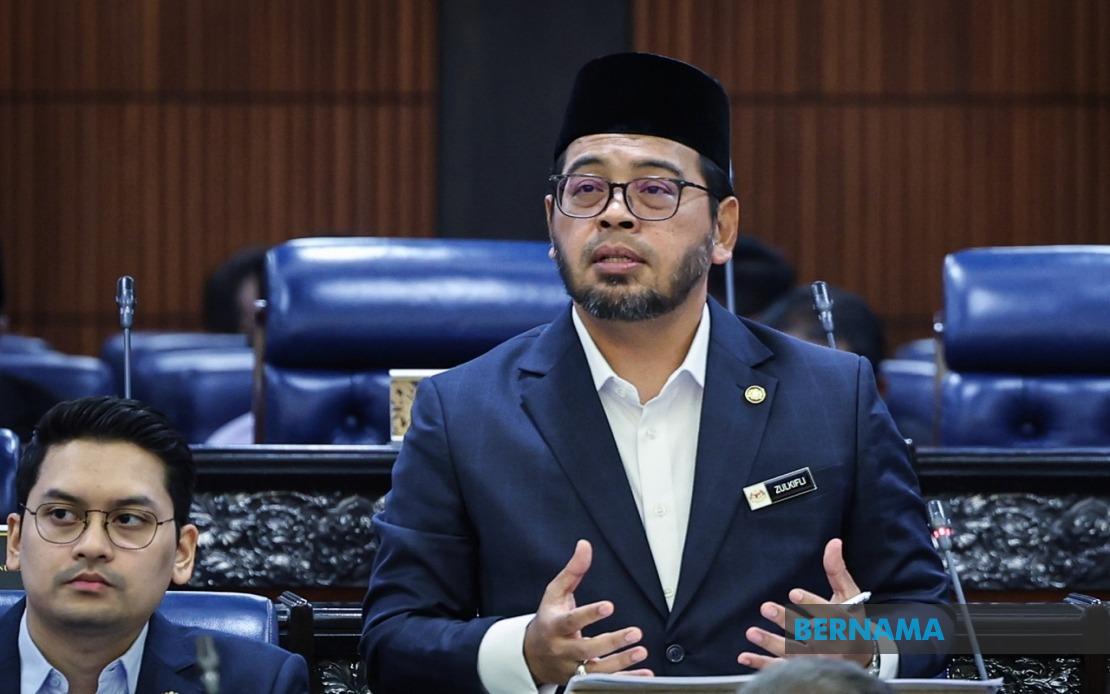
In a marathon parliamentary session spanning more than ten hours, Malaysian lawmakers on August 11 intensified pressure on the government to implement sweeping reforms at Lembaga Tabung Haji (TH) and ensure those responsible for massive institutional failures face justice. The special Dewan Rakyat sitting focused heavily on the findings of the Royal Commission of Inquiry, which has exposed significant governance weaknesses at the institution responsible for managing haj affairs for over ten million Malaysian depositors.
The losses detailed during the debate paint a troubling picture of TH's investment decisions. Minister of Finance II Datuk Seri Amir Hamzah Azizan revealed that nearly RM13 billion in total losses stem from 14 problematic investments, with seven investments recording complete losses. Of this staggering sum, RM10.2 billion was ultimately absorbed by Malaysian taxpayers through a government rescue operation involving Urusharta Jamaah Sdn Bhd (UJSB) in 2018. The remaining RM2.6 billion represents impairment losses that TH itself has borne between 2018 and 2025 for investments that remain under its management, underscoring the ongoing financial vulnerability of the institution.
One particularly egregious case highlighted during proceedings involved the Al-Rawda Real Estates Development & Project Management Co Ltd arrangement, where TH transferred 1.4 billion Saudi riyals—approximately RM1.5 billion—to an intermediary to secure leases on four hotels in Madinah and Makkah for pilgrim accommodation. When the intermediary failed to honour its rental obligations to TH, the institution was forced to record a complete impairment loss of RM1 billion in 2024, leaving pilgrims without the promised facilities and representing a catastrophic failure of due diligence and contractual oversight.
Parliamentary pressure concentrated on the urgent need to amend the Tabung Haji Act 1995 (Act 535) to prevent recurrence of such failures. Multiple MPs stressed the importance of strengthening investment oversight mechanisms, tightening financial management protocols, and insulating TH's leadership structure from political interference. The debate reflected growing concern that institutional vulnerabilities stemmed not merely from individual misconduct but from systemic governance gaps that require legislative correction rather than administrative patching. The consensus emerged that strong depositor protections must be embedded in law rather than dependent on the competence of individual administrators.
Minister in the Prime Minister's Department (Religious Affairs) Dr Zulkifli Hasan attempted to frame the government's response as comprehensive and forward-looking. He emphasised that recovery measures since 2018 have placed TH on stronger financial footing through governance restructuring and investment quality improvements. The government has also maintained the haj pilgrimage cost at RM33,300 across three consecutive seasons from 2024 to 2026, providing some stability for Malaysian Muslims planning to perform this religious obligation. However, Dr Zulkifli's assertion that systemic reforms have been substantially implemented appeared to satisfy few lawmakers, who demanded concrete evidence of progress beyond ministerial reassurances.
A critical theme throughout the sitting was the necessity for accountability mechanisms that move beyond institutional reforms. Multiple MPs called for thorough and transparent investigations of individuals identified in the RCI report as having committed misconduct or caused direct losses to TH. The government indicated that such investigations have already commenced, with several individuals detained on suspicion of bribery, abuse of power, and governance violations. Nevertheless, MPs expressed skepticism about the pace and transparency of these investigations, demanding that criminal proceedings be pursued vigorously and that asset recovery efforts achieve tangible results.
The government signalled openness to establishing a multi-agency task force to monitor investments at risk of future losses, suggesting recognition that TH's existing internal controls have proven inadequate. This proposal indicates acknowledgment that preventing future financial disasters requires mechanisms beyond TH's own institutional framework, potentially involving oversight from financial regulators, anti-corruption bodies, and law enforcement agencies. The complexity of investment structures that allowed the Al-Rawda debacle and similar failures suggests that sophisticated multi-agency coordination will be necessary to identify red flags before capital is deployed.
Dr Zulkifli's closing remarks emphasised a critical governance principle: that institutional strength must derive from systems rather than individuals. He stated that decision-making should invariably follow established law, policies, procedures, and checks and balances centred on depositor interests. This philosophy, though sound in theory, underscores the fundamental problem that TH's current systems failed during the period under RCI investigation, suggesting that simply restating governance principles without structural overhaul will prove insufficient. The challenge ahead involves translating these stated principles into robust enforcement mechanisms and accountability frameworks.
The timing of the RCI report's public release on July 29, following a deliberate delay by the government, became a point of contention. Officials justified the postponement as necessary to allow TH time to implement the Commission's 25 recommendations, of which 75 per cent had reportedly been completed by late July. However, this sequencing raised questions about whether delaying public disclosure served institutional rehabilitation or merely postponed political accountability. The parliamentary debate itself became a mechanism for forcing fuller public awareness of the scale of institutional failure, complementing the formal RCI documentation.
The absence of opposition MPs from significant portions of the proceedings drew sharp criticism from government benches, with accusations that parliamentary boycotts represented a dereliction of oversight responsibility to over ten million TH depositors. Whether this criticism reflected genuine concern for legislative scrutiny or partisan positioning remained debatable, but it underscored the fundamental principle that TH's depositors—not political parties—constitute the primary stakeholders whose interests demand comprehensive parliamentary accountability. The need for cross-partisan commitment to institutional reform emerged as implicitly more important than partisan positioning on the issue.
For Malaysian Muslims planning haj pilgrimages and the broader investing public, the parliamentary debate revealed both encouraging and concerning dimensions. The maintenance of stable pilgrimage costs demonstrates government commitment to preventing TH depositors from bearing additional financial burdens resulting from past mismanagement. Simultaneously, the exposure of RM13 billion in losses and systematic governance failures during the 2014-2020 period raises legitimate questions about whether current reform measures adequately address underlying institutional vulnerabilities. Public confidence in TH depends less on ministerial assurances than on demonstrable progress in criminal accountability, regulatory tightening, and transparent monitoring of ongoing investments.
The path forward for TH requires not merely legislative amendment and administrative reorganisation but fundamental cultural change within the institution. Investment decisions must operate under heightened scrutiny, intermediary arrangements must be subject to competitive bidding and rigorous due diligence, and leadership must operate with genuine autonomy from political influence. The RCI report, now circulating in public domain, provides detailed blueprint for these changes. Whether parliament's August 11 sitting catalyses genuine implementation or merely represents another cycle of institutional hand-wringing remains the crucial question for Malaysian depositors and the broader Islamic finance sector.

