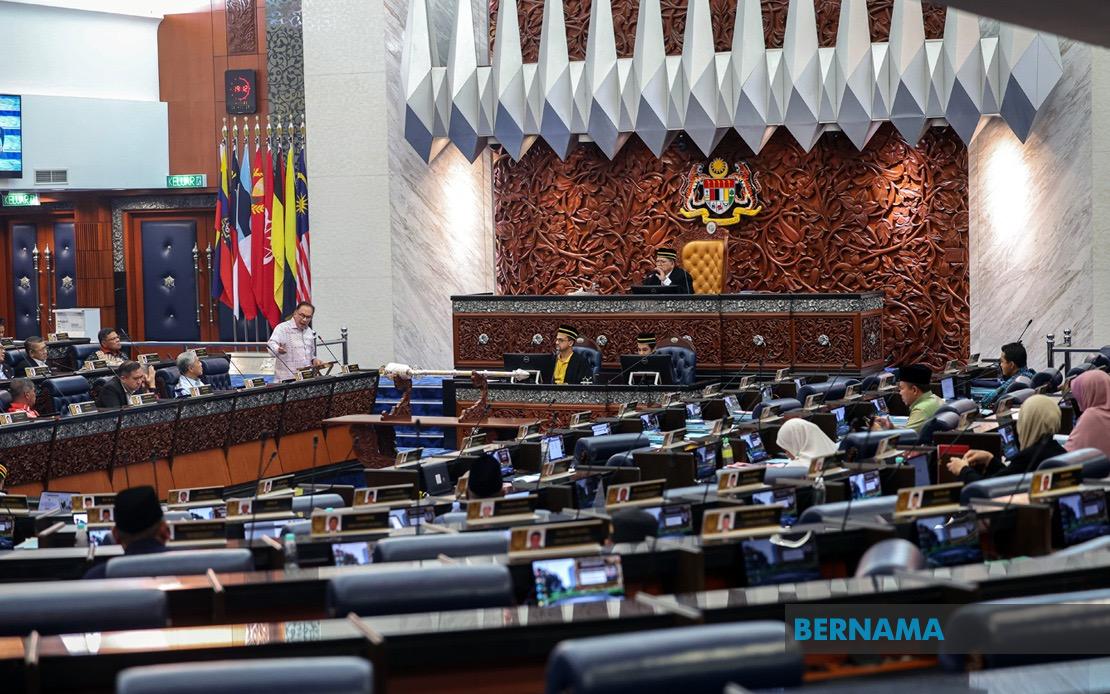
The Dewan Rakyat has formally endorsed amendments to the Employment Insurance System (Amendment) Bill 2025, establishing a tiered fine structure that targets employers who neglect their obligation to report vacant positions to PERKESO. Lawmakers approved the changes through majority voice vote following substantive debate among 13 cross-party parliamentarians, marking a significant step in strengthening Malaysia's employment regulatory framework. The graduated penalty approach represents a compromise between enforcement rigour and the operational realities faced by Malaysian businesses seeking to comply with labour market regulations.
The amended clause introduces a progressive fine schedule designed to encourage voluntary compliance while deterring repeated violations. First-time offenders face a maximum penalty of RM1,000, while repeat violations incur RM3,000 for second offences and up to RM5,000 for any subsequent breach. This tiered structure emerged following the Dewan Negara's approval of the amendment on March 12, which specifically modified Clause 11 and Subsection 45F(4) of the legislation. The decision to implement graduated penalties rather than uniform fines acknowledges that inadvertent non-compliance differs fundamentally from wilful disregard, offering employers opportunity to correct course without incurring maximum financial consequences.
Deputy Human Resources Minister Datuk Khairul Firdaus Akbar Khan framed the amendments as centring on education and organisational improvement within Malaysia's employment sector. He emphasised that the government intends to deploy compliance assistance mechanisms before imposing any financial sanctions, signalling that regulatory enforcement will follow a graduated approach. Employers receiving formal notification of non-compliance will have opportunity to rectify their reporting failures before facing compound proceedings. This methodology acknowledges that many employers, particularly smaller enterprises, may lack familiarity with notification requirements rather than deliberately evading them.
The maximum penalty underwent significant downward revision during the legislative process, originally proposed at RM10,000 before stakeholder consultation trimmed it to RM5,000. PERKESO conducted extensive engagement sessions across various business sectors throughout Malaysia to gather employer perspectives on compliance feasibility. These consultations revealed widespread concern about overly punitive measures that might inadvertently penalise small and medium enterprises attempting to navigate regulatory compliance. The government's willingness to recalibrate penalty levels based on industry feedback demonstrates responsive policymaking that balances enforcement objectives against practical implementation constraints.
Rural businesses emerged as a particular concern during parliamentary debate, with Nurul Amin Hamid from Padang Terap highlighting awareness gaps in less urbanised areas where employers may lack regular exposure to legislative updates or reporting mechanisms. This geographical disparity in regulatory consciousness underscores the need for PERKESO to prioritise outreach and training programmes extending beyond major commercial centres. The quality and accessibility of government communication regarding compliance obligations appears crucial for ensuring equitable application of penalties across diverse business environments throughout Malaysia.
Parliamentarians stressed the necessity for uncomplicated reporting systems that minimise administrative burden on employers while maintaining data integrity for labour market analysis. The information collected through mandatory vacancy reporting underpins PERKESO's job-matching capabilities, which theoretically improve employment outcomes by connecting job seekers with available positions more efficiently. The efficiency of this reporting system directly influences whether potential workers, particularly those from disadvantaged backgrounds, gain timely knowledge of employment opportunities. However, multiple MPs cautioned that needlessly complex reporting platforms could inadvertently discourage compliance rather than facilitate it, potentially defeating the policy's intended purpose.
Transparency in job advertising mechanisms received particular emphasis from Syerleena Abdul Rashid representing Bukit Bendera, who advocated that government portals facilitate equitable access to employment information across demographic groups. The reporting obligation fundamentally aims to broaden awareness of available positions beyond networks traditionally accessible to well-connected job seekers. When employers systematically notify PERKESO of vacancies, the organisation can proactively match candidates to suitable roles, theoretically reducing unemployment duration and improving workforce allocation efficiency. This transparency objective aligns with broader equity concerns regarding fair opportunity distribution in Malaysia's labour market.
The Employment Insurance System modification addresses structural challenges within Malaysia's labour intermediation system where significant information asymmetries persist between employers and job seekers. Many skilled workers remain unaware of opportunities matching their qualifications, while employers struggle identifying suitable candidates beyond their existing networks. By mandating vacancy reporting and establishing progressive penalties for non-compliance, policymakers attempt to correct these market failures through regulatory intervention. The success of this approach depends substantially on PERKESO's capacity to develop user-friendly reporting platforms and maintain responsive communication with employer communities.
Implementation challenges warrant serious consideration given Malaysia's diverse business landscape ranging from sophisticated multinational corporations to informal micro-enterprises. Smaller employers lacking dedicated human resources departments may struggle integrating PERKESO reporting into existing operational procedures despite genuine compliance intent. The government's commitment to issuing compliance notices before imposing penalties provides reasonable accommodation for inadvertent oversights, though effectiveness depends on consistent, transparent communication from enforcement authorities. Building trust between regulators and employer communities through respectful engagement appears essential for ensuring sustained compliance rather than grudging adherence driven primarily by penalty fears.
The amendment's approval reflects parliamentary consensus that organised labour markets require employers to contribute systematically to employment data infrastructure supporting broader economic objectives. When vacancy information remains concentrated in employer channels inaccessible to broader job-seeking populations, labour market inefficiencies persist, unemployment persists longer than necessary, and human capital allocation suffers. By establishing legal requirements backed by graduated penalties, Malaysia's legislators signal commitment to transparency principles within employment relationships. The coming months will reveal whether PERKESO and employer communities successfully establish efficient reporting relationships that benefit workers without imposing unreasonable compliance costs on businesses.

