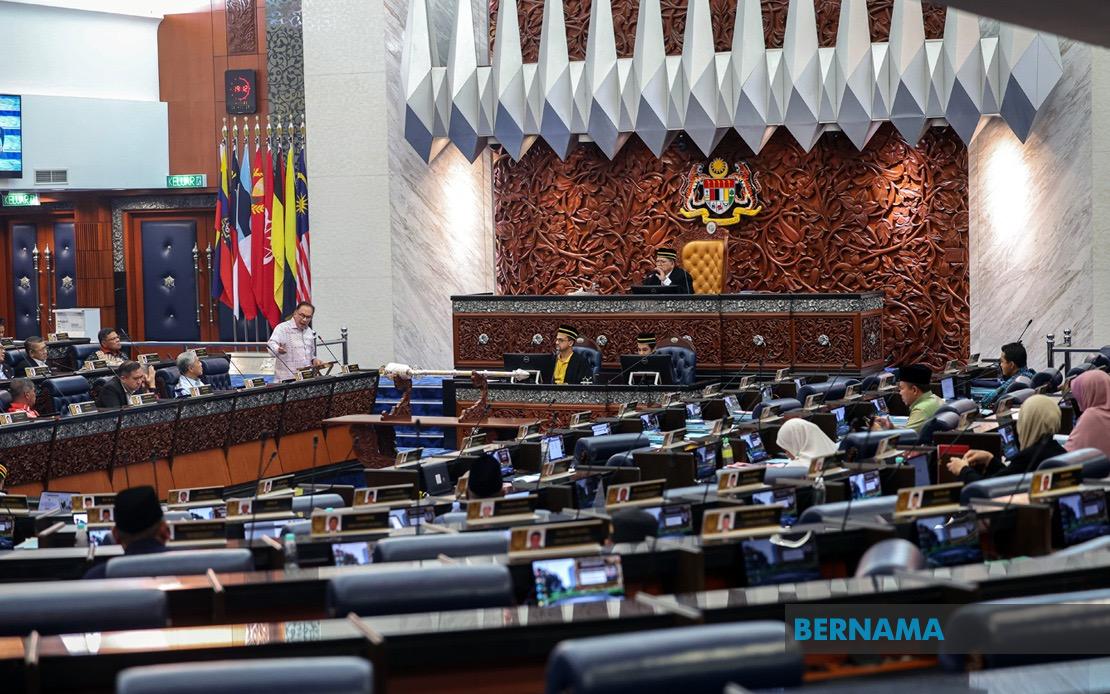
Parliament has given its backing to a significant financial manoeuvre that will channel RM14.5 billion in leftover proceeds from Malaysian Government Investment Issues towards the nation's Development Fund. The Dewan Rakyat endorsed the measure through a voice vote on July 15, following debate contributions from Datuk Seri Ismail Abd Muttalib of PN–Maran and Datuk Zulkafperi Hanapi, marking another step in the government's comprehensive debt management strategy for 2026.
Deputy Finance Minister Liew Chin Tong outlined the mechanics of the arrangement, explaining that the Development Fund operates as a separate financial vessel drawing resources from multiple sources including transfers from the Consolidated Revenue Account, the Consolidated Loan Account, loan repayments, and various receipts earmarked for development purposes. This multi-source funding model provides flexibility in how Malaysia finances its long-term infrastructure and capital expenditure requirements, allowing the government to maintain clear separation between day-to-day operating costs and strategic development investments.
The broader context involves a RM95 billion MGII issuance programme scheduled throughout 2026, representing a substantial mobilisation of capital markets to meet several competing fiscal needs. Of this total, RM55 billion has been earmarked specifically to refinance maturing MGII instruments—a refinancing necessity that reflects Malaysia's ongoing management of its debt maturity profile. An additional RM2 billion portion supports the partial redemption of Malaysian Islamic Treasury Bills, short-term shariah-compliant securities that form part of the country's diversified Islamic financing toolkit.
The remaining RM38 billion from the total MGII issuance serves a more directly visible purpose: partially financing the 2026 fiscal deficit. This allocation underscores the government's reliance on capital market borrowing to bridge the gap between projected revenues and planned expenditures, a reality facing most developing economies navigating inflation, currency pressures, and demographic demands on public spending.
Within the January to May 2026 period, actual MGII issuance reached RM40 billion gross, demonstrating steady execution of the government's borrowing programme. After deducting RM25.5 billion needed to refinance maturing MGII securities from that amount, the net proceeds available for transfer to the Development Trust Account totalled the RM14.5 billion now approved by parliament. This calculation illustrates how gross issuance figures differ substantially from net funding available for new development purposes—a distinction critical for understanding Malaysia's actual fiscal capacity.
Under Malaysia's existing legal framework, a strict distinction governs which expenditures can be financed through borrowing. Development expenditure, which encompasses infrastructure, capital projects, and long-term asset creation, may be financed through government borrowing. Conversely, operating expenditure covering salaries, administrative costs, and current service delivery must be financed exclusively through government revenue sources and tax collections. This legal architecture reflects orthodox fiscal principles designed to prevent excessive deficits and unsustainable debt accumulation, though it also constrains fiscal flexibility in responding to crises.
Deputy Minister Liew indicated that additional MGII issuances covering the June through December 2026 period remain pending, with parliament expected to consider transferring those proceeds during a subsequent sitting. This phased approach to approving transfers reflects Malaysia's parliamentary practice of seeking explicit approval for major financial manoeuvres rather than granting blanket authorisation, ensuring ongoing legislative oversight of government borrowing and fund allocation decisions.
Concern about the potential "crowding out" effect emerged during parliamentary questioning, with Datuk Zulkafperi raising the prospect that heavy government securities issuance could displace private sector borrowing in domestic financial markets. This phenomenon would occur if institutions like the Employees Provident Fund and Retirement Fund Incorporated channelled investment capital exclusively into government debt, leaving insufficient credit availability for private enterprises. Such dynamics have constrained credit availability in various developing economies, potentially hampering private investment and economic growth.
Liew countered this concern by noting that Malaysia has been progressively reducing new borrowing volumes year-on-year over recent years, suggesting a measured approach to debt accumulation. He further argued that MGII and government securities issuance actually provides essential investment vehicles for major institutional investors, enabling the EPF, KWAP, and other financial institutions to continue deploying capital within Malaysia while generating competitive returns. Without such domestically-denominated investment opportunities, institutional investors might redirect capital abroad, potentially weakening the ringgit and complicating external financing requirements.
This dynamic reveals a fundamental tension in emerging market finance: governments require capital market access to fund development, yet excessive borrowing risks crowding out private investment and destabilising currency values. Malaysia's approach attempts to navigate this tension through measured issuance, diversified financing sources, and explicit parliamentary oversight. For Malaysian and regional observers, the parliamentary approval signals confidence in the government's continued ability to access capital markets while maintaining debt sustainability criteria.
The transfer of MGII proceeds to the Development Fund carries implications extending beyond mere accounting entries. It represents a judgment that infrastructure investment and capital project financing should proceed despite challenging global economic conditions, potentially signalling government confidence in medium-term growth prospects. For institutional investors holding these securities, the arrangement provides certainty regarding fund deployment and development project timelines. For the broader economy, it suggests continued emphasis on physical infrastructure as a driver of productive capacity and regional competitiveness.

