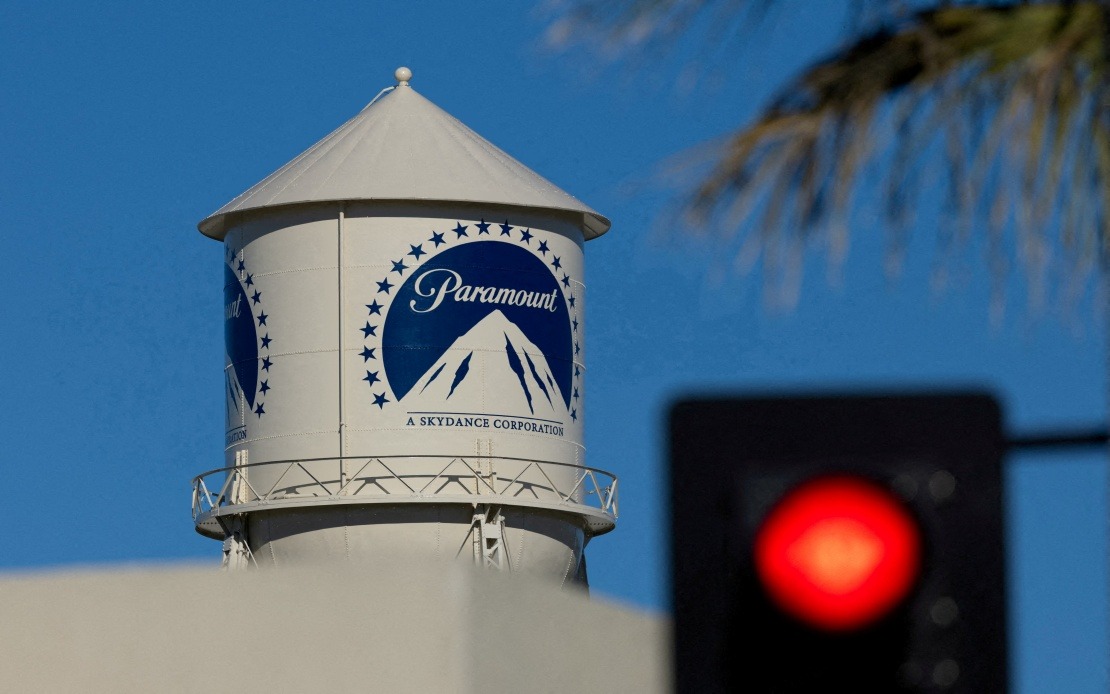
Paramount has put its ambitious acquisition of Warner Bros Discovery on hold after a coalition of 12 United States states mounted a legal challenge to the proposed merger on competition grounds. The entertainment conglomerate, controlled by the Ellison family, will now only pursue the deal following a final court ruling or by June 1, 2027 at the latest, according to court filings made public on Friday. This development represents a significant setback for one of the entertainment industry's largest proposed transactions in recent years, valued at approximately US$111 billion.
A federal judge previously imposed a temporary suspension of the acquisition through mid-August to evaluate whether the states should receive a preliminary injunction to block the merger entirely. The judicial pause itself signals substantive concerns about the transaction's impact on market competition, with the states' legal arguments appearing to have resonated sufficiently with the bench to warrant extended consideration. Among the states leading the challenge is California, America's most populous state and a centre of the entertainment industry itself, lending particular weight to the antitrust arguments being advanced.
The competing states have centred their legal challenge on the assertion that combining Paramount and Warner Bros Discovery would substantially harm competition in the film distribution market, ultimately squeezing cinemas and reducing their negotiating power with content providers. The states presented evidence demonstrating that the merged entity would control a significant portion of the theatrical film market, creating conditions for anti-competitive behaviour. The judge's decision to suspend the transaction indicates she found this preliminary showing of market concentration convincing enough to justify intervention.
Interestingly, this legal obstacle comes despite regulatory approval from the US Justice Department, which concluded that the merger would not harm competition or consumer interests across television, streaming, and film production sectors. The federal government's position suggests that competition concerns, if they exist, may be narrower than the states believe. However, the European Commission took a more cautious approach, granting approval only with conditions attached, reflecting European regulators' more stringent approach to large media consolidation.
Paramount's path to this acquisition has been marked by competitive bidding and shifting circumstances. Netflix originally agreed to acquire Warner Bros' streaming and studio operations last year, but Paramount intervened with a substantially higher offer that encompassed the entire Warner Bros Discovery group, including major television assets such as CNN. This escalation transformed the transaction from a streaming-focused acquisition into a comprehensive media consolidation play, which may have triggered greater antitrust scrutiny from state authorities concerned about media ownership concentration.
The Ellison family's backing of Paramount adds another dimension to this story, given Larry Ellison's prominence as a technology billionaire and known supporter of President Donald Trump. While the Justice Department under the Trump administration approved the deal without conditions, the decision by state authorities to mount a challenge demonstrates that regulatory oversight remains distributed across multiple jurisdictions with potentially differing policy priorities. State-level antitrust enforcement has emerged as an increasingly important counterweight to federal decisions.
For Southeast Asian and Malaysian observers, this transaction and its legal complications offer insights into how US antitrust authorities now scrutinise entertainment sector consolidation. Media ownership concentration represents a concern that extends beyond American borders, as major entertainment companies distribute content globally. The outcome of this case may influence how international media companies approach future mergers and acquisitions, potentially affecting content availability and licensing arrangements across the region.
The indefinite pause also reflects broader questions about media market structure in the digital age. As streaming services proliferate and traditional television networks seek scale through consolidation, regulators are grappling with how to define relevant markets and assess competitive harm. The dispute between federal and state authorities suggests uncertainty about which framework—the content production perspective favoured by the Justice Department, or the theatrical distribution perspective favoured by the states—should prevail in antitrust analysis.
The timing of the preliminary injunction hearing in mid-August will prove crucial. Should the judge grant the requested injunction, it would effectively block the merger from proceeding unless the states' legal challenge ultimately fails on its merits. Conversely, if the injunction request is denied, the transaction could move forward despite ongoing litigation. Either outcome carries significant implications for Paramount's strategic plans and Warner Bros' future ownership structure. The possibility of the deal remaining in limbo until mid-2027 would create substantial uncertainty for both companies' operations and employee retention.
This legal battle underscores the complex regulatory environment facing major media transactions in the United States. While technological disruption has transformed how audiences consume entertainment, regulatory frameworks for assessing market power remain contested. The involvement of multiple state attorneys general demonstrates that antitrust enforcement, once primarily a federal function, now involves significant state-level participation. For Malaysian readers following global entertainment industry trends, this case illustrates how deals announced as completed can face unexpected regulatory hurdles based on evolving interpretations of competitive harm in rapidly changing markets.

