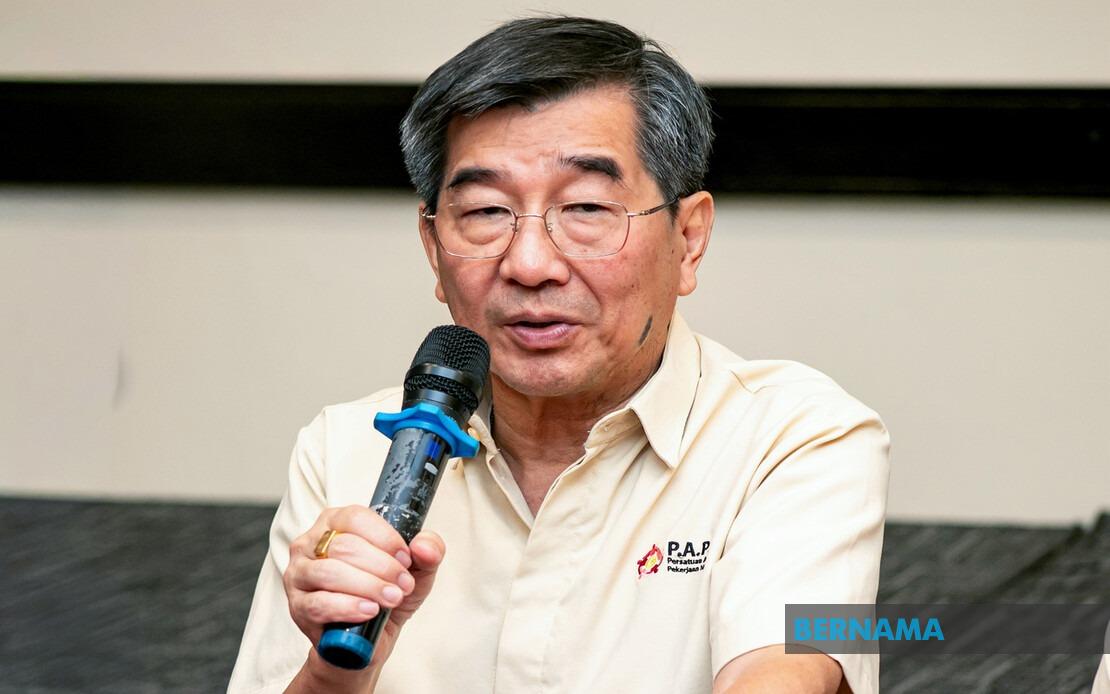
The Malaysian Association of Employment Agencies (PAPA) has introduced a new insurance framework designed to balance the interests of employers and domestic workers whilst rectifying longstanding vulnerabilities in Malaysia's domestic employment sector. Launched in collaboration with GMAT Sdn Bhd and Allianz Malaysia, the scheme addresses a structural weakness that has persisted throughout the industry, leaving employers exposed to significant financial hardship once initial guarantee periods expire. According to PAPA president Datuk Foo Yong Hooi, the programme fills critical voids in the existing recruitment and employment landscape by introducing protections for scenarios previously left uninsured, reflecting a pragmatic response to real-world employment challenges.
The domestic worker employment model in Malaysia has long operated within a narrow window of guaranteed protection. Employers typically receive contractual guarantees lasting between three and six months, during which employment agencies shoulder liability for worker performance and conduct. Once this period concludes, the financial burden of managing domestic workers falls entirely on employers, exposing them to losses from abscondment, unexpected illness, and related complications. This structural gap has created an environment where employers face genuine risk despite having paid substantial recruitment and placement fees. The new scheme acknowledges this vulnerability by extending protection beyond the conventional guarantee window, providing employers with contingency coverage during the critical first year when worker attachment and household integration challenges are most acute.
Abscondment has emerged as one of the most consequential problems affecting domestic worker employment in Malaysia. When workers abandon positions without notice, employers face not only the loss of household support but immediate out-of-pocket expenses to recruit replacements. The new scheme addresses this directly by offering RM5,000 in compensation to employers when a domestic worker absconds during the insured period, a figure calibrated to approximate the typical costs associated with recruitment and placement. Datuk Foo emphasised that the first year represents the highest-risk period for employment instability, justifying the concentration of abscondment coverage during this initial phase. This design reflects experience-based understanding of employment patterns and risk distribution within the sector.
A significant innovation within the scheme involves extending medical coverage to domestic workers themselves, a gap that has persisted due to their historical classification as informal workers ineligible for standard social protection. The Social Security Organisation (PERKESO) provides coverage only for work-related accidents, leaving domestic workers uninsured for general illnesses and conditions unrelated to employment duties. This creates a problematic situation where employers may discover pre-existing medical conditions only after employment commences, resulting in unexpected medical expenses and complicated employment relationships. The new policy bridges this gap by providing hospitalisation and surgical coverage extending to general illnesses, weekly compensation of up to 12 weeks for workers certified medically unfit for duty, and limited assistance for replacement of essential documents such as passports. These provisions represent a meaningful expansion of social protection for a vulnerable workforce largely excluded from formal employment security frameworks.
The insurance product structure reflects lessons learned from a previous abscondment policy introduced approximately two decades ago, which was ultimately discontinued following problems with fraudulent claims. By restructuring the coverage framework and reducing the abscondment benefit after the initial high-risk year, the scheme aims to prevent the claim inflation and moral hazard issues that undermined its predecessor. The policy maintains other protective features including personal accident coverage and hospitalisation benefits beyond the first-year period, ensuring sustained protection for both parties whilst minimising incentives for fraudulent claims. This refined approach demonstrates how insurers and employment associations can design sustainable protection mechanisms by learning from historical implementation challenges.
The programme carries implications for Malaysia's informal labour market, where domestic workers constitute a significant but historically underprotected cohort. By introducing portable health coverage linked to employment rather than tied to employers' voluntary benevolence, the scheme establishes a precedent for extending basic social protection to workers excluded from conventional employment security regimes. This development aligns with broader regional and international efforts to formalise domestic work and establish minimum protection standards. For Malaysian policymakers considering future labour regulation, the scheme provides a practical model demonstrating how public-private partnerships can expand protection without imposing excessive regulatory burdens on individual employers.
Implementation of the insurance framework occurs through digital platforms, allowing employers to purchase coverage online whilst Allianz Malaysia manages claims processing and reimbursement. The online architecture reduces administrative friction and enables rapid policy activation, important considerations for a market where employment arrangements often arise with short notice. Reimbursement covers hospitalisation and surgical expenses at private healthcare facilities subject to specified limits, providing domestic workers access to higher-quality medical facilities than public sector alternatives alone might enable. This feature particularly benefits workers requiring urgent care or specialised treatment unavailable through government health services.
Datuk Foo noted that although PAPA members enjoy preferred access, the scheme remains available to all employers with domestic workers, eliminating artificial barriers to coverage and enabling broader market penetration. This inclusive approach increases the scheme's potential impact across Malaysia's domestic worker employment ecosystem, which encompasses both formally contracted arrangements and informal household employment relationships. Expanded accessibility may gradually formalise previously uninsured employment relationships, incrementally improving protection standards throughout the sector.
The insurance framework carries significance beyond immediate employer-worker relationships, addressing underlying structural problems within Malaysia's recruitment and domestic worker management systems. Stabilising employment relationships through reduced financial uncertainty may contribute to lower worker turnover, better household management outcomes, and improved working conditions as employers gain confidence in relationship continuity. Conversely, workers benefit from explicit protection against medical emergencies and document loss, enhancing their security and enabling more rational employment decisions. These complementary benefits create incentive alignment, positioning the scheme to generate positive outcomes across multiple stakeholder categories.
Longer-term prospects for the scheme depend on claims experience, premium sustainability, and employer and worker adoption rates. If the framework succeeds in managing claims whilst remaining affordable for domestic worker employers, it may establish a template replicable across Southeast Asia's large domestic worker employment sector. Other regional markets facing similar structural gaps in worker protection might adopt analogous approaches, gradually upgrading social protection standards throughout domestic service industries. For Malaysia, successful implementation reinforces the country's positioning as a progressive regional labour market capable of balancing employer flexibility with worker protections.

