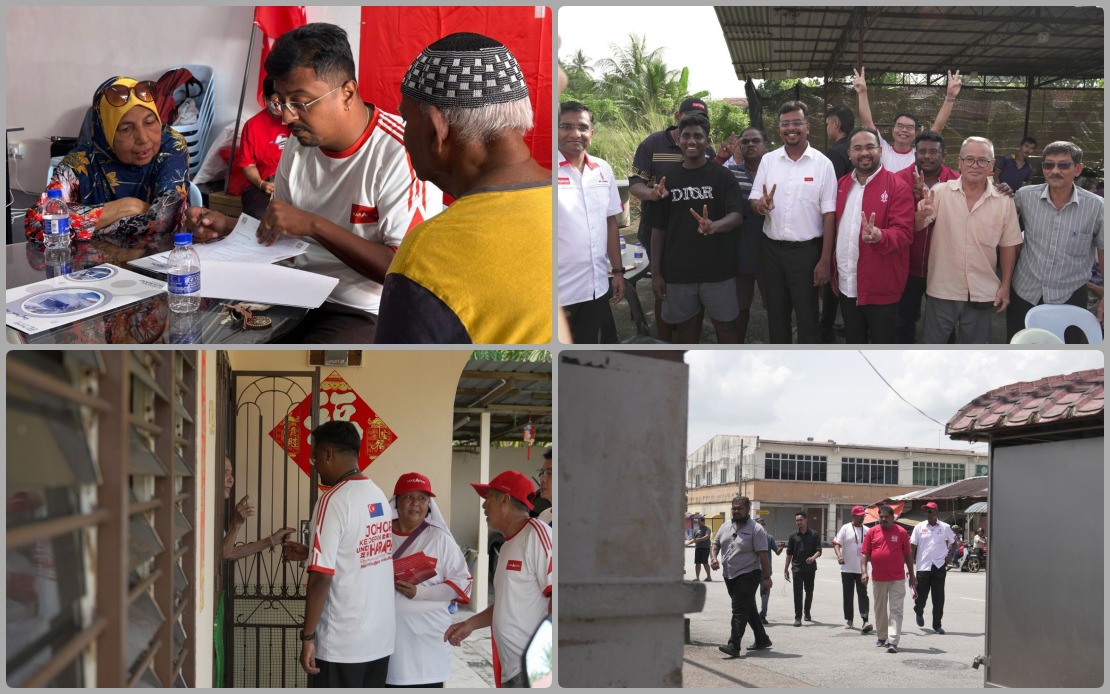
Dr. A. Ruban, the Pakatan Harapan nominee contesting the Paloh state assembly seat, has been admitted to Batu Pahat Hospital as he undergoes medical treatment for a slipped disc condition. The hospitalisation came at noon on July 7, only four days before voters are scheduled to head to the polls in the 16th Johor state election, with early voting already underway.
The candidate's campaign manager, Abdul Majid Abd Aziz, explained that Dr. Ruban sought immediate medical attention after experiencing debilitating spinal pain that severely restricted his physical mobility throughout the morning. According to Abdul Majid, the condition represents a recurrence of a pre-existing spinal issue for which Dr. Ruban had previously undergone surgical intervention. The renewed discomfort, though, appears to have been triggered or exacerbated by the physically taxing demands of the election campaign.
The intensive schedule characteristic of state election campaigns has emerged as a contributing factor to Dr. Ruban's health deterioration. Abdul Majid attributed the relapse partly to exhaustion and the compressed timetable required to cover ground in his constituency, noting that the candidate had been conducting numerous field walkabouts to connect directly with residents. This pattern of candidate-led grassroots campaigning, while essential for building voter contact and demonstrating commitment, can take a toll on individuals with existing medical vulnerabilities.
Despite the seriousness of requiring hospitalisation during a critical election period, campaign representatives have characterised Dr. Ruban's medical condition as non-critical. Abdul Majid indicated that the prognosis appears favourable, with discharge anticipated within one to two days depending on medical assessment. This optimistic timeline suggests the acute phase of the condition is manageable through conservative treatment rather than requiring extended hospitalisation.
The timing of this health episode presents a significant logistical and political challenge for the Pakatan Harapan campaign machinery in the Paloh constituency. With only days remaining before polls open, Dr. Ruban's physical absence from campaign activities could disadvantage his bid to convert voter interest into ballots cast. However, campaign officials have moved swiftly to mitigate the impact, pledging that organisational structures will remain operational and engaged with constituents.
Abdul Majid assured stakeholders that Pakatan Harapan's ground operation in Paloh would sustain momentum regardless of Dr. Ruban's temporary unavailability. The campaign team intends to continue disseminating the candidate's policy positions and electoral manifesto through alternative channels and via other party representatives working the constituency. This continuation strategy reflects the reality that while individual candidates carry significant symbolic and campaigning weight, modern electoral operations involve broader party structures capable of functioning during such interruptions.
The Paloh contest represents a notably competitive four-way race that reflects the fragmented political landscape characterising contemporary Johor politics. Beyond Dr. Ruban's Pakatan Harapan bid, the seat is being contested by D. Jeevakumar representing Perikatan Nasional, independent candidate G. Kamaleswaren, and the incumbent Lee Ting Han standing under the Barisan Nasional banner. This configuration ensures that Dr. Ruban's campaign hiatus, while unfortunate, occurs within a genuinely contested environment where no single candidate enjoys overwhelming advantage.
Lee Ting Han's position as the sitting assemblyperson provides inherent structural advantages including governmental machinery and name recognition accumulated through tenure. However, the presence of both a Perikatan Nasional challenger and an independent candidate suggests sufficient voter dissatisfaction or political fragmentation to prevent any candidate from assuming victory. The four-way split in a state assembly contest typically increases unpredictability, making grassroots mobilisation and direct voter contact particularly consequential in determining outcomes.
The July 11 polling date represents the culmination of a state-wide electoral exercise involving all 56 state assembly constituencies across Johor. The scale of this simultaneous voting exercise underscores the significance of individual contests like Paloh within the broader political picture. For Malaysian observers tracking coalition politics and regional power dynamics, results from constituencies such as Paloh will contribute to understanding whether Pakatan Harapan can sustain or expand its electoral footprint in traditionally contested states.
For Dr. Ruban specifically, his hospitalisation raises broader questions about candidate welfare during election campaigns and whether political parties adequately consider health implications when scheduling candidates with pre-existing medical conditions. While political competition demands intense personal commitment from candidates, balancing electoral imperatives against genuine health risks remains a legitimate consideration for party leadership. The resolution of his immediate medical situation will partially determine whether he can resume active campaigning in the final days before voting.
The incident also reflects the physical toll that Malaysian electoral campaigns exact on participants. Unlike systems with shorter, less intensive campaign periods, competitive races in Malaysia typically involve sustained weeks of public activity, community engagement, and constant travel. For candidates managing chronic health issues, this intensity creates predictable stress points requiring careful management.
As Johor voters prepare to cast ballots, the Paloh constituency race exemplifies contemporary Malaysian electoral dynamics where traditional voting patterns coexist with emerging political volatility, where individual candidates matter significantly but within organisational contexts, and where external factors including personal health can influence campaign trajectories. The ultimate electoral outcome in Paloh, like elsewhere in the state, will reflect the accumulated impact of dozens of campaigns, party strategies, candidate performances, and voter sentiment regarding representation and governance direction.

