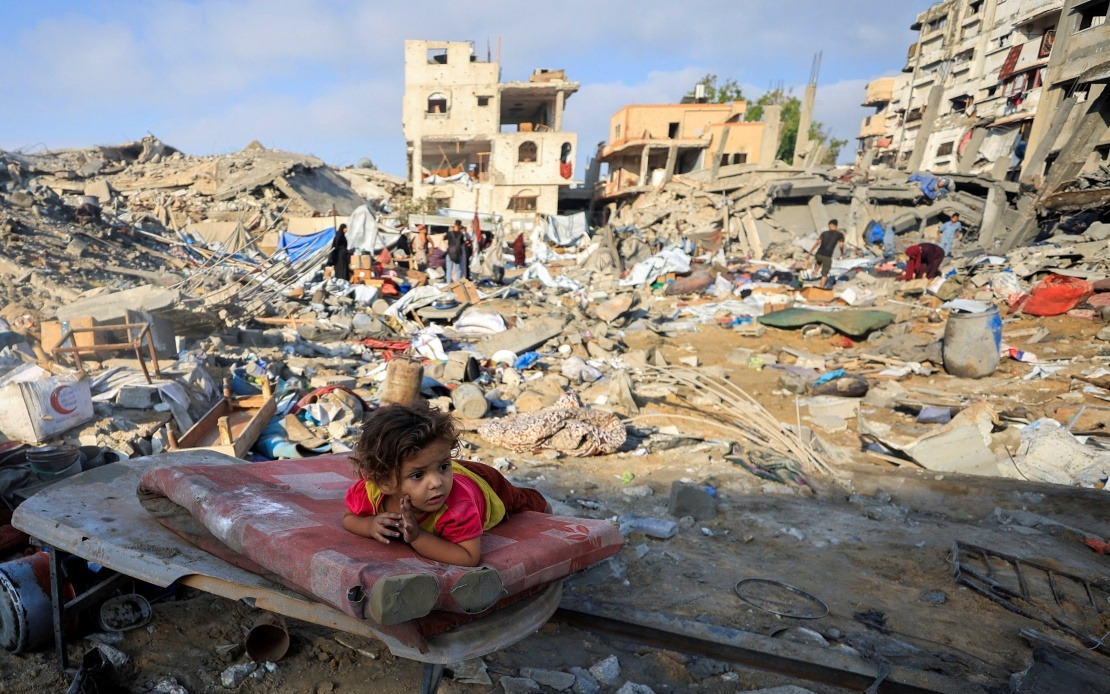
The Palestinian Ministry of Health issued a stark assessment on Saturday, declaring that the nation's healthcare infrastructure faces its gravest challenge since establishment of the Palestinian Authority. The crisis encompasses the Gaza Strip, where an ongoing Israeli military operation has devastated medical facilities, and the occupied West Bank, where escalating violence and financial strain have compounded existing system fragility. Health Ministry officials characterised the situation as existential, threatening the viability of basic medical services across Palestinian territories.
Conditions in Gaza present the most acute dimensions of this healthcare emergency. Hospitals and primary care facilities operate under siege-like circumstances, enduring repeated military strikes that damage infrastructure and displace patients and staff. Pharmaceutical inventories have dwindled to critical levels, leaving clinicians unable to treat common conditions or manage chronic diseases. Fuel shortages have forced facilities to operate on backup power when available, creating dangerous gaps in surgical capacity, life support systems, and diagnostic equipment. The cumulative effect has transformed Gaza's health sector into a barely functioning emergency response operation rather than a comprehensive medical system.
The financial dimension of this crisis extends beyond immediate operational challenges. The Palestinian government confronts a severe budgetary squeeze that has cascaded through salary payments, supply procurement, and equipment maintenance. This structural problem predates the current escalation but has intensified dramatically, creating a dual emergency: immediate humanitarian catastrophe alongside systematic institutional collapse. Health workers struggle to sustain services without resources for basic operations, placing impossible burdens on medical personnel already traumatised by violence.
Health Minister Majed Abu Ramadan framed the crisis as a violation of international legal frameworks and humanitarian principles. He emphasised that restricting patient access to treatment, blocking medical supply deliveries, and targeting healthcare workers and facilities constitute breaches of international humanitarian law requiring coordinated global response. This framing seeks to mobilise international pressure by recharacterising Gaza's healthcare collapse as a matter of legal accountability rather than mere suffering requiring charity. For Malaysia and other Southeast Asian nations valuing international law, this argument carries particular resonance in discussions of humanitarian obligations and state responsibility.
The ministry appealed directly to international institutions and influential states to enforce humanitarian principles. The United Nations, World Health Organisation, International Committee of the Red Cross, and various human rights organisations were specifically named as bearers of legal and moral obligations to intervene. These appeals reflect Palestinian frustration that existing international mechanisms have proven insufficient to stem the humanitarian deterioration. For Malaysian policymakers engaged in international diplomacy, the ministry's statement underscores the limitations of declaratory international law when enforcement mechanisms prove weak.
Establishment of secure humanitarian corridors emerged as a specific policy demand. The ministry argued that unobstructed pathways for medical supplies, wounded persons, and personnel are essential to sustaining any functional healthcare response. This technical proposal addresses a concrete operational bottleneck but also carries symbolic weight, representing Palestinian assertions of sovereignty and right to manage their own medical emergencies. The corridor concept resonates with Southeast Asian experiences of conflict-affected regions requiring international humanitarian access protocols.
The ministry's treatment of healthcare workers themselves constitutes an important dimension of the statement. Medical and administrative staff in Gaza have suffered alongside their patients, losing family members, losing homes, and enduring direct threats while attempting to maintain services. Rather than depicting them simply as victims, the ministry celebrated their resilience and commitment, emphasising how humanitarian obligation transcends wartime hardship. This recognition acknowledges both their extraordinary sacrifice and implicitly criticises conditions that demand such sacrifice.
The statement addressed Palestinian medical professionals who have departed Gaza for safety or professional development. Rather than characterising such emigration as abandonment, the ministry positioned these individuals as integral to Palestinian healthcare capacity, forced to leave by extraordinary circumstances beyond their control. This distinction matters for maintaining institutional memory and professional networks. Many trained Palestinian doctors and nurses now work internationally, and their eventual return capacity depends on whether they maintain connections to the Palestinian health system. The ministry's inclusive framing seeks to preserve this relationship despite separation.
Conditions in the West Bank present a different but related crisis. While lacking the intensity of Gaza's experience, West Bank healthcare facilities face systematic pressures from military operations, restrictions on ambulance movement, and chronic financial constraints. The occupied West Bank's fragmented geography, dominated by Israeli military control and Jewish settlements, creates barriers to coherent medical service delivery. Jerusalem's health sector, embedded within this contested space, experiences distinct pressures reflecting its symbolic and political significance. These disparate conditions require differentiated responses while remaining interconnected through Palestinian institutional frameworks.
The ministry emphasised its commitment to resource management and system resilience despite circumstances beyond its control. This framing balances acknowledgment of crisis severity with assertion of institutional responsibility and determination. Palestinian officials cannot resolve the structural causes of this emergency—the military operations, the restrictions on movement, the political conditions preventing normal economic function. They can only manage consequences and preserve institutional capacity for eventual recovery. This limited agency reflects the constrained sovereignty characterising Palestinian governance.
For regional observers including Malaysia, this healthcare crisis illustrates how political and military conflicts translate into humanitarian devastation in civilian populations. The Palestinian health ministry's statements document systematic collapse of essential services, requiring international response mechanisms to function effectively. The specificity of demands—medicines, fuel, humanitarian corridors, institutional protection—transforms abstract humanitarian concerns into concrete policy requirements. Malaysian engagement with these issues reflects both humanitarian principle and the broader question of how international norms address asymmetric conflicts affecting civilian welfare.
The timing and tone of the ministry's statement suggest escalating frustration with international response adequacy. The repeated appeals to international bodies, the emphasis on legal obligations, and the detailed documentation of crisis dimensions indicate Palestinian determination to create international accountability records. Whether such statements generate sufficient diplomatic pressure remains uncertain, but they establish clear markers of institutional collapse and international responsibility that may influence future assessments of accountability for humanitarian consequences.

