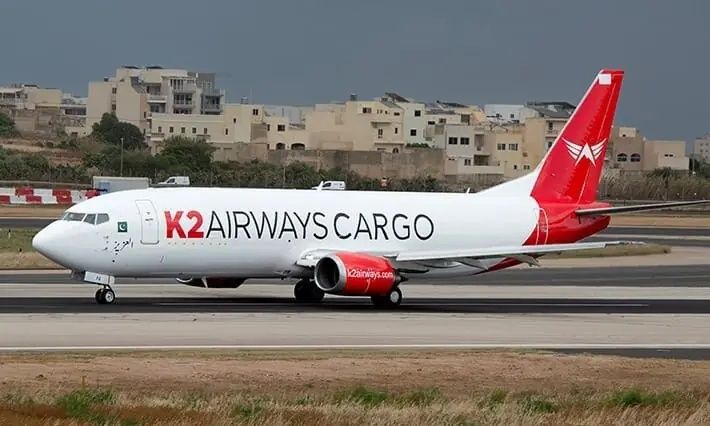
Pakistan's military and civilian authorities mobilised extensive search operations on Wednesday following the disappearance of a K2 Airways cargo plane carrying five crew members off the country's southern coast. Prime Minister Shehbaz Sharif declared the aircraft had crashed into the Arabian Sea after vanishing during its approach to Karachi from Sharjah in the United Arab Emirates. The development marks another aviation incident for a nation that has faced recurring safety challenges in its commercial aviation sector over the past decade.
The K2 Airways Boeing 737-400 experienced critical difficulties during its descent towards Karachi International Airport on Tuesday evening. According to the Pakistan Airports Authority, radar operators detected the aircraft rapidly losing altitude whilst simultaneously changing direction at 21:21 pm local time. The plane's crew had previously reported complications with their navigational systems as they prepared for landing. Contact with the flight was severed approximately 155 nautical miles west of Karachi, effectively ending real-time tracking of the troubled aircraft's final moments.
Flightradar24, an independent aviation monitoring service tracking global aircraft movements, released preliminary telemetry data suggesting a disturbing pattern in the plane's descent profile. The aircraft initially lost altitude significantly, then climbed momentarily before experiencing a second, abrupt drop in elevation that proved catastrophic. This sequence of events—characteristic of severe aeronautical emergencies—provides investigators with crucial technical clues about what may have transpired during those final critical minutes.
Prime Minister Sharif expressed profound sorrow regarding the incident and publicly extended condolences to the families of the five crew members. His office issued formal statements directing Pakistan's civil aviation authority alongside the navy and air force to deploy maximum available resources towards locating the aircraft wreckage. The emphasis on coordinated inter-agency response reflects the serious nature of maritime search operations in the Arabian Sea, where challenging ocean conditions can complicate recovery efforts significantly.
The search coordination involved both military and commercial maritime assets. Naval vessels alongside merchant ships contributed to systematic searches across the crash zone, whilst military aircraft provided aerial reconnaissance support to cover wider geographical areas. The deployment of multiple asset types underscores the complexity of locating wreckage in open ocean environments and the importance of swift, comprehensive response mechanisms during aviation disasters.
K2 Airways operates as a private cargo carrier providing both scheduled freight services and charter operations across domestic and international routes throughout South Asia and beyond. The airline represents one of several commercial operators utilising cargo aircraft for regional trade and logistics, highlighting Pakistan's role within broader Asian supply chains. The incident impacts not merely the airline but potentially broader regional cargo transportation networks that rely on Pakistan's airspace and airports.
The aircraft itself possessed considerable operational history before joining K2 Airways' fleet. Manufactured in 1999, it initially served as a passenger aircraft for Russia's Aeroflot and Indonesia's Garuda Indonesia before undergoing conversion to cargo configuration in 2012. The plane's prior service with established international carriers does not necessarily indicate structural vulnerability, though investigators will examine its complete maintenance records and service history as part of accident reconstruction efforts.
Pakistan's aviation sector has endured a concerning trajectory regarding safety incidents and regulatory compliance over recent years. The nation experienced several major passenger aircraft disasters throughout the previous decade, with catastrophic crashes in Karachi and elsewhere claiming hundreds of lives. These historical incidents prompted international scrutiny regarding Pakistan's aviation standards and operational oversight mechanisms, creating lasting reputational consequences for the country's airlines.
International aviation authorities took formal action against Pakistan's flagship carrier based on persistent safety and licensing deficiencies. The European Union imposed a four-year ban on Pakistan International Airlines accessing European airspace, a significant commercial and regulatory sanction reflecting widespread concerns about operational standards. The ban remained in effect until 2024, when EU authorities determined that Pakistan had implemented sufficient improvements warranting reinstatement of flying privileges. That lifting of restrictions represented vindication of Pakistan's efforts to strengthen safety protocols and institutional governance within its aviation sector.
The current incident involving K2 Airways will inevitably attract renewed attention to Pakistan's broader aviation safety framework and regulatory effectiveness. Investigators from the aircraft accident investigation board will conduct comprehensive technical analysis examining mechanical systems, maintenance records, crew training documentation, and weather conditions prevailing during the flight. International aviation authorities including the International Civil Aviation Organisation may also engage in oversight roles, particularly given the international dimensions of the aircraft's operational history and the involvement of multiple crew members.
For regional context, aviation incidents affecting Pakistani carriers carry implications for neighbouring countries' transportation networks and interstate aviation agreements. Southeast Asian and South Asian nations coordinate air traffic management and share safety protocols through various multilateral frameworks. Any findings regarding systemic deficiencies in Pakistani aviation operations could influence bilateral aviation agreements and cross-border flight arrangements affecting Malaysia and other regional partners conducting business through Pakistan's airspace.
The incident underscores persistent vulnerabilities within emerging market aviation systems despite significant regulatory improvements implemented globally post-9/11 and following previous disasters. Weather systems, navigational equipment reliability, crew training standards, and maintenance protocols remain critical variables in preventing aviation accidents. Pakistan's experience with this incident and its broader safety history illustrate ongoing challenges for developing nations balancing commercial aviation growth with rigorous safety standards.

