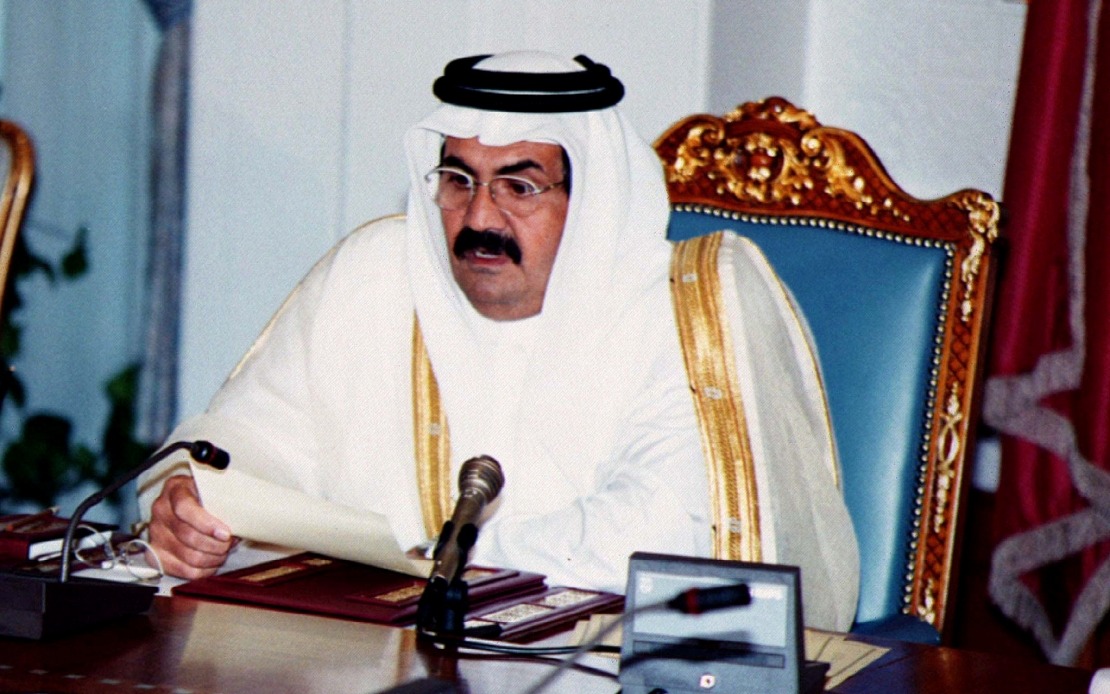
Pakistan's Prime Minister Shehbaz Sharif and Maldives President Mohamed Muizzu travelled to Qatar on Monday to express their condolences to Qatari Emir Sheikh Tamim Bin Hamad Al Thani and the broader royal family on the death of former Emir Sheikh Hamad Bin Khalifa Al Thani. The diplomatic visits underscore the significant regional relationships maintained between Gulf and South Asian nations, particularly at moments of national importance and transition within leadership hierarchies.
Prime Minister Sharif made a one-day official visit to the Gulf state, bringing with him a high-level delegation that reflected the gravity of the occasion. The Pakistani contingent included his brother Nawaz Sharif, a former premier who remains an influential figure in national politics, alongside Deputy Prime Minister and Foreign Minister Senator Ishaq Dar and Information Minister Attaullah Tarar. This composition of the delegation signalled Pakistan's desire to demonstrate solidarity and respect through senior-level representation across both governmental and familial lines.
Sheikh Hamad Bin Khalifa Al Thani, who passed away at age 74 on Sunday, had served as Qatar's emir for nearly two decades before his abdication in 2013. His reign fundamentally transformed the small Gulf state into a regional and global economic powerhouse, with his leadership spanning a critical period of Qatar's modernisation and international emergence. The long tenure and significant achievements during his rule made his passing a matter of consequence not only for the Gulf Cooperation Council but for nations across Asia and beyond that have developed substantial ties with Qatar.
Global leaders have taken the opportunity to reflect on Sheikh Hamad's substantial contributions to his nation and the broader Middle Eastern region. Tributes have emphasised the former emir's instrumental role in steering Qatar through dramatic economic transformation, particularly through the nation's petroleum and natural gas sectors, which became engines of wealth creation and geopolitical influence. His vision extended beyond economic metrics to encompassing education, infrastructure development, and the cultivation of Qatar's standing as a centre of regional diplomacy and soft power projection.
Maldives President Mohamed Muizzu echoed sentiments expressed across the international community, emphasising that the former emir's imprint on Qatar's institutional development and regional standing would resonate across generations. The president highlighted how Sheikh Hamad's legacy extended well beyond national boundaries, influencing political and economic trajectories throughout the Arab world and across Islamic-majority nations more broadly. This acknowledgment reflects the interconnected nature of contemporary Middle Eastern geopolitics, where transformative leadership in one nation reverberates through regional systems and international relations frameworks.
Bangladesh Prime Minister Sheikh Hasina Rahman offered formal condolences that specifically enumerated Sheikh Hamad's key areas of contribution. His work in fostering regional peace, advancing economic development across multiple sectors, strengthening educational institutions, and nurturing mechanisms for international cooperation were singled out as achievements warranting enduring respect and recognition. These dimensions of his legacy encompass both tangible infrastructure and institutional development alongside the more intangible yet equally consequential work of diplomatic bridge-building and conflict mitigation across contentious regional spaces.
Pakistan and India have both declared Monday as a day of national mourning, a symbolic gesture that underscores Sheikh Hamad's perceived importance to South Asian nations and broader bilateral relationships with Gulf states. These formal mourning declarations reflect diplomatic protocol while simultaneously indicating the depth of relationships maintained between subcontinental powers and the leadership of the Arabian Peninsula. For Pakistan specifically, the gesture carries added weight given the country's significant economic interests in Qatar, including substantial expatriate populations and energy sector cooperation.
The convergence of multiple regional leaders in Qatar for these condolence visits illustrates how succession moments and memorial occasions serve as focal points for reaffirming bilateral relationships and demonstrating commitment to sustained diplomatic engagement. For nations like Pakistan and Maldives, maintaining strong ties with Qatar carries both symbolic and practical importance—Qatar has served as a significant investor, trading partner, and diplomatic interlocutor for both nations. The presence of senior delegations thus functions as tacit confirmation of these relationships' continued priority.
Sheikh Hamad's abdication in 2013 in favour of his son Sheikh Tamim Bin Hamad Al Thani represented a significant transition in Gulf leadership. The former emir's decision to voluntarily step down was relatively unusual within the regional context, and the relative stability and continuity witnessed since has partly reflected the institutional foundations he established. His passing marks the end of an era for those who recall Qatar's pre-boom economy and limited international profile, making his death a genuine historical marker for the nation and its partners across Asia and the Middle East.

