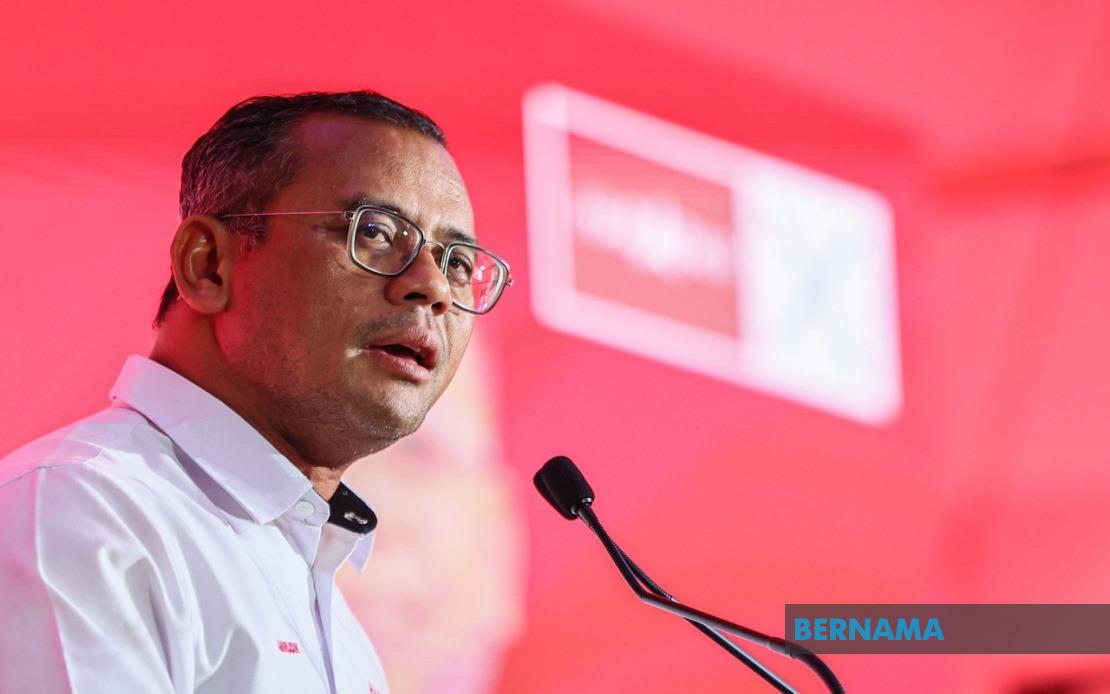
PKR vice-president Datuk Seri Amirudin Shari has pushed back against suggestions that Pakatan Harapan's manifesto for the upcoming Johor State Election draws substantially from competitors, insisting that the platform represents months of deliberate development by the coalition's top leadership. Speaking in Kluang on July 3, the Selangor Menteri Besar characterised the manifesto as a product of rigorous internal planning rather than any borrowing from other political organisations.
The remarks come as Pakatan Harapan prepares for the 16th Johor State Election, scheduled for polling on July 11, with early voting set for July 7. A total of 172 candidates are contesting across 56 State Legislative Assembly seats, making this a significant electoral test for the coalition in one of Malaysia's most politically consequential states. Amirudin's comments signal the coalition's confidence in its platform and its determination to frame the election narrative around original thinking and voter-responsive policymaking.
Central to PH's campaign platform are commitments on affordable housing and healthcare support—initiatives Amirudin attributed to careful analysis and consultation rather than imitation. The coalition has sought to ground these pledges in empirical evidence, framing them not as campaign rhetoric but as solutions emerging from structured engagement with constituencies. This emphasis on data-driven policymaking reflects a broader positioning by Pakatan Harapan as a technocratic alternative to other political formations, an approach that has gained traction among urban and semi-urban voters across the region.
The affordable housing component has drawn particular scrutiny, with critics questioning whether PH's targets are achievable within realistic timeframes and budgetary constraints. Amirudin directly addressed these concerns, noting that the Selangor state government has already approved construction of 174,000 affordable housing units, with 40,000 completed to date. This record in Selangor serves as a concrete example that PH can point to when defending the feasibility of its Johor pledge.
When pressed on the ambitious nature of these housing targets, Amirudin reframed the discussion, arguing that the figure emerges from necessity rather than mere political calculation or capacity assessment. He emphasised that PH's campaign team conducted surveys and focus group discussions to establish the baseline demand for affordable accommodation, suggesting that the coalition has grounded its promises in grassroots feedback. This methodology—setting targets based on identified need rather than perceived deliverability—represents a deliberate political choice, one that distinguishes Pakatan Harapan's approach from more cautious platforms that promise only incremental improvements.
The coalition's campaign machinery has reportedly encountered encouraging signals from door-to-door outreach efforts, though Amirudin acknowledged that many potential supporters may not yet be openly declaring their allegiance. This observation touches on a recurring dynamic in Malaysian electoral politics: the presence of shy voters who support a candidate privately but hesitate to express preference publicly, whether due to workplace dynamics, family considerations, or simple caution. Understanding and mobilising this cohort could prove decisive in close contests across Johor's 56 seats.
Amirudin, serving as PH's Johor election machinery director in addition to his state leadership role, highlighted the upcoming campaign visit by Prime Minister Datuk Seri Anwar Ibrahim as a significant morale booster for party workers and as a tool for building voter confidence. The national leadership's visible engagement in state-level campaigns carries symbolic weight, signalling to the grassroots that the party hierarchy prioritises the contest while simultaneously attempting to leverage the Prime Minister's national standing at the state level. This strategy assumes that positive sentiment toward the federal government can translate into support for state candidates—an assumption that varies considerably depending on local circumstances and the performance of Pakatan Harapan's state administration.
The coalition's leadership lineup at the campaign event in Kluang included PKR vice-president R. Ramanan and Amanah secretary-general Faiz Fadzil, alongside candidates for several state seats. This breadth of participation underscores the extent to which Pakatan Harapan views the Johor election as a showcase for its wider coalition structure. In Malaysian politics, state elections increasingly function as barometers of national sentiment and as proving grounds for emerging political talent, and Johor's status as Malaysia's second-largest state by population amplifies these stakes.
For Malaysian readers and regional observers, the Johor election carries implications extending beyond state boundaries. The outcome will test whether Pakatan Harapan can sustain and expand electoral support beyond its 2022 breakthrough at the federal level, or whether dissatisfaction with national governance or internal coalition tensions have eroded the coalition's ground strength. Johor presents particular challenges for PH, as the state has traditionally been a Barisan Nasional stronghold, and reclaiming it would represent a major realignment in Malaysian politics. Conversely, a PH underperformance in Johor could signal vulnerability heading into future federal contests and constrain the coalition's strategic options in parliament.
Amirudin's insistence that PH's manifesto emerged from original deliberation rather than competitive imitation reflects broader positioning by the coalition as substantive and methodical. Whether voters find this characterisation persuasive will depend partly on perceived delivery on previous promises and partly on how effectively the coalition can communicate the content and rationale of its platform across diverse constituencies. The 16th Johor State Election will provide concrete data on whether Pakatan Harapan's approach resonates across Malaysia's diverse demographic and socioeconomic landscape.

