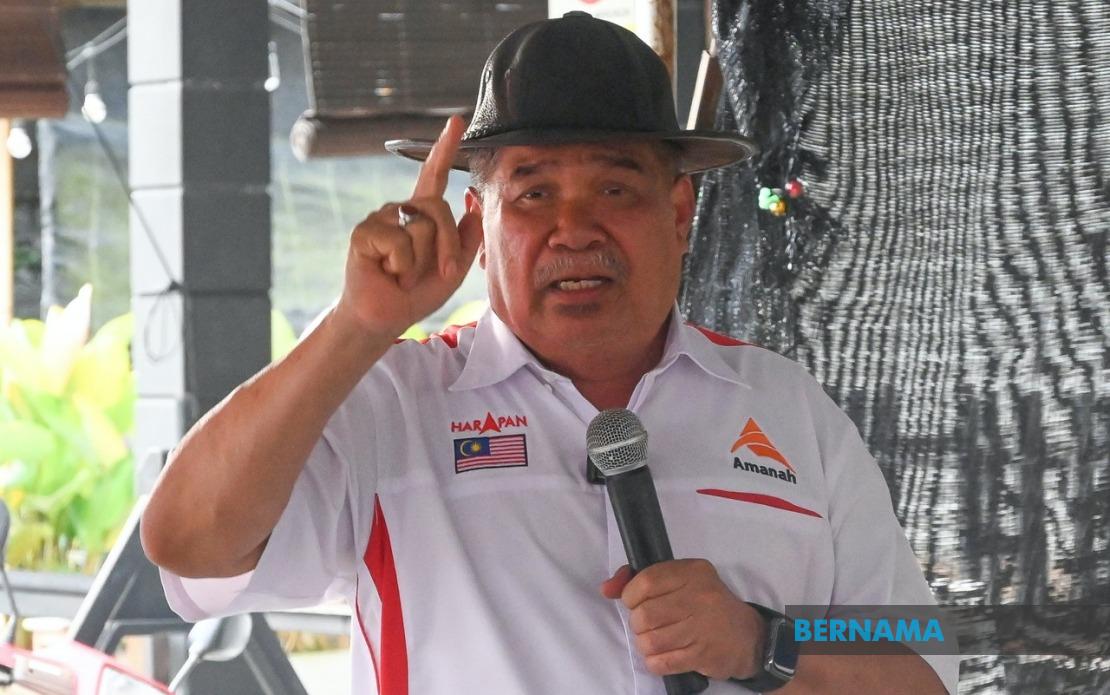
Pakatan Harapan has signalled its determination to maintain focus on serving ordinary Malaysians rather than being drawn into political manoeuvring, as the ruling coalition faces a shifting landscape of alliances among opposition and other political blocs. Amanah President Datuk Seri Mohamad Sabu delivered the message through a Facebook post, emphasising that the coalition and its component party will persist with an agenda centred on the wellbeing of the people and national interests, deliberately placing these priorities above factional or individual political gains.
The statement arrives amid observable political realignment, particularly the growing cooperation between Barisan Nasional and Perikatan Nasional, two forces that have historically competed for electoral dominance. Rather than perceiving this development as a threat requiring urgent reactive measures, Mohamad Sabu framed Pakatan Harapan's response as one grounded in political maturity and a commitment to sustained hard work on behalf of voters. This positioning reflects the coalition's broader strategy of insulating itself from what might be characterised as destabilising political theatre.
Central to Mohamad Sabu's message was an affirmation of Prime Minister Datuk Seri Anwar Ibrahim's dedication to defending Malay-Muslim interests through substantive policy implementation rather than inflammatory rhetoric. The articulation distinguishes between protecting constitutional provisions—including Islam's status as the Federation religion, the institution of the Malay Rulers, the Malay language, and Bumiputera rights—and deploying these protections as tools for generating political anxiety. This nuanced framing suggests the government believes such interests are best secured through stable institutional governance and progressive development rather than confrontational posturing.
A significant component of Mohamad Sabu's intervention centred on rejecting what he characterised as corrosive narratives portraying the Malay community as perpetually endangered. The Amanah President and Minister of Agriculture and Food Security argued that continuously reinforcing perceptions of threat and vulnerability undermines rather than strengthens Malay society. Instead, he advocated for government messaging that cultivates self-assurance and capability among the Malay population, positioning confidence as the foundation for genuine advancement.
The framing reflects a philosophical divergence between Pakatan Harapan's approach and tactics deployed by competing political actors. Mohamad Sabu contended that a truly empowered Malay community is characterised by educational attainment, moral integrity, economic self-sufficiency, technological competence, and willingness to engage in fair competition with other communities. This conceptualisation shifts the conversation from defensive protectionism toward proactive capacity-building, suggesting that sustainable advancement emerges from equipping Malays with skills and confidence rather than sheltering them from perceived threats.
The minister's comments implicitly critique the deployment of identity politics as a mobilising force, suggesting that contemporary Malay voters are increasingly discerning and resistant to manipulation through sentiment-based appeals. His assertion that Malays are growing more mature and self-reliant, less vulnerable to endless cycles of political grievance-mongering, reflects either genuine confidence in electoral constituencies or an aspiration regarding their development. Either interpretation carries implications for how different coalitions might position themselves to appeal to these voters.
Packatan Harapan's strategic positioning also involves a deliberate refusal to engage in what the party leadership characterises as divisive political games. By maintaining that the coalition will not be drawn into such contests, the government attempts to occupy moral and strategic high ground, suggesting that alternatives to its approach necessarily rely on the very tactics it rejects. This rhetorical strategy serves to differentiate Pakatan Harapan from competitors while simultaneously constraining its own tactical flexibility.
The emphasis on building a generation of economically capable, technologically proficient Malays capable of global competition addresses concerns that have historically animated Bumiputera policy debates. Rather than framing such protections as permanent fixtures, Mohamad Sabu's comments suggest a vision where initial advantages eventually yield to genuine competitiveness, implying that the ultimate goal is creating circumstances where such protective mechanisms become unnecessary. This long-term framing may appeal to younger, economically ambitious Malays while potentially unsettling those for whom permanent preferential structures represent core interests.
For Malaysian readers, particularly those monitoring coalition dynamics and electoral prospects, Mohamad Sabu's intervention signals Pakatan Harapan's intention to compete on the basis of developmental performance and institutional stability rather than identity-based alarmism. The coalition's apparent confidence—whether warranted or aspirational—rests on assumptions about voter maturity and receptiveness to substantive policy debate. Whether this positioning proves electorally viable will depend substantially on whether governments deliver tangible improvements in economic opportunity, service quality, and governance.
The broader regional context also merits attention. Southeast Asian democracies frequently grapple with similar tensions between identity-based mobilisation and performance-based governance. Pakatan Harapan's articulated approach, should it prove successful domestically, might offer instructive lessons regarding whether progressive coalitions can prevail through focusing on delivery rather than counter-narratives about threats. Conversely, if the coalition finds itself electorally disadvantaged, the experience would suggest that identity-oriented political messaging retains considerable force across the region.
Looking ahead, the stability of Pakatan Harapan's position depends partly on whether the BN-PN cooperation develops into a unified electoral challenge or remains tactical. Simultaneously, the coalition's internal cohesion will face testing if its constituent parties diverge on how assertively to contest identity-related policy areas. Mohamad Sabu's intervention suggests Amanah, at minimum, is committed to the coalition's stated philosophical orientation, though navigating these tensions while maintaining electoral competitiveness presents continuing challenges.

