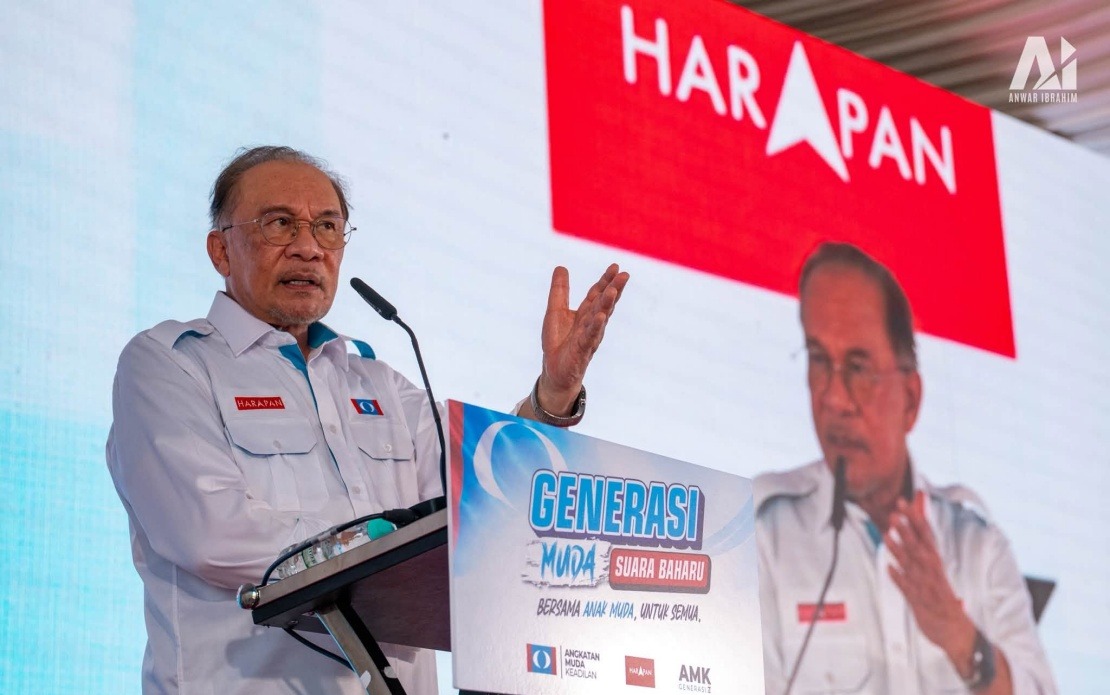
Pakatan Harapan has made a direct appeal to voters in Negeri Sembilan to entrust the coalition with continued governance of the state, emphasising its track record of administrative probity and stability ahead of the 16th state election scheduled for August 1. In a statement released through social media, Prime Minister Datuk Seri Anwar Ibrahim, speaking in his capacity as PH chairman, called on the electorate to strengthen the coalition's legislative position by delivering a decisive mandate at the ballot box. The messaging reflects PH's broader strategy of positioning itself as a guarantor of institutional integrity and effective public administration in the lead-up to polling day.
The coalition's appeal carries particular significance for Negeri Sembilan, a state that has seen shifting political alignments in recent years and where governance performance has become a central electoral issue. By emphasising continuity and clean administration, PH appears to be drawing a contrast with previous governance models and positioning itself as a stabilising force in state politics. The invocation of religious principles in the campaign messaging, with Anwar citing Quranic verses emphasising unity and cooperation, attempts to ground the political platform in shared moral values that resonate across Malaysia's multicultural electorate.
PH's electoral machinery in Negeri Sembilan reflects the three-party structure of the coalition, with candidate distribution aimed at balancing representation across its membership base. The coalition is contesting all 36 available state seats, deploying a comprehensive candidate slate rather than pursuing a selective approach. The composition sees PKR fielding 16 candidates, positioning the party as the primary PH vehicle in the state, whilst the Democratic Action Party (DAP) is contesting 11 seats and the National Amanah Mandate Organisation (Amanah) has been allocated nine positions. This distribution reflects both the relative organisational strength of each partner and internal coalition negotiations regarding candidate selection and seat allocation.
The strategic decision to contest every seat represents a full-strength effort by PH to dominate the Negeri Sembilan legislature and secure a commanding working majority. Such comprehensive candidacy coverage typically signals coalition confidence in its electoral prospects and reflects preparation for a sustained ground campaign across all constituencies. For voters, this approach means a genuine choice in every state seat rather than uncontested areas, potentially driving higher engagement with the electoral process and clearer competition between PH and rival political formations.
The timeline for the election process has been structured to accommodate multiple phases of voting. Early polling is scheduled for July 28, providing an advance voting opportunity for designated voter categories, whilst the main polling day falls on August 1. This staggered approach reflects electoral administration practices designed to manage voter participation across different circumstances, including provision for civil servants, security personnel, and those unable to vote on the principal election day. The window between early voting and general polling allows both election authorities and political campaigns to monitor momentum and adjust ground activities accordingly.
Negeri Sembilan's political significance extends beyond its state assembly size, as the state represents a microcosm of broader national political trends and serves as a testing ground for coalition governance models. The state's economic orientation toward agriculture, manufacturing, and commerce, combined with its demographic composition, makes it representative of Malaysia's central region political character. Electoral outcomes in Negeri Sembilan often provide early indicators of voter sentiment regarding national political dynamics and coalition performance, making the August 1 exercise more than a routine state election.
PH's governance messaging emphasises institutional stability as a prerequisite for economic development and public service effectiveness. In the Malaysian political context, where governance quality and administrative probity have emerged as voter priorities, the coalition's framing around clean administration addresses a fundamental concern shaping electoral behaviour. The explicit commitment to integrity-driven governance suggests PH's recognition that institutional credibility—rather than merely policy platforms—has become central to electoral competition at the state level.
The coalition's appeal for a strengthened mandate carries implications for resource allocation and decision-making capacity within the state government. A commanding legislative majority typically translates into greater policy implementation capacity, smoother budget passage, and enhanced ability to undertake major development initiatives without parliamentary obstruction. For Negeri Sembilan residents, the distinction between coalition governance with a modest majority versus a substantial one could materially affect the pace and scope of state-level development projects, administrative appointments, and policy implementation during the anticipated term of government.
PH's religious framing in campaign messaging reflects broader patterns in Malaysian electoral politics, where spiritual and moral dimensions increasingly feature alongside conventional policy platforms. By anchoring political promises in Islamic theological concepts emphasising collective welfare and ethical conduct, the coalition appeals to religiously-informed voters who evaluate political alternatives through both material and spiritual lenses. This approach recognises that governance legitimacy in Malaysia operates across multiple registers simultaneously—technical competence, moral authority, and institutional integrity each contributing to electoral assessment.
The stakes for PH in Negeri Sembilan extend beyond maintaining existing representation to demonstrating governance effectiveness that can be extrapolated to national political prospects. State-level electoral performance provides concrete evidence regarding coalition functionality, coordination effectiveness between partner parties, and voter confidence in PH's administrative model. Success in Negeri Sembilan strengthens PH's narrative of coalition viability and governance competence, messaging particularly important given ongoing discussions regarding national political stability and coalition durability in the Malaysian system.

