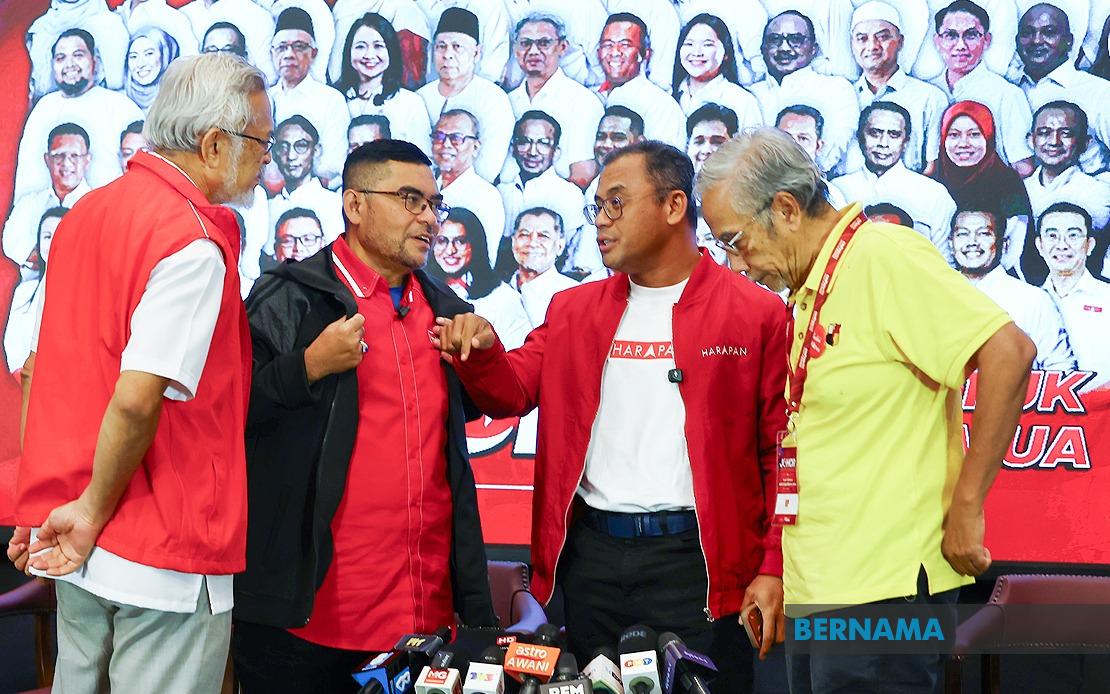
Pakatan Harapan is preparing to undertake a detailed examination of the Johor state election results to sharpen its political machinery before contesting the Negeri Sembilan state polls, according to the coalition's senior leadership. Datuk Seri Amirudin Shari, the Selangor Menteri Besar and PKR's Election Co-director, outlined the coalition's introspective approach during a press briefing at the PH Operations Centre in Johor Bahru on July 11. The coalition intends to dissect voting behaviour patterns, track demographic shifts among younger voters, and identify which electoral dynamics influenced the outcome across the 56 state assembly seats contested.
Barisan Nasional secured 29 of the 56 seats in the Johor election, translating to a comfortable majority of over 50 per cent. This result, however, prompted Amirudin to emphasise that the coalition would not rush to draw definitive conclusions from the Johor outcome. He acknowledged that several seats remained unconfirmed at the time of his statement, suggesting that a full seven days would be needed to consolidate reliable data from each polling centre and verify the final tallies. This measured approach reflects the importance PH places on understanding granular electoral shifts rather than responding reactively to partial results.
The coalition's introspection extends to understanding the broader contours of electoral support. The review will examine not only the loss of ground in Johor but also evaluate performance variations across different voter segments, particularly among the youth electorate whose participation has become increasingly decisive in Malaysian politics. Such analysis is crucial for a coalition that has experienced substantial volatility in public support since its 2018 federal victory, particularly following the collapse of its Selangor-led administration in 2020 and subsequent realignment of political forces at both state and national levels.
Looking ahead to Negeri Sembilan, PH has adopted a markedly more confident posture. The coalition believes its incumbent administration, headed by Menteri Besar Datuk Seri Aminuddin Harun, has established sufficient developmental achievements and public goodwill to warrant retention of the state. Amirudin explicitly stated that the coalition expects to retain state control based on the track record of governance in Negeri Sembilan over the past term. This confidence contrasts sharply with the outcome in Johor, suggesting that PH's internal assessment indicates differing political dynamics across Malaysia's states.
Candidate selection emerged as a critical component of PH's refinement strategy. The coalition scheduled discussions on candidate nominations for the subsequent day, with the explicit goal of ensuring that those selected aligned with voter expectations in their respective constituencies. The full list of PH candidates was planned to be announced on July 14, providing a compressed timeframe between finalisation of the candidate slate and the anticipated polling date. This deliberate sequencing reflects a belief that candidate quality and local resonance significantly influence electoral outcomes.
The political management of Negeri Sembilan also carries implications for Malaysia's federal politics. Amirudin took the opportunity to address concerns that state-level electoral competition might destabilise the federal government. He sought to reassure observers that all component parties of the ruling coalition, spanning both PH and Barisan Nasional components, have committed to maintaining the federal administration intact. This statement is particularly significant given the historical fragility of coalition arrangements in Malaysian politics, where defections and realignments have frequently triggered government changes. Amirudin cited Prime Minister Datuk Seri Anwar Ibrahim's leadership and the explicit commitment of BN members as evidence of this federal stability.
The coalition's review process also reflects broader strategic questions facing PH in the current political environment. The coalition has struggled to consolidate support in certain regions while maintaining strongholds in others, creating an uneven electoral geography. Understanding whether Johor represents a state-specific phenomenon or signals broader erosion of support becomes essential for planning federal and future state campaigns. The emphasis on youth voting patterns suggests PH recognises that generational dynamics may be reshaping Malaysian electoral behaviour in ways that differ from previous election cycles.
Negeri Sembilan holds particular symbolic value for PH as one of its earlier state victories and a demonstration of its capacity to govern at the state level. Retaining the state would provide a psychological boost to the coalition and validate its governance model at a time when federal stability remains tenuous. Conversely, any loss in Negeri Sembilan could trigger cascading questions about PH's broader electoral viability and may prompt accelerated internal reviews across multiple state organisations.
The review undertaken by PH encompasses not merely technical electoral analysis but also reflects deeper strategic repositioning. By acknowledging the need for comprehensive reflection and commitment to methodical candidate selection, the coalition signals maturity in accepting electoral setbacks whilst remaining determined to compete effectively in the near term. For Malaysian observers, the Johor result and PH's response illuminate the competitive intensity of contemporary state-level politics, where coalitions must constantly adapt machinery and messaging to reflect evolving voter preferences and demographic composition across different regions of the country.

