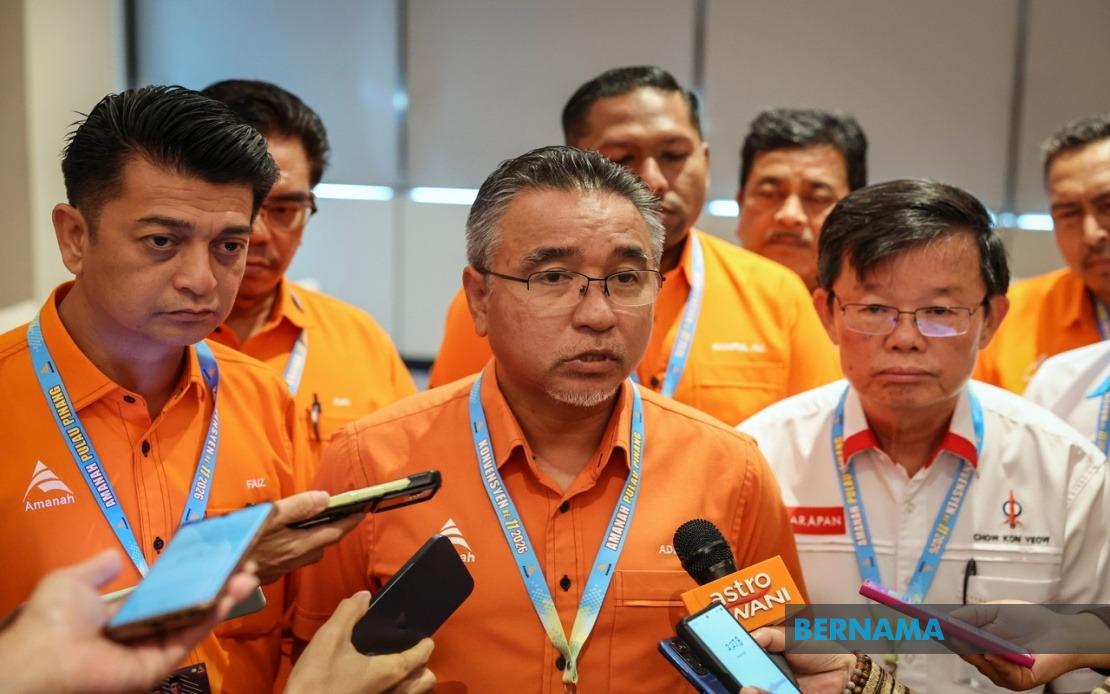
Pakatan Harapan remains steadfast in pursuing a political model centred on values, integrity, and administrative capability, according to senior coalition figures responding to the coalition's underwhelming performance in the Negeri Sembilan state election. The stance underscores PH's determination to maintain philosophical consistency while acknowledging the need for tactical adjustments as Malaysia's political terrain continues to shift. Amanah vice-president Adly Zahari articulated this position at the Penang Amanah Convention in Bukit Mertajam, emphasizing that the coalition's foundational principles remain non-negotiable despite recent electoral challenges.
The Negeri Sembilan election, held yesterday, delivered disappointing results for PH, which captured just 11 of the 36 state seats. Barisan Nasional dominated the contest by securing 18 seats, while Perikatan Nasional claimed seven, providing a stark reminder of the coalition's vulnerability in peninsular battlegrounds. The result follows similar disappointments in recent Johor contests, prompting PH leaders to acknowledge that electoral momentum alone cannot sustain political viability. Adly's comments suggest that rather than abandoning core principles, the coalition intends to sharpen how it communicates and implements them.
Underlying PH's reassessment is recognition that Malaysian voters ultimately judge political parties on tangible outcomes affecting household finances and public services. Rising cost of living remains a persistent concern for millions of Malaysians, as does job creation, educational quality, and the overall responsiveness of government machinery. Adly identified these issues as decisive factors in voter calculations, suggesting that PH's messaging has failed to adequately demonstrate how its policies address these daily anxieties. The coalition's challenge, therefore, is not philosophical but communicative—translating its governance initiatives into language and outcomes that resonate with economically pressed constituents.
PH's leadership has committed to conducting detailed post-mortem examinations of recent electoral performances, particularly focusing on areas requiring refinement. This analytical approach indicates a coalition attempting to move beyond blame-shifting toward constructive evaluation of its own weaknesses. Adly emphasized that improved communication strategies represent a critical priority, acknowledging that PH's achievements and policy initiatives have not penetrated public consciousness sufficiently. In Malaysia's competitive political marketplace, where narratives matter enormously, the coalition recognizes that good governance alone proves insufficient without effective messaging.
Penang's PH chairman Chow Kon Yeow has convened a strategy meeting scheduled for August 8 to evaluate both the Johor and Negeri Sembilan results comprehensively. This coordinated response suggests that PH leadership views these defeats not as isolated incidents but as part of a broader pattern requiring systemic adjustment. The meeting will likely examine demographic shifts, regional variations in voter sentiment, and the effectiveness of grassroots mobilization efforts across different constituencies. For Malaysian observers, this represents a critical moment where the coalition must demonstrate capacity for genuine self-reflection rather than defensive posturing.
Chow's emphasis on refocusing voter attention toward government performance and service delivery indicators a strategic pivot toward outcome-based campaigning. Rather than relying solely on anti-corruption narratives or reform promises, PH intends to ground its electoral appeal in concrete evidence of improved living standards and efficient public administration. This approach acknowledges that Malaysian voters have grown increasingly skeptical of abstract political messaging, preferring instead demonstrable improvements in healthcare access, transportation infrastructure, and economic opportunity. The coalition's ability to translate policy achievements into voter-relevant metrics will likely determine its electoral trajectory through any forthcoming general election.
Job creation emerges as a particularly salient concern in PH's strategic recalibration. Malaysia's unemployment rate, while modest by regional standards, masks underemployment and skills-mismatch problems affecting younger demographics disproportionately. PH's emphasis on employment opportunities suggests recognition that economic anxiety, rather than broader ideological considerations, increasingly drives electoral behaviour. Southeast Asian politics generally reflects this trend, where voters consistently prioritize economic management over other governance dimensions. For PH specifically, credibly demonstrating that its policies generate meaningful employment—particularly in emerging sectors like renewable energy and digital innovation—could substantially strengthen its electoral position.
The coalition's commitment to values-based politics, while reaffirmed by senior figures, faces testing in an environment where rivals deploy alternative political vocabularies. Barisan Nasional's traditional emphasis on development and patronage networks, combined with Perikatan Nasional's Islamist orientation, offer competing visions that resonate with different voter segments. PH's challenge involves maintaining its reform identity while simultaneously demonstrating governing pragmatism. This balancing act has proven historically difficult for reformist coalitions across Southeast Asia, where the gap between idealistic opposition rhetoric and messy governance realities often creates disillusionment.
Regional implications warrant consideration, particularly given Malaysia's position within ASEAN's increasingly complex geopolitical landscape. A PH coalition struggling electorally could theoretically destabilize Malaysia's international engagement, though current indications suggest the government will maintain continuity in foreign policy regardless of electoral fluctuations. Nevertheless, domestic political fragmentation potentially complicates Malaysia's capacity to project regional leadership on issues ranging from maritime disputes to economic integration. For Southeast Asian observers, PH's ability to restore electoral credibility carries implications beyond Malaysian borders.
The upcoming general election, which may occur earlier than the constitutionally mandated 2027 timeline, will provide crucial testing ground for PH's reformulated strategies. Whether the coalition successfully translates its re-emphasis on values and competence into improved electoral performance remains uncertain. However, the serious engagement with post-election analysis and strategic adaptation suggests leadership willing to confront uncomfortable realities rather than retreating into ideological rigidity. For Malaysian voters, particularly those economically squeezed and frustrated with governance quality, the critical question is whether PH can convincingly demonstrate that values-based politics and practical improvements in living standards remain compatible objectives.

