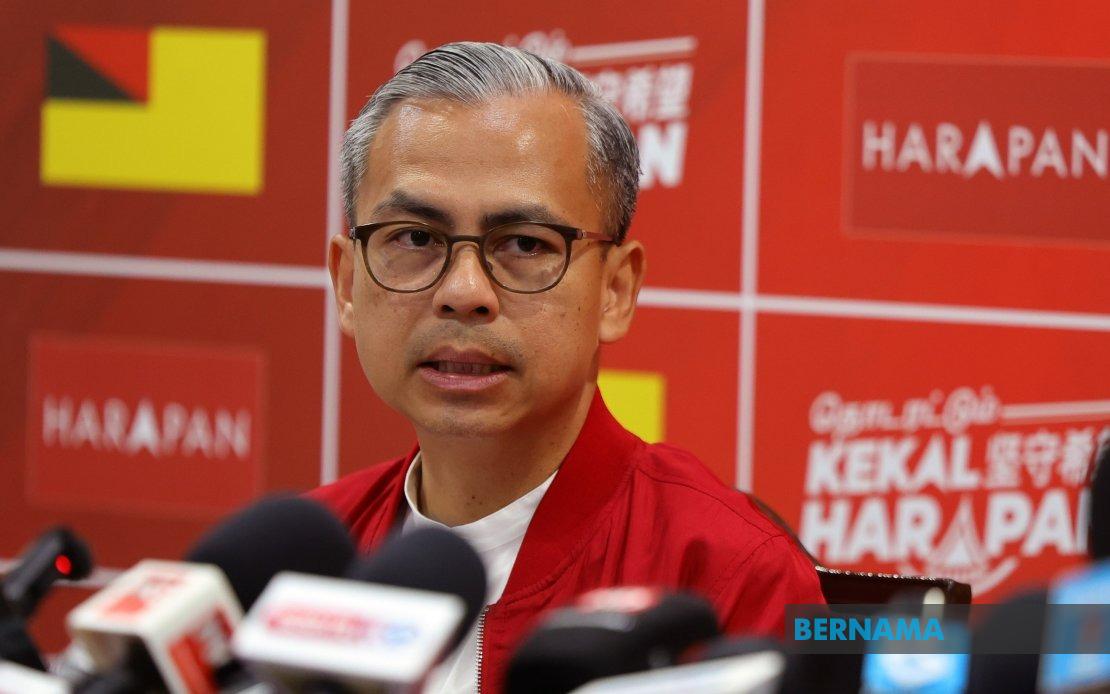
In a forceful riposte during the Negeri Sembilan state election campaign, Pakatan Harapan has challenged a political narrative that threatens to undermine the coalition's broader appeal among Malaysia's Malay-Muslim electorate. Communications director Datuk Seri Fahmi Fadzil took direct aim at what he characterised as divisive claims designed to portray only one political grouping as capable of representing the interests of Malay-Muslims, characterising the argument as fundamentally at odds with Malaysia's established multicultural and pluralistic foundations.
Fahmi's intervention comes at a critical juncture as Malaysia's complex political landscape continues to shift. The implicit concern underlying his remarks is that exclusive identity-based political messaging risks fragmenting voter coalitions built on broader values and shared governance objectives. By highlighting his own Malay-Muslim background alongside Amanah communications director Khalid Abdul Samad, Fahmi underscored an elementary but often overlooked reality: Malay-Muslim Malaysians hold diverse political views and affiliations, distributed across multiple party structures and coalitions.
This territorial dispute over representation reflects deeper anxieties within Malaysian politics about which coalition can credibly serve the interests of the Malay-Muslim majority. The framing of such competition in zero-sum terms—where one group's claim to represent this community implicitly denies legitimacy to others—represents what Pakatan Harapan views as corrosive to democratic participation and national cohesion. Fahmi's characterisation of such messaging as breeding "unhealthy divisions" signals the coalition's assessment that voters increasingly recognise the hollowness of claims to exclusive community representation.
Packatan Harapan's strategy appears centred on demonstrating tangible governance accomplishments that benefit Malaysia's Malay-Muslim communities while simultaneously arguing for a more inclusive political identity transcending ethnic categorisation. This dual approach reflects the coalition's calculation that contemporary Malaysian voters, particularly younger demographics, respond more robustly to evidence of institutional performance than to symbolic appeals rooted solely in ethnic or religious identity. The coalition has therefore invested considerable effort in publicising infrastructure and resource allocation achievements within Negeri Sembilan, where Menteri Besar Datuk Seri Aminuddin Harun leads the administration.
The metrics Pakatan Harapan marshals to substantiate its governance claims are instructive. An expansion in mosque construction and a near-tripling of zakat collection revenues compared to the preceding administration constitute material evidence intended to rebut suggestions that Malay-Muslim interests have been marginalised under coalition stewardship. Such concrete indicators of resource distribution hold particular significance in Malaysian electoral politics, where voters frequently evaluate political performance through the lens of visible development and institutional resource flows to their communities.
Yet the broader philosophical argument advanced by Fahmi extends beyond simple resource allocation disputes. His advocacy for unity "founded on shared values and the common good" articulates a vision of Malaysian political identity that transcends ethnic or religious stratification. This represents a substantive departure from political messaging grounded primarily in ethnic or communal protective mechanisms, instead positioning Pakatan Harapan as offering an alternative governing philosophy that privileges cross-cutting coalitional bonds and shared policy objectives.
The articulation of this alternative vision assumes heightened importance against the backdrop of ongoing electoral competition in Negeri Sembilan. Early voting was scheduled for July 28, with polling day set for August 1, creating a compressed campaign timeline within which Pakatan Harapan required rapid message penetration and voter persuasion. The coalition's decision to deploy senior communications figures at press conferences addressing precisely this question of representation suggests institutional recognition that the narrative dimension of electoral competition carries substantial weight in determining voter behaviour.
Packatan Harapan's positioning also reflects broader strategic calculations about the coalition's medium-term viability. As a multiethnic, multireligious political formation, the coalition's success depends substantially on its capacity to demonstrate to Malay-Muslim voters that ethnic and religious interests need not be subordinated or marginalised within a broader governing framework. This requires not merely symbolic gestures toward inclusion but rather sustained evidence of resource allocation, institutional representation, and policy responsiveness to constituencies within the Malay-Muslim community.
The presence of Negeri Sembilan DAP secretary Cha Kee Chin at the press conference underscored Pakatan Harapan's deliberately inclusive staging of its communications apparatus. By assembling representatives from multiple coalition components and highlighting intra-coalition Malay-Muslim leadership voices, the coalition sought to embody the pluralistic political model it was simultaneously articulating verbally. This representational strategy, where the composition of the communicating body mirrors the coalition's stated values, carries rhetorical weight beyond the specific claims advanced in oral remarks.
The electoral implications of this dispute merit careful attention. Malaysian voters, particularly those within the Malay-Muslim demographic majority, increasingly navigate complex identity vectors and policy preferences that resist simple categorisation. Exclusive claims to community representation may resonate with segments prioritising communal protective politics; conversely, they risk alienating constituencies seeking governance frameworks that transcend zero-sum ethnic competition. Pakatan Harapan's strategy thus attempts to position itself as capable of serving Malay-Muslim interests whilst simultaneously maintaining the cross-ethnic, cross-religious coalition structures upon which its parliamentary and state-level majorities depend.
As Negeri Sembilan voters approached the ballot box, the contest over representation and identity remained a central feature of political messaging. The state election thus served as a microcosm of larger Malaysian political tensions regarding how electoral coalitions can simultaneously maintain ethnic-communal legitimacy whilst advancing more inclusive political identities and governance philosophies. Pakatan Harapan's explicit rejection of exclusive representation claims represented one significant attempt to navigate this enduring tension within Malaysia's multicultural democracy.

