Pakatan Harapan has reaffirmed its commitment to honouring the constitutional framework that grants the Sultan of Johor exclusive authority to appoint the state's Menteri Besar, positioning the pledge as a cornerstone of its approach should the coalition secure a mandate in the forthcoming Johor state election. The statement came as a direct response to pressure from the incumbent Menteri Besar to name PH's preferred candidate before voters cast their ballots, a convention that has become increasingly contentious in Malaysian politics.
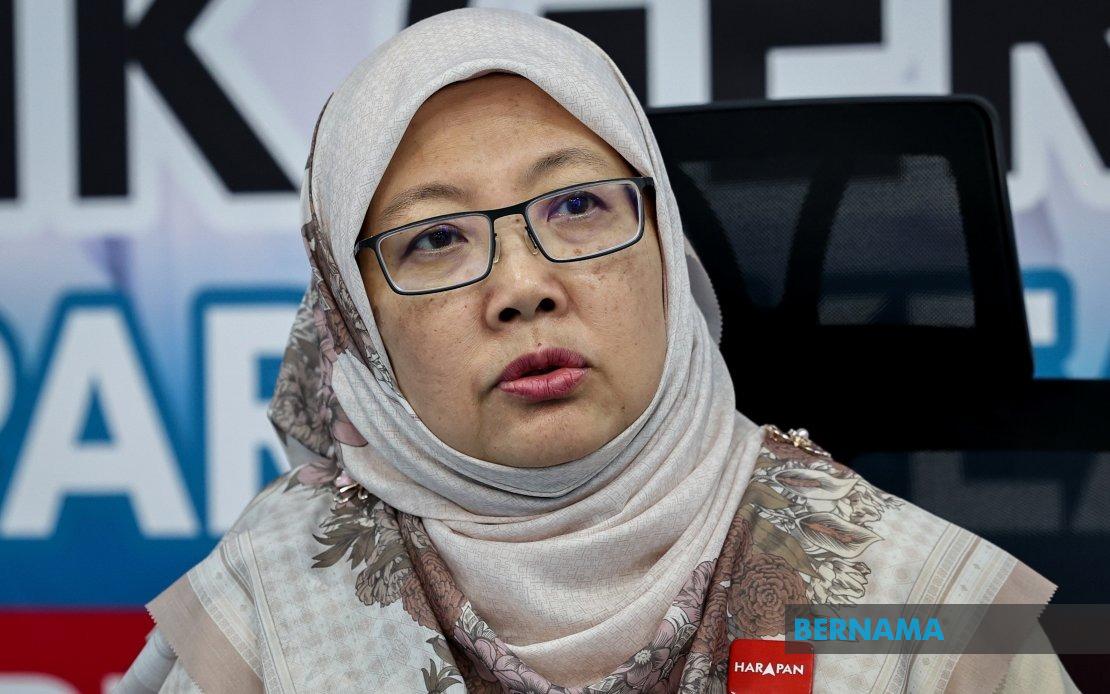
Johor PKR chairman Datuk Seri Dr Zaliha Mustafa articulated the coalition's position in measured terms, emphasizing that PH views the constitutional role of the Sultan as paramount and inviolable. By explicitly invoking the Johor State Constitution 1895, she signalled respect for the state's historical legal architecture and the monarchy's institutional prerogatives—a calculated move designed to appeal to traditionalist voters and highlight PH's commitment to proper constitutional governance.
The controversy stems from contemporary Malaysian electoral practices, where major coalitions typically announce their chief ministerial candidates well before elections, allowing voters to make informed choices about leadership. However, PH's decision to defer this announcement reflects a strategic calculation that differs markedly from this trend. Rather than naming a candidate, the coalition has chosen to frame the Menteri Besar appointment as exclusively the Sultan's constitutional domain, effectively sidestepping expectations set by incumbent Johor Menteri Besar Datuk Onn Hafiz Ghazi.
Dr Zaliha's statement makes clear that PH intends to redirect campaign discourse toward substantive governance issues. By arguing that the coalition possesses numerous capable leaders qualified for executive responsibility, she deflected pressure to identify a single personality, instead positioning PH as a cohesive team committed to administrative competence. This approach attempts to shift voter attention from personality-driven politics toward policy substance—a narrative particularly resonant in Johor, where economic development and job creation remain paramount concerns among the electorate.
The timing of this positioning merits careful analysis. Elections in Malaysian states increasingly turn on economic management and service delivery rather than ceremonial governance questions. PH's insistence that the people require detailed explanations of the state's development agenda, rather than clarity about leadership personalities, reflects an understanding that Johor voters—a constituency spanning urban, rural, and industrial areas—prioritize tangible improvements to living standards. The coalition appears confident that policy proposals addressing employment, infrastructure, and economic diversification will prove more persuasive than traditional leadership contests.
From a constitutional perspective, PH's stance aligns with Malaysia's foundational principle that hereditary monarchs retain significant executive prerogatives, particularly at state level. By explicitly affirming this principle, PH distinguishes itself from political movements that might challenge or circumvent royal authority. This positioning carries particular weight in Johor, where the Sultanate commands deep historical reverence and institutional loyalty. The assertion that PH respects constitutional limitations on executive appointments may resonate with voters concerned about maintaining proper checks on political power and preserving the monarchy's role as guardian of constitutional order.
The implicit criticism embedded in PH's response targets the expectation that coalition partners should pre-announce their leadership candidates. Such practices, while now commonplace, fundamentally alter the dynamics of executive selection by effectively removing the Sultan's discretion from public discourse. By reasserting the constitutional allocation of this power, PH challenges what might be characterized as democratic mission creep—the gradual expansion of popular input into functions traditionally reserved for constitutional monarchies.
This strategy carries both advantages and risks for the coalition. The advantage lies in appearing constitutionally principled and respect-conscious, potentially attracting voters troubled by the erosion of monarchical authority. The risk involves appearing evasive to voters who interpret the position as institutional obfuscation, a refusal to provide transparency about who would lead the state. In Johor's politically competitive environment, where voters increasingly demand clarity about leadership choices, this ambiguity could prove costly if opposition parties effectively characterize PH as unwilling to stand behind potential candidates.
The reference to PH's pool of qualified leaders serves as a hedge against this vulnerability. By naming no single individual but emphasizing leadership depth, PH attempts to signal that the specific identity matters less than the competence and commitment of whoever the Sultan selects from the coalition's ranks. This framing assumes voters will prioritize governance capability over personality—a reasonable but not guaranteed assumption in Malaysian electoral contests, where individual political figures often command dedicated followings.
For Malaysian politics more broadly, this episode illustrates ongoing tension between democratic participation and constitutional monarchy. Modern electoral systems increasingly expect transparency and popular input into executive selection, yet Malaysia's constitutional framework explicitly vests such powers in the Sultan. PH's position attempts to reconcile these competing pressures by respecting constitutional order while promising substantive policy benefits. Whether this approach proves persuasive to Johor voters will indicate whether the electorate values procedural constitutionalism above leadership clarity in state-level contests.

