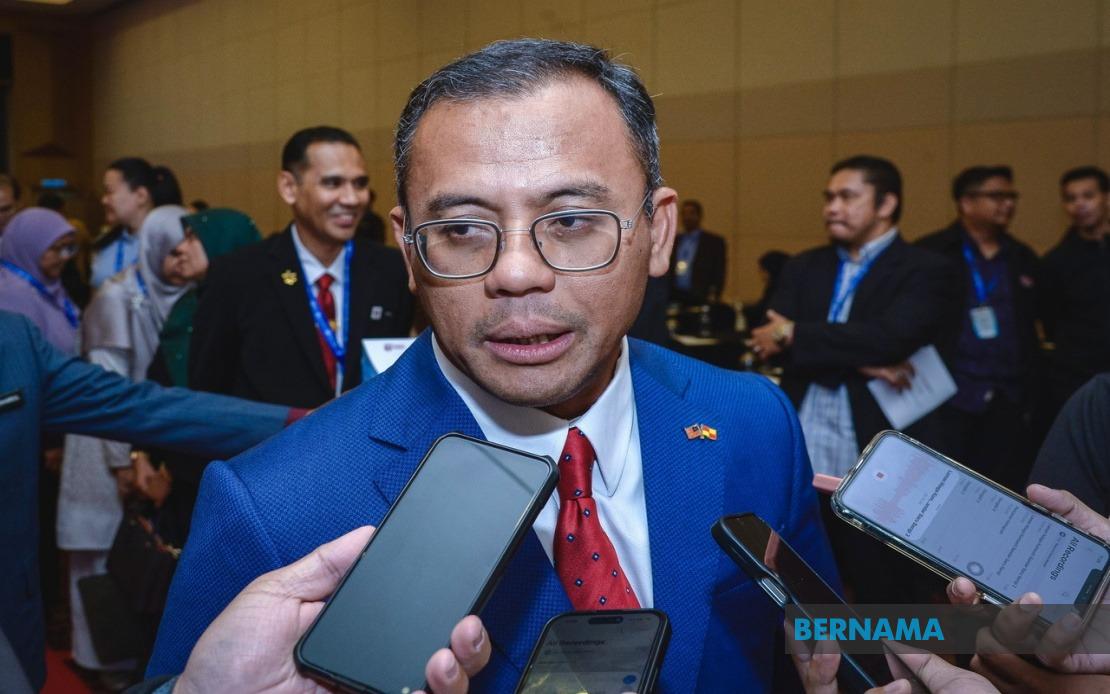
Pakatan Harapan has indicated it remains receptive to forging political alliances with rival parties, so long as any such arrangements are anchored in two core commitments: maintaining political stability and advancing the interests of ordinary Malaysians. The statement from Amirudin Shari, a senior PKR figure and member of PH's Presidential Council, reflects the coalition's pragmatic stance toward the complex landscape of Malaysian politics as the country heads toward critical electoral contests.
Amirudin, who serves as Selangor Menteri Besar, underscored that PH's openness extends beyond specific parties or coalitions. Speaking after officiating the Ecology International Conference II at Bangi, he emphasized that cooperation with any political entity merits consideration if it meets the coalition's foundational principles. This framing suggests PH is positioning itself as principle-driven rather than opportunistic, a rhetorical stance designed to deflect criticism that it might be engaging in mere political calculations or short-term tactical maneuvers.
The remarks carry particular weight given persistent speculation about potential realignment between PH and Bersatu, particularly at the state level in Selangor, Malaysia's most economically significant state and a PH stronghold. Media reports from the previous week had suggested Selangor's PH branch might be open to collaboration with Bersatu, sparking questions about whether Malaysia's fractured political landscape is shifting again. Amirudin moved swiftly to dampen such speculation, flatly denying that Selangor PH had reached any understanding with Bersatu or engaged in substantive discussions leading to formal cooperation.
Yet the Selangor leader's denial, while categorical, also contained carefully hedged language that leaves room for future developments. He acknowledged that various ideas and proposals circulate within political circles, attributing these partly to broader national-level realignments and preparations for upcoming elections. This distinction between current reality and hypothetical future possibilities reflects the uncertainty characterizing Malaysian politics, where yesterday's rivals often become tomorrow's allies based on shifting electoral calculations and factional dynamics.
Crucially, Amirudin emphasized that any major political decision involving cooperation cannot be made unilaterally at the state or regional level. Instead, such matters require evaluation and approval from PH's central leadership, a reminder that the coalition operates through hierarchical decision-making structures. This assertion serves multiple purposes: it signals that PH leadership maintains discipline and prevents freelancing by ambitious state-level figures, while also suggesting that substantive discussions, should they occur, would be conducted through proper institutional channels rather than backroom deals.
The timing of these overtures carries significance in the context of Malaysia's electoral calendar. General elections remain on the horizon, and several state polls, including Melaka, are also in prospect. Political observers widely recognize that coalition-building ahead of such contests shapes both the competitive dynamics and the eventual outcomes. For PH, which swept to power in 2018 before suffering setbacks, demonstrating electoral strength and relevance becomes paramount. Bersatu, meanwhile, has navigated a complex trajectory, breaking from UMNO and eventually joining Perikatan Nasional before facing its own internal tensions.
The concept of cooperation itself warrants examination within Malaysia's specific political context. Governing coalitions in the country often involve multiple parties with distinct organizational bases and policy priorities, requiring constant negotiation and compromise. PH's own formation brought together PKR, DAP, and Amanah—three quite different entities—and the coalition has repeatedly experienced strains over ministerial appointments, policy direction, and factional positioning. Any expansion to include additional parties would necessarily complicate this internal dynamics further, demanding mechanisms to manage competing interests.
Amirudin's framing of stability as a prerequisite carries both principled and strategic implications. Stability appeals to voters wary of political chaos and to businesses requiring predictable policy environments. For PH, emphasizing this principle positions the coalition as responsible stewards of governance rather than mere power-seekers. Simultaneously, insisting on people's interests as a central criterion allows PH to retain flexibility: almost any policy position can be justified by claiming it serves public welfare, providing cover for pragmatic political decisions that observers might otherwise characterize as purely self-interested.
The broader backdrop involves Malaysia's persistent political fragmentation. No single party commands a parliamentary majority in most configurations, necessitating coalition governments. This structural reality means that cooperation between parties, whether formal or informal, constitutes the norm rather than the exception. PH's openness to working with other entities recognizes this reality while attempting to maintain its own internal coherence and ideological positioning.
For Southeast Asian observers, Malaysia's political flexibility offers both lessons and cautionary tales. The region's various democracies grapple with similar coalition dynamics, where parties must balance ideological commitments against practical electoral imperatives. PH's evolution from an opposition coalition promising reform to a governing coalition navigating compromise mirrors experiences across the region, where parties in power often struggle to maintain the principled clarity they possessed in opposition.
Looking forward, the significance of Amirudin's statements may lie not in what was explicitly announced but in what remains unresolved. PH has preserved its capacity to pursue cooperation if circumstances warrant, while simultaneously denying that such negotiations are currently underway. This positioning allows the coalition to respond flexibly to political developments without appearing to abandon its stated principles or rush into hasty alliances. Whether this equilibrium can be maintained through the demanding period of election campaigns remains uncertain, particularly if electoral calculations suggest that cooperation would materially improve PH's prospects or prevent unfavorable outcomes.

