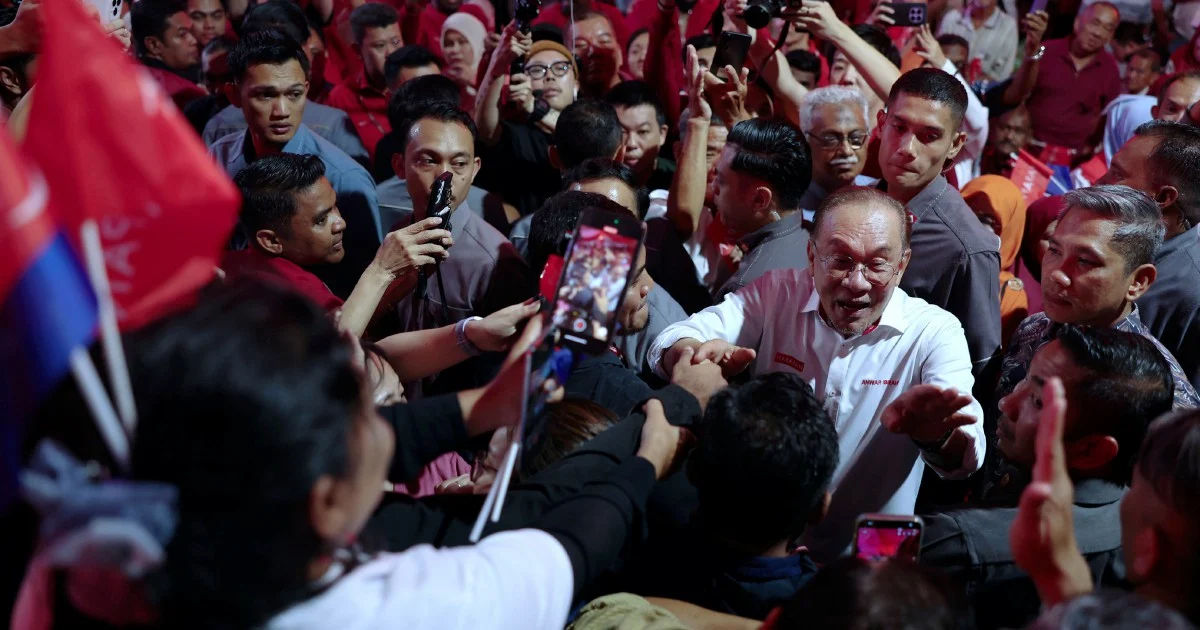
Pakatan Harapan launched its complete roster of 56 candidates for Johor's state election on July 11 at an event in Tangkak, with coalition chairman Datuk Seri Anwar Ibrahim presiding over the announcement. The move marks a critical moment for the opposition alliance as it gears up for an electoral battle in Malaysia's second-largest state by population, where political competition remains intense between multiple coalitions vying for legislative control.
The timing of the candidate announcement reflects the compressed campaign schedule that characterises Malaysian state elections. With polling day set for July 11, parties have limited weeks to build momentum, mobilise grassroots supporters, and communicate their policy platforms to voters. PH's early release of its full slate demonstrates organisational preparation and suggests the coalition has resolved internal negotiations over candidate allocation among its constituent parties, which typically involves delicate horse-trading over winnable seats.
Johor represents particularly significant electoral terrain for PH. As the southernmost peninsula state and home to major urban centres including Johor Bahru, the state election outcome could reshape the broader political landscape. A strong showing would bolster PH's narrative of growing electoral momentum following its 2022 emergence as the largest bloc in parliament, while defeat could embolden rival coalitions and create instability within the current federal government configuration that depends on complex inter-party arrangements.
The Johor electorate has demonstrated its volatile nature in recent years. The state has experienced multiple changes in government and shifting voter preferences, with urbanised areas increasingly tilting towards reform-oriented candidates whilst rural constituencies maintain more traditional voting patterns. Understanding this complex constituency breakdown is essential for assessing PH's prospects with its 56-candidate offering, as the coalition must balance fielding competitive candidates in competitive urban seats whilst maintaining presence in traditional strongholds and contesting marginal constituencies where victory margins typically measure in the hundreds.
Anwar Ibrahim's personal involvement in the announcement underscores PH's commitment to the Johor contest. As Prime Minister and coalition chairman, his public endorsement of the candidate slate carries both symbolic and practical weight, signalling unity within an often-fractious alliance and projecting confidence in the federation's electoral strategy. His presence in Tangkak also demonstrates engagement with constituencies beyond the federal capital, a necessary component of state election campaigning.
The 56-candidate roster encompasses PH's three main component parties—PKR, DAP, and Amanah—alongside smaller coalition members. The distribution of candidatures across these parties reflects agreements struck during coalition negotiations, with seat allocations typically determined by calculations of electoral viability, internal party hierarchies, and geographical representation. Such arrangements frequently generate frustration among disappointed candidates and party members, yet represent essential compromises necessary for maintaining coalition cohesion.
Johor's electoral dynamics extend beyond mere seat counts. The state contains diverse communities—Malay-Muslim majorities in rural regions, significant Chinese populations in urban areas, and Indian communities distributed across towns and plantation areas. Effective campaign messaging must address these varied constituencies with tailored policy positions on education, economic opportunity, local development, and religious governance. PH's candidate selection must therefore balance demographic representation with electoral winability, a perpetual tension in Malaysian electoral politics.
The opposition coalition faces competition from Barisan Nasional, which possesses historical advantages in Johor and remains deeply embedded in state institutional structures and patronage networks. Additionally, smaller coalitions and independent candidates may fragment opposition votes, particularly in marginal constituencies where victory margins prove paper-thin. Understanding the precise competitive landscape in each of the state's 56 constituencies becomes essential for predicting the election outcome beyond simple national opinion polling.
Campaign messaging from PH candidates will likely emphasise economic development, anti-corruption credentials, and governance improvements. Recent federal performance under PH-led administrations provides both opportunities—citing specific policy achievements and investments—and vulnerabilities, should voters feel disappointed by unfulfilled campaign promises or governance missteps. Individual candidate campaigns must navigate these broader coalition narratives whilst establishing personal connections with constituents and demonstrating local responsiveness.
The candidate announcement initiates the formal campaign phase, though informal campaigning typically begins much earlier. Over coming weeks, candidates will conduct ground-level engagement activities including community meet-and-greets, policy forums, and media appearances designed to build name recognition and establish campaign narratives. Digital platforms provide additional campaign channels, enabling candidates to reach younger voters and disseminate messages beyond traditional geographic limitations.
For Malaysian politics more broadly, the Johor contest provides an important mid-term test of voter sentiment regarding the federal government. Elections in individual states function as barometers for national political health, offering indications of whether governing coalitions maintain sufficient electoral support or face emerging challenges that could influence future federal configuration. A Johor outcome substantially diverging from national polling trends would demand serious analysis regarding state-specific dynamics versus broader national factors.
The election also reflects Malaysia's ongoing political transition. Since 2018, the country has experienced extraordinary electoral volatility, with multiple government changes at state and federal levels. Johor's July 11 election represents the next data point in assessing whether this turbulence is stabilising around new equilibrium arrangements or whether voters continue exercising fluid preferences that defy traditional political alignments. The stakes extend beyond Johor's borders into national political calculations.

