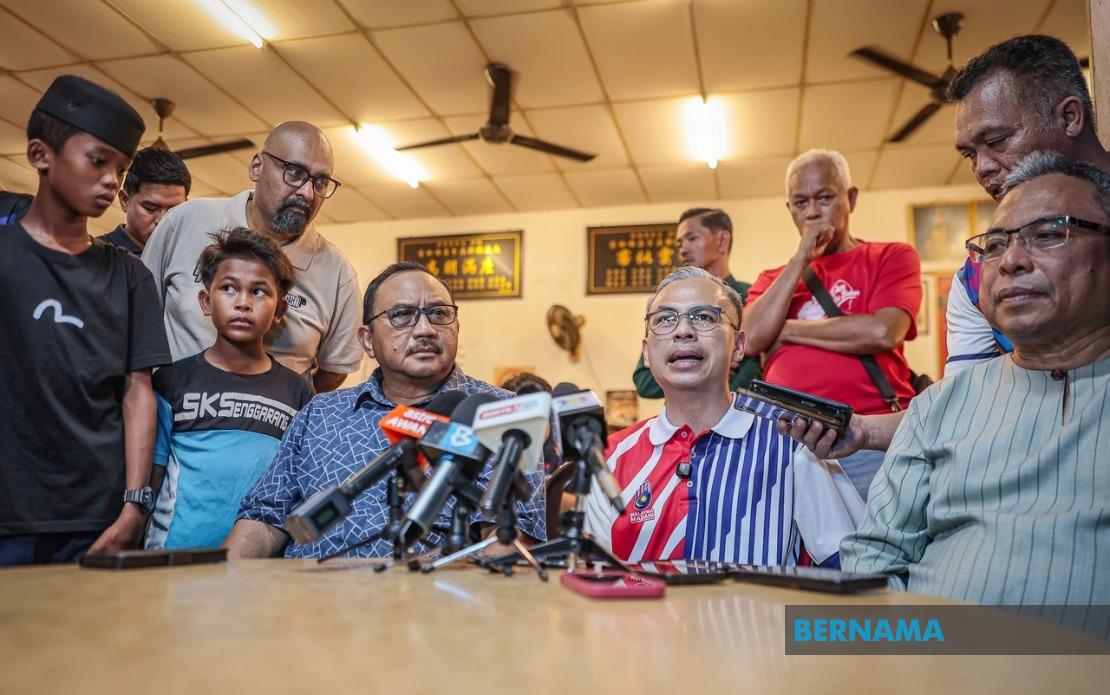
Pakatan Harapan is preparing a comprehensive campaign for the 16th Johor State Election that marries conventional grassroots organization with modern digital communication strategies, reflecting the coalition's attempt to reach voters across demographic and geographic lines in Malaysia's second-largest state by population. The campaign formally commences following the nomination process, with coalition leaders positioning themselves to maximize visibility across both traditional and online channels during what promises to be a closely watched electoral contest in the peninsula's southern industrial heartland.
According to Datuk Fahmi Fadzil, the PH Communications director and Minister of Communications, the integrated approach reflects a deliberate strategy to ensure the coalition's platform penetrates all layers of society. By pairing direct community engagement—the traditional strength of Malaysian opposition politics—with rapid information dissemination through social media networks, PH aims to counter the historical organizational advantages of the ruling Barisan Nasional in Johor, where BN retains substantial institutional machinery and local relationships. The communications approach signals recognition that Malaysian voters increasingly consume political information through multiple channels simultaneously, and that relying solely on either grassroots activation or digital presence would leave substantial voter segments unreached.
PKR, the largest component of the PH coalition and the primary bearer of opposition hopes in Johor, is fielding 20 candidates across the state's constituencies. The party's leadership structure—with Fahmi personally overseeing campaign commencement in certain areas and deputy president Nurul Izzah Anwar accompanying candidates at nomination venues—underscores the campaign's hierarchical coordination and the stakes PH has invested in the state contest. Establishing dedicated media dissemination channels represents an institutional commitment to information control and rapid response capabilities, critical infrastructure for modern electoral competition where narratives can shift rapidly in response to opponent statements or external events.
The emphasis on fact-based communication deserves scrutiny as a campaign positioning tool. By explicitly committing to accuracy and evidence-driven messaging, PH implicitly critiques potential misinformation from opponents while establishing a benchmark for voter evaluation of campaign claims. This rhetorical stance particularly resonates in Johor, where infrastructure development projects—visible, tangible outcomes of governance—become central to electoral narratives. The coalition's invocation of specific mega-projects, particularly the Rapid Transit System Link and the Johor-Singapore Special Economic Zone, demonstrates how PH intends to translate federal-state cooperation into compelling electoral narratives about economic opportunity and regional integration.
The Johor-Singapore Special Economic Zone represents particularly potent campaign material for PH, as it embodies federal initiatives with potential state-level economic spillovers. The zone, positioned as an engine for cross-border economic integration and job creation, allows the coalition to argue that federal PH governance translates into tangible state-level benefits. This messaging targets economically anxious constituencies in Johor's industrial zones and port cities, where employment and business opportunity concerns dominate local political discourse. The Rapid Transit System, meanwhile, speaks to urban development and quality-of-life improvements, constituencies that lean toward swing voters amenable to modernization narratives.
PH's governance performance in Selangor, Negeri Sembilan, and Penang provides the coalition with concrete examples against which voters can measure promises. These three states represent the coalition's most sustained governance records, offering documented policy implementation across multiple electoral cycles. By referencing these experiences, PH attempts to transform opposition identity from aspirational to empirical, suggesting that voters backing the coalition are not betting on untested promises but investing in proven administrative competence. Penang and Selangor's sustained development records, despite federal-state governance divisions, become particularly important as Johor voters consider whether divided governance—a likely scenario if PH gains ground—represents liability or opportunity for balanced administration.
The candidacy of specific individuals such as Dr Maszlee Malik and Onn Abu Bakar carries symbolic weight beyond their individual electoral prospects. Maszlee, who served as Education Minister under the first PH federal government, represents technocratic credibility and policy expertise. Onn Abu Bakar's candidacy in Senggarang signals PH's effort to establish presence across Johor's diverse constituencies. These personality-driven campaign elements complement the broader messaging architecture, offering voters recognizable names associated with specific policy domains or community leadership.
The Malaysian Communications and Multimedia Commission's formation of a task force alongside the Election Commission, Royal Malaysia Police, and Malaysian Media Council addresses the election cycle's misinformation environment. This institutional coordination represents an implicit acknowledgment that digital-age elections require active monitoring infrastructure to identify and counter false information campaigns. The task force's composition, mixing regulatory, law enforcement, and industry actors, reflects contemporary governance approaches to information integrity, though questions remain about enforcement mechanisms and the definition of misinformation boundaries in politically contested environments.
Fahmi's participation in community engagement activities, including attending a wayang pacak film screening, demonstrates the granular nature of Malaysian political campaigning, where candidates maintain visibility through cultural participation and informal social interaction. This ground-level presence, replicated across numerous constituencies and campaign events, sustains voter contact that social media and television campaigns cannot fully replace. The Hasrat MADANI programme, the broader context for Fahmi's Johor visit, connects PH's state campaign to its federal governing narrative and ideological positioning, linking local electoral contests to national governance themes.
The promise of a dedicated Johor state election manifesto signals that PH intends to move beyond generalized federal policy positions toward state-specific commitments and priorities. This approach acknowledges that Johor voters respond to locally relevant policy agendas, whether regarding port development, agricultural support, or regional infrastructure. A tailored manifesto also allows PH to differentiate its platform from both the incumbent Johor Barisan Nasional and any other opposition forces, consolidating anti-incumbent sentiment into coherent alternative governance proposals.
For Malaysian political observers, the PH campaign strategy reflects evolving opposition organizational sophistication and resource mobilization. The integration of digital and grassroots approaches, emphasis on governance track records, and coordination across multiple organizational levels suggests the coalition has absorbed lessons from previous electoral cycles and invested substantially in campaign infrastructure. Whether these sophisticated campaign mechanics translate into electoral gains in Johor, a state with distinct political dynamics compared to peninsular strongholds like Selangor, remains contingent on broader voter sentiment regarding national governance performance and local concerns about economic opportunity and development equity.

