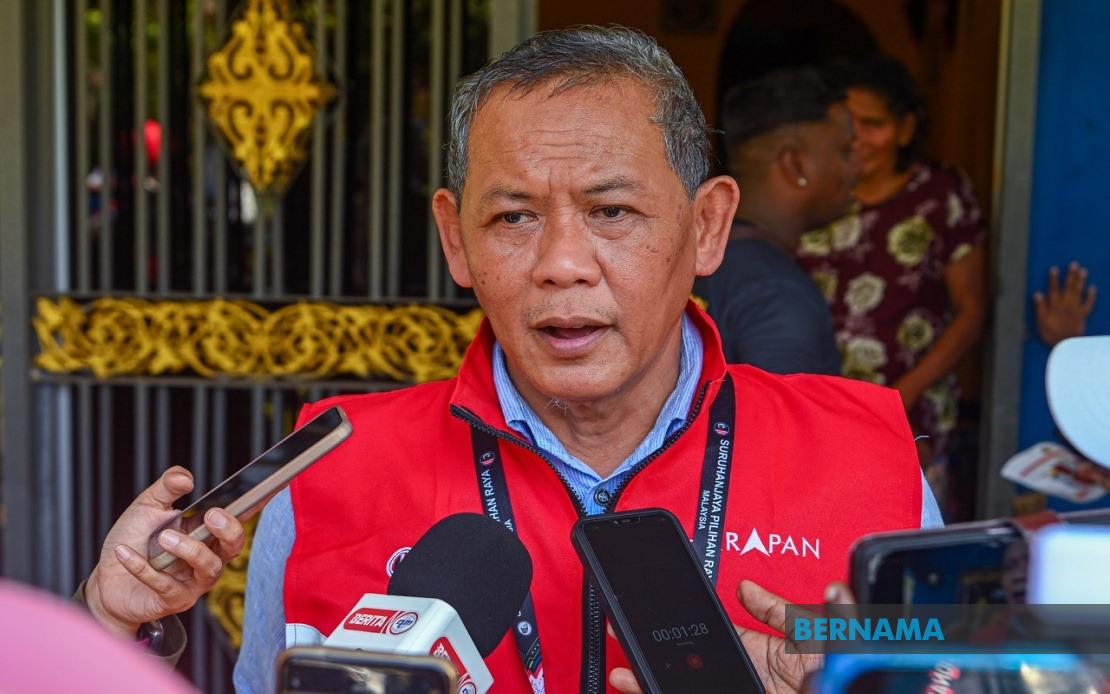
The opposition coalition Pakatan Harapan has recalibrated its electoral strategy for the 16th Negeri Sembilan state election, positioning its newly launched manifesto to appeal to a wider cross-section of voters by extending welfare and educational benefits to the M40 income group, traditionally sidelined in previous campaigns that focused predominantly on lower-income B40 households. State PH chairman Datuk Seri Aminuddin Harun, speaking at a community engagement session in Sekang Estate, Linggi, articulated this strategic pivot as a departure from narrow assistance programmes, emphasizing that the coalition now recognizes the economic vulnerabilities and aspirations of middle-income families earning between RM4,000 and RM8,000 monthly alongside the poorest segments of society.
The manifesto, branded "Negeri Sembilan Kekal Harapan" and anchored on ten key pledges, reflects growing recognition among PH strategists that the expanding middle class represents a crucial demographic in Malaysian electoral politics. Rather than presenting compartmentalized assistance schemes, the coalition has restructured its platform to position education access, healthcare provisions, and economic support initiatives as universal benefits designed to maximize impact across socioeconomic strata. This approach signals a maturation of PH's political messaging, acknowledging that blanket poverty-focused approaches risk alienating voters who perceive themselves as overlooked by conventional patronage politics, even as they struggle with cost-of-living pressures and educational expenses.
Aminuddin, simultaneously serving as Menteri Besar and vying for the Linggi state seat in a three-way battle against Barisan Nasional incumbent Datuk Mohd Faizal Ramli and Bersatu's Zamri Md Said, invoked PH's track record since assuming power in Negeri Sembilan following the 2018 general election as evidence of implementation capability. The distinction he drew between articulating promises and actualizing policy represents a common rhetorical strategy during electoral campaigns, yet carries particular weight in Malaysian politics where trust in institutional delivery remains contested. By anchoring the manifesto in demonstrated achievement rather than aspirational rhetoric, PH leadership appears to be attempting insulation against accusations of electoral grandstanding—a vulnerability that has periodically undermined opposition credibility when programme implementation encounters practical constraints or fiscal limitations.
The electoral timeline creates compressed conditions for campaign messaging. With the Negeri Sembilan State Legislative Assembly dissolved on June 5 and polling scheduled for August 1, candidates face less than a month between formal campaign launch and voting, restricting opportunities for detailed policy explanation or grassroots engagement. Early voting commences July 28, meaning campaigns must compress outreach efforts considerably. Within this constrained window, the manifesto's simplified structure of ten commitments functions as a mnemonic device for voters, reducing policy complexity to digestible talking points suitable for rapid dissemination through both traditional and digital media channels.
The M40 expansion carries particular significance for Negeri Sembilan specifically, where demographic composition reflects Malaysia's broader urbanization patterns. Port Dickson and surrounding areas contain substantial middle-class populations employed in services, commerce, and light manufacturing, constituencies unlikely to self-identify with B40 welfare narratives yet experiencing genuine financial pressures from inflation, housing costs, and education expenses. By acknowledging these constituencies explicitly, PH signals awareness that electoral coalitions require calibrated messaging addressing distinct constituent groups rather than monolithic policy packages. This represents pragmatic politics attuned to Malaysian voters' nuanced self-perception regarding socioeconomic status and deservingness of state assistance.
Aminuddin's supplementary appeal for mature campaign conduct and restraint regarding communal harmony reflects longstanding tensions within Negeri Sembilan electoral politics, where religious and ethnic sensitivities occasionally surface as campaign flash-points. By pre-emptively advocating for elevated discourse standards, the Menteri Besar attempts framing PH as the responsible, stability-oriented option while potentially inoculating against anticipated opposition accusations of social divisiveness. This messaging pattern, familiar across Malaysian elections, serves dual purposes: establishing moral high ground while implicitly warning supporters and opponents alike that certain rhetorical boundaries should remain inviolate.
The PKR vice-president's positioning also reflects internal coalition dynamics within PH, where resource distribution, candidate selection, and ideological emphasis occasionally generate friction among constituent parties. Aminuddin's articulation of coalition achievements, coupled with emphasis on PH's governing experience, subtly reinforces PKR's centrality within the coalition's Negeri Sembilan apparatus. As someone holding simultaneously positions as state PH chairman, Menteri Besar, PKR vice-president, Negeri Sembilan PKR chairman, and Member of Parliament, Aminuddin embodies the institutional consolidation that PKR has achieved within the state's political structure, a configuration that shapes coalition dynamics and candidate nomination processes.
Education expansion emerges as a particularly resonant policy theme within the manifesto's M40 focus. Malaysian middle-income families consistently identify education quality and accessibility as paramount concerns, with private schooling costs, examination preparation expenses, and university entrance fees representing major household budgetary pressures. By explicitly pledging expanded educational access for M40 children, the manifesto addresses authentic concerns among this demographic without depending upon redistribution mechanisms that might alienate higher-income constituencies. This represents nuanced class politics reflecting recognition that M40 households occupy economically precarious positions where marginal assistance programmes generate disproportionate impact compared to similar resources directed toward the poorest segments.
The manifesto launch at Sekang Estate in Linggi carries symbolic significance beyond mere logistical convenience. Estate communities, traditionally comprising Indian plantation workers and their descendants, represent a specific demographic whose economic integration and social representation have periodically become electoral focal points. By specifically conducting community engagement with this constituency immediately preceding manifesto articulation, PH leadership demonstrates attentiveness to minority community concerns while anchoring inclusive political messaging in concrete engagement patterns rather than abstract pledges.
Broader electoral context positions this Negeri Sembilan contest as a significant testing ground for PH's capacity to maintain political dominance in a state it has governed since 2018. Opposition narratives emphasizing coalition instability and governance challenges pose persistent challenges to PH retention strategies. Manifesto expansion toward M40 constituencies represents strategic anticipation that electoral consolidation requires not merely defending existing support bases but expanding coalitions across class lines. Whether this rhetorical repositioning translates into material policy delivery or genuine constituency expansion remains contingent upon implementation patterns following August 1 polling results.

