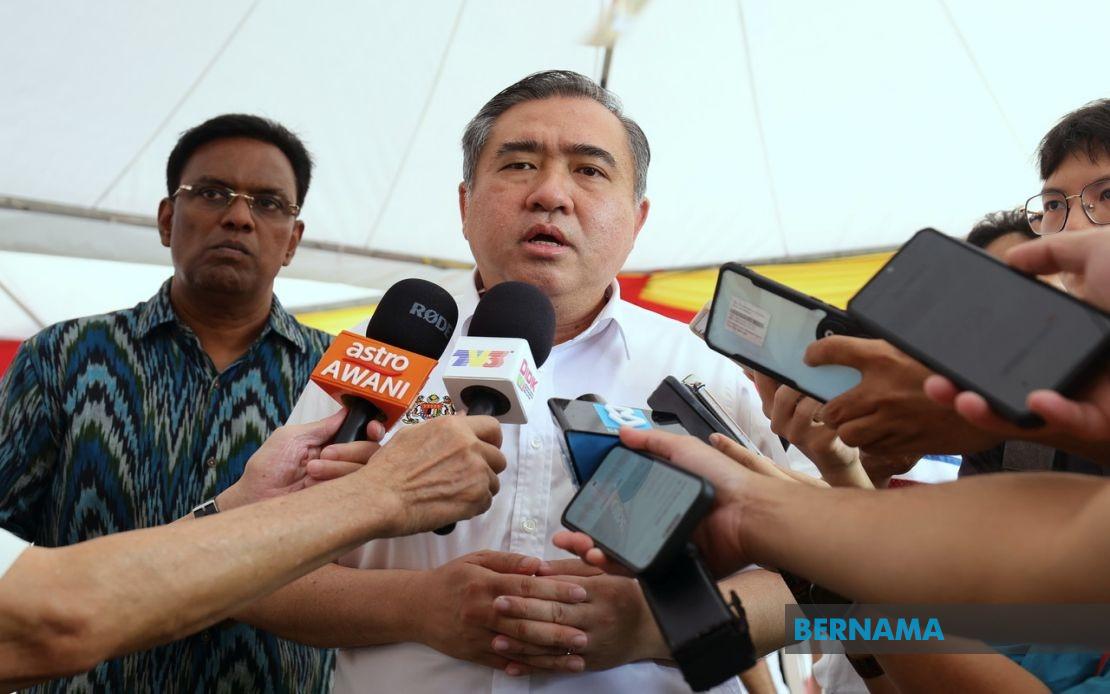
Pakatan Harapan has publicly declared its preparedness to confront whatever political tactics its opponents may deploy in the Negeri Sembilan state election, including the prospect of an alliance between Barisan Nasional and Perikatan Nasional. Speaking in Seremban on July 16, DAP secretary-general Anthony Loke stressed that the coalition would remain unperturbed by rival manoeuvres and would instead channel its energy into fortifying its own organizational machinery and mobilization efforts across constituencies.
Loke's comments came as political observers closely monitor negotiations between BN and PN over seat distribution and electoral boundaries for the Negeri Sembilan contest. The prospect of a formal understanding between the two major opposition blocs represents a significant shift in Malaysia's political landscape, particularly given their previous competitive relationship. The DAP leader's measured response suggests that PH has already prepared contingency strategies to address the electoral arithmetic that might result from such an arrangement.
The coalition's strategic approach centers on maintaining solidarity among its component parties, which PH leadership views as the decisive factor in converting campaign momentum into actual electoral victories. Loke emphasized that internal unity would prove more valuable than reactive responses to opposition positioning, effectively calling for PH members to concentrate on their own strengths rather than being drawn into defensive posturing. This calculated stance reflects lessons learned from previous state contests, particularly the Johor election, where PH managed to navigate complex political scenarios while maintaining organizational discipline.
The Negeri Sembilan election carries particular significance for PH because it represents a test of whether the coalition can sustain its 2018 breakthrough and subsequent political victories despite facing a potentially consolidated opposition. The state has historically served as a bellwether for broader national political trends, making its outcome highly consequential for PH's positioning heading towards the next general election. Loke's confidence appeared rooted in confidence in the incumbent Menteri Besar Datuk Seri Aminuddin Harun's administration, which has governed the state since 2018 under PH's leadership.
One significant challenge confronting PH involves potential shifts among ethnic Chinese voters, who have traditionally formed a critical component of the coalition's electoral base. Opposition parties, particularly MCA within the BN framework, have signalled their intention to aggressively contest for this demographic's support. Loke acknowledged these dynamics while maintaining that the electorate would ultimately determine outcomes based on performance and policy delivery rather than pre-election claims about voter sentiment. His refusal to engage extensively in counter-claims about public support reflects confidence that PH's administrative record would prove persuasive to voters.
The Transport Minister contextualized his political remarks within a broader discussion of the government's development initiatives in Negeri Sembilan. Loke sought to reframe the MADANI Adopted Village programme—which provides targeted assistance and infrastructure improvements to rural communities—as a sustained commitment rather than a campaign-timed initiative. This distinction carries political weight, as opposition parties frequently characterize such programmes as electoral gimmickry designed to win votes in the months preceding polling day. Loke's assertion that the initiative represents continuous implementation since 2025 across all government ministries attempted to insulate the programme from such criticism.
The MADANI framework encompasses three complementary initiatives targeting different rural constituents: the Adopted Village scheme providing comprehensive community assistance, the Adopted School programme improving educational infrastructure, and the Santuni MADANI scheme delivering direct support to vulnerable populations. Kampung Mantin Dalam and nearby communities in the Seremban district have been selected as pilot sites for these programmes, potentially benefiting from upgraded basic services and targeted development spending. While Loke denied that timing was political, the reality that such initiatives feature prominently in his remarks during the pre-election period underscores their potential electoral significance.
Parallel developments in Melaka have created complications for the broader PH coalition, with the state DAP organization withdrawing from the government over disputes concerning nominated assembly member appointments. Loke characterized this as an internal matter that Melaka DAP had resolved independently, noting that the state government had reorganized its legislative assembly seating arrangements accordingly. This withdrawal, while politically significant for Melaka's governance, signals potential strains within PH that could ripple into other state contests if similar disputes emerge. The Negeri Sembilan campaign therefore unfolds against a backdrop of coalition cohesion concerns that require careful management.
The electoral mathematics in Negeri Sembilan reflect a broader challenge facing Malaysia's political system, where minority governments and coalitions dependent on multiple parties have become increasingly common. The state assembly comprises 36 seats distributed across multiple constituencies with varying demographic compositions and incumbent party representations. A BN-PN understanding could significantly alter the competitive dynamics by consolidating opposition strength in specific areas, potentially reducing the total number of genuinely competitive three-way contests and forcing PH to achieve higher vote shares to secure its target seats.
Loke's emphasis on focusing inward rather than outward reflects strategic maturity born from several election cycles. Rather than expending resources on critiquing opposition positioning, PH intends to concentrate on the ground-level mechanics of voter mobilization, candidate selection, and message delivery in its target constituencies. This approach acknowledges that while opposition cooperation may impose constraints, PH's ability to deliver on its electoral promises and communicate effectively with voters remains within its control. The coalition's confidence that administrative performance under Aminuddin Harun's leadership constitutes a compelling asset suggests that PH believes its track record in Negeri Sembilan warrants continued voter confidence despite intensifying electoral competition.
As the Negeri Sembilan campaign formally begins, the state will witness a triangular or potentially four-cornered contest depending on how PN participates in the BN framework. Regional observers will scrutinize whether the potential BN-PN understanding actually translates into effective electoral coordination or whether internal tensions within such an arrangement create openings for PH. The outcome carries implications extending beyond Negeri Sembilan, potentially signalling whether opposition consolidation represents a sustainable political strategy capable of recapturing national power or merely a tactical arrangement of limited durability.

