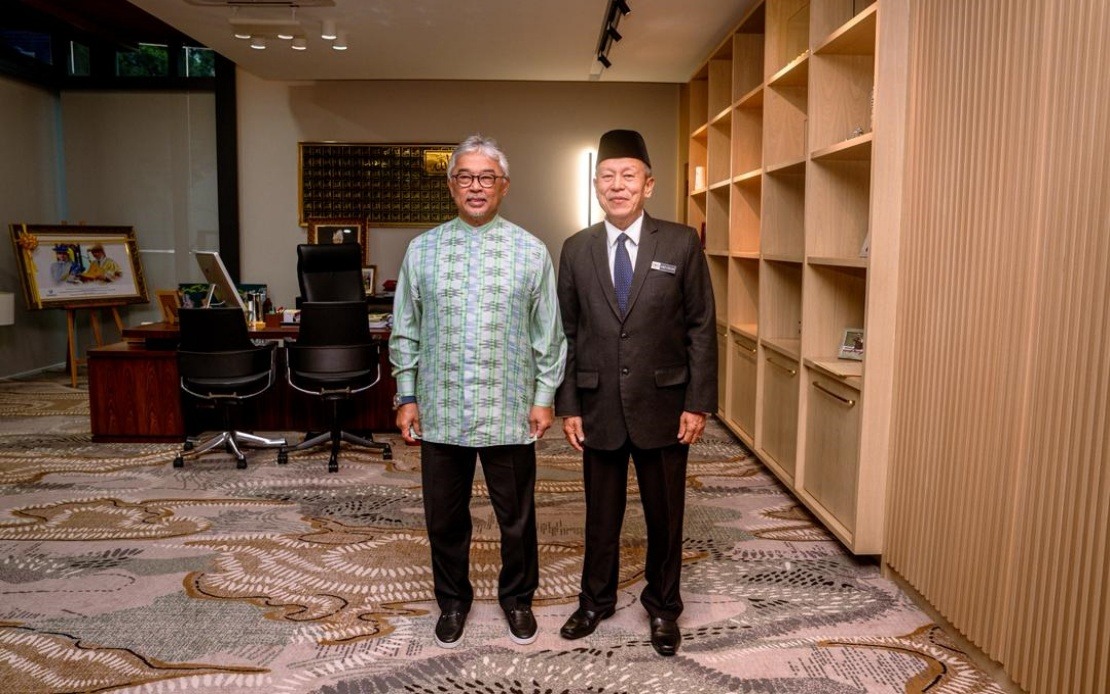
The Sultan of Pahang, Al-Sultan Abdullah Ri'ayatuddin Al-Mustafa Billah Shah, received Malaysia's anti-corruption watchdog chief at his official residence in the capital yesterday, signalling royal engagement with the country's governance agenda. The hour-long audience between His Royal Highness and MACC chief commissioner Datuk Seri Abd Halim Aman at Shahzan House in Ampang underscores the institution's efforts to maintain high-level support as it pursues its mandate to root out graft across the nation's public and private sectors.
According to a statement issued by the MACC, the meeting centred on an operational update regarding the commission's recent achievements and strategic direction. The briefing covered a broad spectrum of the agency's work, extending beyond simple case statistics to encompass systemic reforms aimed at reinforcing standards of honesty and propriety throughout Malaysian institutions. This presentation-style engagement reflects an emerging pattern where constitutional monarchs are kept directly informed of progress in key governance areas, rather than relying solely on cabinet-level reporting channels.
The substance of yesterday's discussion ranged across several interconnected themes pertinent to Malaysia's anti-corruption landscape. Officials highlighted initiatives designed to bolster institutional credibility at a time when public trust in enforcement mechanisms remains fragile. The MACC has faced periodic criticism regarding the independence of its investigations and the consistency of its prosecutorial decisions, making royal acknowledgement of its work potentially valuable for institutional legitimacy. Governance standards, corruption prevention frameworks, and the mechanisms through which the commission builds confidence among the citizenry featured prominently in the conversation.
For Malaysian readers familiar with the constitutional framework, such audiences carry symbolic weight beyond their immediate operational significance. The Sultan's willingness to dedicate time to an anti-corruption briefing sends a message about the importance placed on transparency and accountability within the palace's worldview. In Malaysia's system, the constitutional monarch serves as guardian of institutional integrity and upholderof national values, making royal attention to anti-graft efforts a form of institutional endorsement that agencies actively seek.
Datuk Seri Abd Halim's approach to this engagement reflects the MACC's broader strategy of cultivating relationships across Malaysia's power structures. By securing direct access to the Sultan, the chief commissioner demonstrates that the commission maintains pathways to influence at the highest levels of the state. This matters particularly in Pahang, Malaysia's largest state by land area, where the Sultan holds significant administrative and symbolic authority. Strengthening this relationship potentially facilitates the MACC's work investigating cases with local dimensions or involving state-level institutions.
The timing of this audience also merits consideration within the broader political environment. Malaysia's anti-corruption agency has navigated contentious periods, particularly when high-profile investigations touched on sensitive political figures or business interests. Royal audiences and public acknowledgements of the MACC's work serve as confidence signals, suggesting that institutional independence remains protected even amid broader political currents. For observers in Southeast Asia watching Malaysia's governance trajectory, such events indicate whether anti-corruption agencies can maintain operational autonomy or face pressure to moderate their activities.
Datuk Seri Abd Halim's expressions of gratitude and appreciation, while diplomatically conventional, underscore the MACC's appreciation for patronage and support from constitutional institutions. The chief commissioner explicitly referenced His Royal Highness's backing for the commission's corruption-fighting mission, framing anti-graft work within a narrative of shared national purpose. This rhetorical positioning places corruption prevention alongside other state-sanctioned objectives like national security and economic development, elevating its political standing.
The discussion of governance standards and transparent, accountable institutions reflects global imperatives that have become embedded in Malaysian political discourse. International rankings measuring anti-corruption performance and governance quality increasingly influence Malaysia's standing in the eyes of foreign investors, development partners, and international business communities. The MACC's emphasis on these metrics during the royal briefing suggests the agency frames its work partly as a response to external benchmarking pressures, not merely domestic imperatives.
For Southeast Asian readers, this audience illuminates how Malaysia's institutions navigate relationship-building in a system where formal hierarchies and informal networks coexist. The MACC, as an ostensibly independent constitutional body, requires political space to function effectively. Cultivating explicit support from the Sultan provides that space, creating a protective buffer against executive pressure. This dynamic mirrors patterns observable in other regional democracies where anti-corruption agencies must maintain multiple relationships to sustain operational autonomy.
The specific mention of initiatives to enhance public confidence deserves particular attention. Malaysia's society contains multiple communities with varying levels of faith in institutions, and perceptions of fairness in anti-corruption enforcement remain contested. The MACC's public messaging about these initiatives, amplified through royal engagement, represents an attempt to build broader legitimacy. Whether such efforts succeed depends partly on whether investigative outcomes align with public perceptions of impartiality and consistency.
Moving forward, this audience may signal the beginning of regular engagement between the palace and the anti-corruption agency. Institutionalising such contacts could strengthen the MACC's position as it pursues investigations that might prove politically contentious or administratively challenging. Equally, it demonstrates to the commission's international partners that Malaysia's constitutional authorities actively support accountability mechanisms, a point of relevance for countries considering bilateral cooperation or investment.
The broader significance extends to questions about how Southeast Asian democracies balance executive power with institutional checks. Malaysia's Sultan serves functions distinct from executive presidents or prime ministers, creating unique configurations for institutional independence. The MACC's ability to cultivate explicit royal support, distinct from prime ministerial approval, offers a model through which anti-corruption agencies can secure political protection while maintaining investigative autonomy. As governance challenges persist across the region, such arrangements merit close observation by those studying institutional resilience and democratic accountability.

