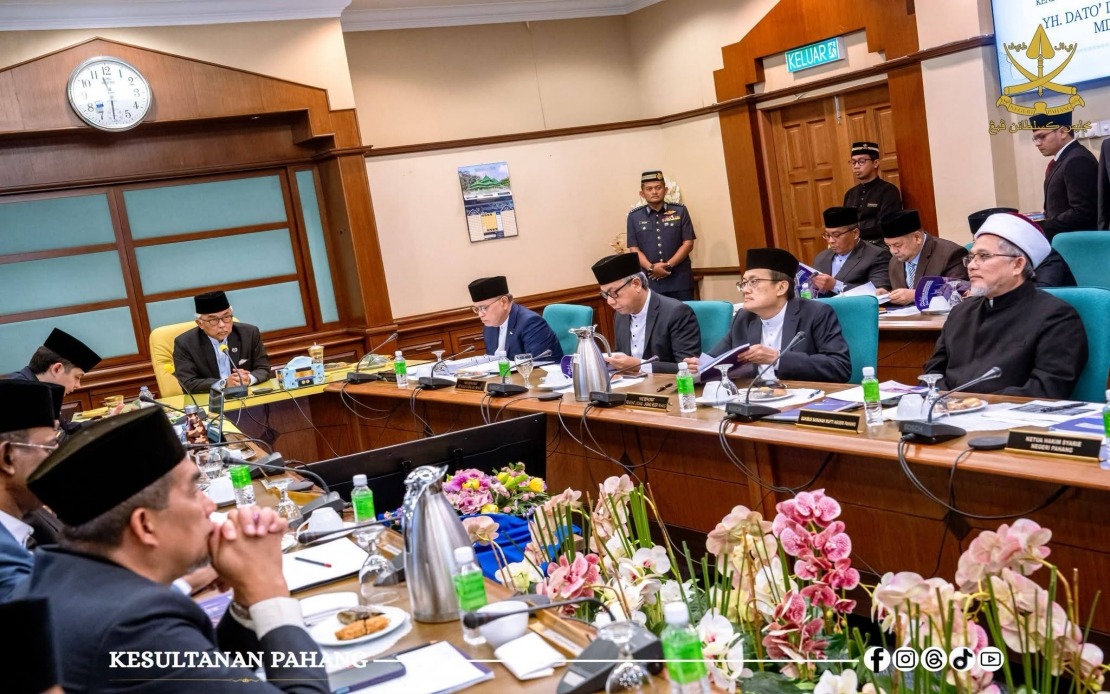
Pahang's ruler has made a significant intervention in Islamic criminal justice policy, advocating for a fundamental shift in how Syariah courts approach sentencing by embracing community service as a meaningful alternative to traditional punishments. Sultan Al-Sultan Abdullah Ri'ayatuddin Al-Mustafa Billah Shah outlined his vision during the 199th session of the Pahang Islamic Religious and Malay Customs Council, signalling state-level momentum toward reimagining rehabilitative approaches within Malaysia's dual legal framework.
The Sultan's remarks, documented on the Kesultanan Pahang official portal, reflect growing momentum across Southeast Asia toward criminal justice reform that prioritises offender rehabilitation over retributive measures. His position challenges conventional perceptions of Islamic punishment as inherently punitive, instead reframing community service within a framework that views sentences as opportunities for behavioural transformation and social reintegration. This conceptual reorientation carries implications for how Syariah courts might address lower-tier offences while maintaining legal coherence with Islamic jurisprudence.
Central to the Sultan's argument is a distinction between punishment as mere penalty and punishment as pedagogical instrument. By characterising community service as a tool encouraging reflection and reform, the ruler positions such sentences as compatible with Islamic values of mercy, redemption and personal development. This framing proves significant because it provides theological and philosophical grounding for alternative sentencing—crucial for legitimising policy changes within communities where tradition carries substantial weight in shaping legal perception.
The Sultan envisions these reforms as part of a broader trajectory toward what he termed a "new era in Syariah legal development" emphasising progressive methodologies. Rather than presenting this as departure from Islamic principles, he articulates the shift as evolution within Malaysia's established Syariah legal framework, ensuring that alternative sentencing operates within constitutional boundaries and existing legislative structures. This measured approach acknowledges jurisdictional complexities within Malaysia's federal system where Islamic law administration remains primarily a state function.
Implementation of community service sentencing would target offences deemed suitable for such alternatives, reflecting careful calibration between rehabilitation objectives and the gravity of specific transgressions. The Sultan emphasised that such measures serve broader societal interests by transforming offenders into socially productive individuals who actively uphold Islamic values. This framing positions rehabilitation not as leniency but as more rigorous engagement with offenders, requiring their sustained participation in structured community activities that reinforce social responsibility.
The attending Tengku Mahkota of Pahang, Tengku Hassanal Ibrahim Alam Shah, represented institutional continuity in advocating these progressive reforms, suggesting multigenerational political commitment to modernising the state's Islamic justice administration. This hierarchical support strengthens the likelihood of serious legislative consideration and implementation, as both current and future leadership demonstrate alignment on this direction.
Parallel recognition of governance achievements underscores the state's broader commitment to institutional integrity. The Pahang Royal Council, State Secretary's Office, Islamic Religious Department and Syariah Prosecution Department received SPINE 2026 certification recognising their integrity and governance management systems. This recognition validates the administrative infrastructure necessary for implementing complex alternative sentencing programmes, demonstrating existing institutional capacity for managing such innovations.
The Sultan framed governance recognition as evidence of sustained efforts embedding integrity throughout state institutions. For community service sentencing to function effectively, robust anti-corruption mechanisms and systematic oversight prove essential—competencies these agencies have already demonstrated. This institutional foundation provides confidence that alternative sentencing would operate through transparent, accountable mechanisms rather than discretionary channels vulnerable to manipulation.
For Malaysian legal observers, these developments reflect international penal reform trends gaining traction across Commonwealth jurisdictions and Muslim-majority nations alike. Singapore, for instance, has expanded community service options within its criminal justice framework, while several Muslim-majority countries have experimented with rehabilitative alternatives respecting both Islamic principles and modern penological approaches. Pahang's trajectory positions it as potential innovator within Malaysia's multi-tiered legal system.
The Sultan's call carries particular resonance given Malaysia's diverse religious and cultural landscape, where confidence in Syariah institutions depends substantially on perceptions of fairness and proportionality. By framing alternatives as education and guidance rather than weakness, the Ruler addresses potential reservations that rehabilitative approaches undermine Islamic law's authority or Islamic values. This rhetorical positioning proves strategically important for building public acceptance among constituencies emphasising traditional approaches.
Implementation timelines and specific legislation remain undefined, yet the Sultan's public advocacy signals serious intention to pursue these reforms through appropriate consultative channels. The call for "meaningful and practical decisions" suggests forthcoming discussions involving Islamic scholars, legal professionals and civil society stakeholders, reflecting Malaysia's institutional culture of consensus-building on religious matters.
These proposals emerge within broader global conversations about criminal justice reform touching Malaysia's legal landscape. As resource pressures mount on correctional systems and evidence accumulates regarding community service effectiveness, jurisdictions increasingly recognise alternative sentencing's fiscal and social benefits. For Pahang specifically, community service programmes could reduce institutional overcrowding while delivering measurable community benefit through offender participation in structured activities.
Looking forward, the Sultan's intervention may catalyse similar discussions across other Malaysian states, where divergent Syariah legal approaches currently characterise the federation. Should Pahang successfully pilot rehabilitative sentencing alternatives, other states might gradually adopt comparable models, creating incremental progress toward more harmonised, forward-looking Islamic criminal justice administration across Malaysia.

