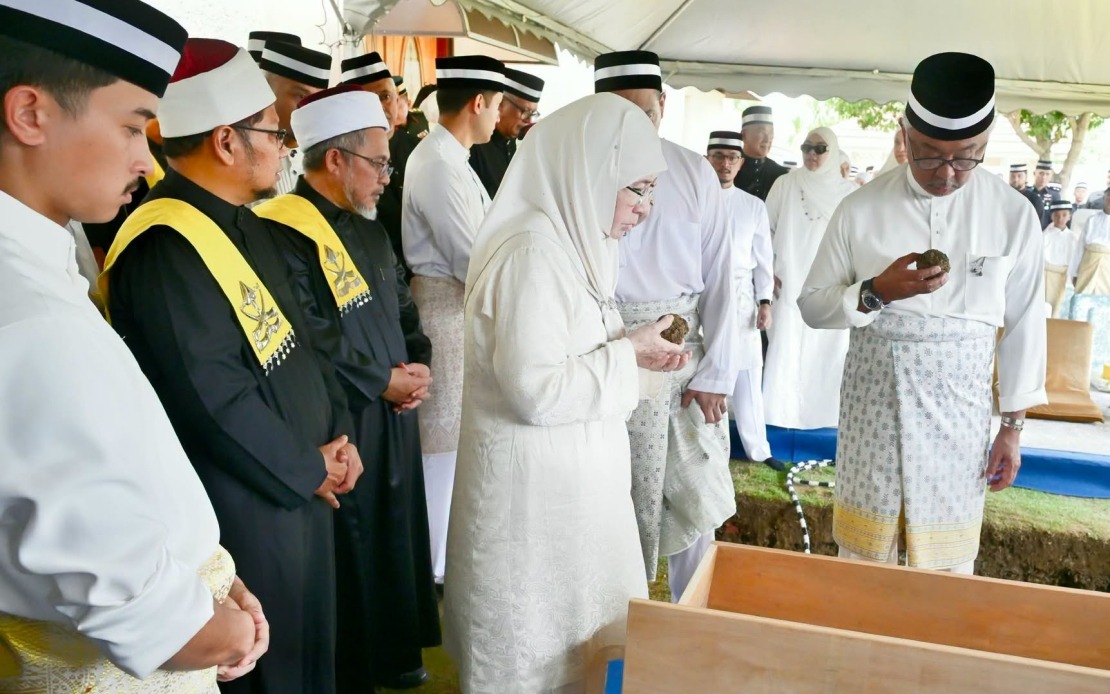
The Pahang royal household has initiated formal mourning protocols following the death of Tengku Puteri Seri Kemala Tengku Datuk Seri Aishah Almarhum Sultan Ahmad Shah, elder sister to the Sultan of Pahang Al-Sultan Abdullah Ri'ayatuddin Al-Mustafa Billah Shah. The three-day observance commenced on Wednesday and extends through Saturday, during which members of the royal family will adhere to established customs and protocols as directed by the Sultan.
Major General Datuk Mohamed Zahari Yahya, Comptroller of the Royal Household of the Sultan of Pahang, outlined the specific requirements for family members during this period of remembrance. Those participating in the formal mourning will be expected to dress entirely in white as a mark of respect, while male members of the household are additionally required to observe complementary dress codes that form part of the royal family's traditional observances during times of bereavement.
The late Tengku Puteri's passing represents a significant moment for the Pahang royal institution, particularly for Sultan Al-Sultan Abdullah and his consort Tengku Ampuan Pahang Tunku Azizah Aminah Maimunah Iskandariah. The formal statement acknowledged the profound nature of this loss within the immediate royal circle and extended recognition of her importance to the state's ruling household. The Sultan's directive to observe structured mourning reflects both personal grief and the ceremonial responsibilities that accompany senior royal deaths in Malaysia's constitutional monarchy system.
Tengku Puteri Seri Kemala Tengku Datuk Seri Aishah passed away at a Kuala Lumpur hospital at 9:15 pm on Wednesday following what official sources characterize as her final illness. Her funeral arrangements proceeded swiftly according to Islamic and royal protocols, with interment taking place the following afternoon at the Royal Mausoleum in Pekan, the historical heartland of Pahang's sovereignty. The rapid completion of funeral rites reflects both religious requirements and the established customs surrounding royal burials in Malaysia.
The state's administration has extended an invitation to Pahang's broader population to participate in spiritual observances for the deceased. Residents have been encouraged to recite Surah Al-Fatihah, the opening chapter of the Quran traditionally recited for the deceased, and to engage in personal prayers seeking divine forgiveness and mercy for Tengku Puteri's soul. This invitation represents a common practice in Malaysian Islamic tradition whereby the community extends collective spiritual support to grieving families through coordinated prayer and remembrance.
The mourning period carries significance beyond ceremonial observance, serving as a moment for reflection on the Pahang royal family's historical role and continuity. As one of Malaysia's major sultanates with centuries of documented governance, the Pahang palace maintains strict protocols regarding succession, mourning, and the ceremonial dimensions of royal life. These formalized practices maintain institutional traditions while reinforcing the symbolic authority that the monarchy holds within Malaysian constitutional arrangements and popular consciousness.
For Malaysian readers and the broader Southeast Asian region, such events highlight the continuing importance of traditional institutions within modern nation-states. While Malaysia has transformed substantially since independence, the royal institutions—particularly at state level—remain embedded in national identity and governance structures. The Pahang sultanate, in particular, holds historical prominence as one of the oldest established royal houses in the Malay Peninsula, tracing its lineage through centuries of regional politics and adaptation.
The protocol surrounding this mourning period also reflects broader patterns within Malaysia's Islamic governance framework. The combination of Islamic funeral practices with royal ceremonial tradition demonstrates how religious and constitutional monarchical systems interweave within the Malaysian context. For international observers and Southeast Asian stakeholders, such practices illustrate the distinctive character of Malaysian institutions, which blend Islamic principles with inherited commonwealth traditions and modern administrative structures.
The state administration's public communication regarding these events underscores how government institutions maintain transparency and inform citizens about significant developments affecting national and state institutions. The Comptroller's statement served not merely to announce procedural requirements but to frame the passing within a narrative of loss, spiritual significance, and community participation—functions that extend beyond administrative necessity into cultural and symbolic territory.
Looking forward, this moment of mourning may prompt broader reflection within the Pahang royal household regarding institutional continuity, succession considerations, and the evolving role of state monarchies in contemporary Malaysia. While the immediate focus remains on honoring the deceased and providing appropriate support to grieving family members, the structural dimensions of such events ripple through both state and federal governance arrangements. For Malaysian political observers and regional analysts monitoring constitutional monarchy dynamics in Southeast Asia, the Pahang royal family's response to this loss offers insights into how traditional institutions navigate contemporary challenges while maintaining ceremonial and cultural significance.

