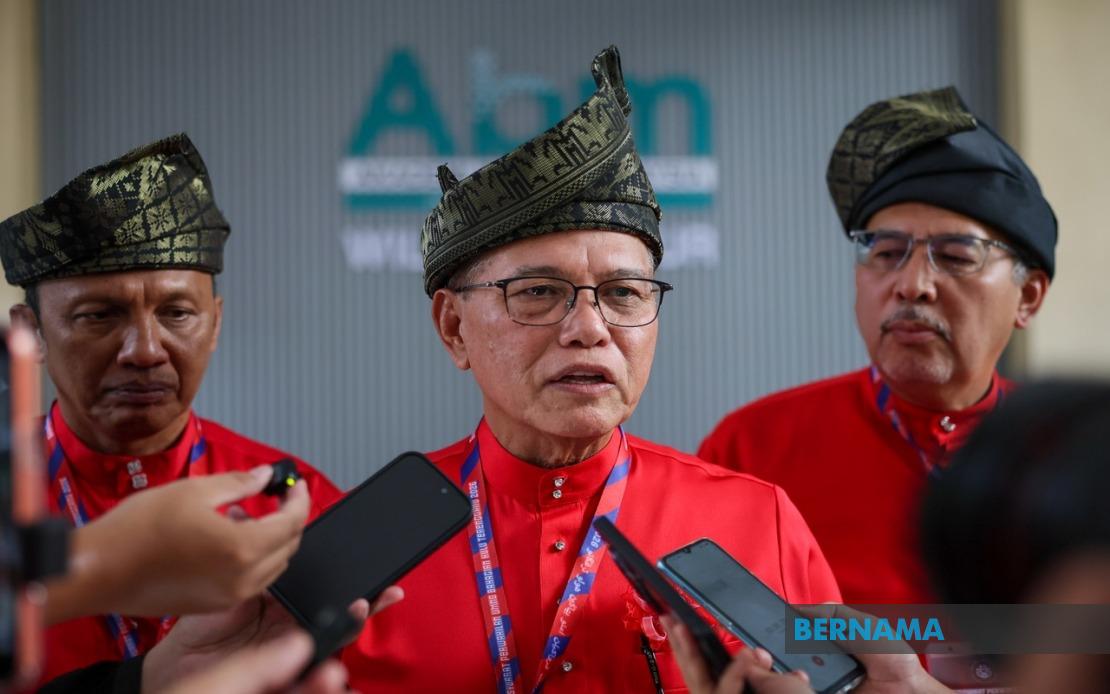
The Pahang State Government has moved decisively to resolve a decades-old concern affecting thousands of rural families, bringing closure to land title disputes that have long constrained settlers' economic security and inheritance planning. With 99.5 per cent of more than 43,600 Federal Land Development Authority (FELDA) settlers in Pahang now holding formal land titles, the state has substantially cleared a backlog that historically created uncertainty around property ownership and generational wealth transfer. Menteri Besar Datuk Seri Wan Rosdy Wan Ismail announced the milestone during an event in Kuala Berang, signalling that a problem requiring sustained administrative effort and coordination between state and federal authorities is nearing final resolution.
Only a small cohort of more than 200 cases remain in limbo, Wan Rosdy disclosed, and these are concentrated in a specific category: applications entangled in inheritance disputes. Such complications typically arise when settler deaths occur without clear succession documentation or when family members dispute rightful ownership claims. Rather than rushing these sensitive matters, the state government has committed to finalising them methodically within 2024, ensuring that legal clarity accompanies resolution and protecting the interests of all claimants. The deliberate pace reflects recognition that inheritance cases often require negotiation, genealogical verification, and sometimes mediation to reach consensus among extended families—a reality that distinguishes them from straightforward administrative processing.
For Malaysia's rural economy and social stability, this achievement carries genuine weight. FELDA settlers represent a foundational cohort in the nation's agricultural development narrative, with many families having invested decades in plots originally allocated by the authority under a social contract emphasizing land ownership as a pathway to rural prosperity. Yet the absence of formal titles has constrained their capacity to access agricultural financing, mortgage their land for business expansion, or securely bequeath assets to heirs. By removing this friction, Pahang is enabling settlers to function as full property owners within Malaysia's legal and financial systems—a transition with downstream effects on rural credit markets, farm investment cycles, and intergenerational wealth consolidation.
Wan Rosdy framed the accomplishment as evidence of the state government's commitment to settler welfare and the resolution of long-standing ownership issues. His framing carries political weight, particularly among UMNO constituencies dependent on rural support. Land security remains a visceral concern in agricultural communities, where property rights directly translate into dignity, economic capacity, and family stability. By delivering on this front, the Pahang administration has addressed a tangible grievance that affects not merely individual families but the broader legitimacy of state governance in these regions. The Menteri Besar's explicit attention to the matter signals that the state recognizes settler concerns as worthy of priority action rather than bureaucratic neglect.
Pahang's progress does not stand in isolation. Johor has achieved parallel success, issuing approximately 14,000 to 16,000 titles to its FELDA settlers, indicating that multiple state governments have recognized the urgency and begun systematic clearance. This regional momentum suggests possible federal coordination or shared administrative innovations that have accelerated what once appeared an intractable problem. Whether through simplified documentation procedures, dedicated teams, or enhanced digital recordkeeping, the states appear to have identified pathways to efficiency that merit study by other administrations managing similar settler populations elsewhere in Peninsular Malaysia, Sabah, and Sarawak.
Beyond immediate title resolution, the state government is simultaneously addressing the needs of FELDA's second generation—settlers' adult children who have grown up on parental holdings but lack independent land access. Pahang has approved approximately 16,000 housing plots designed to accommodate this cohort, recognizing that demographic succession and youth retention in rural areas depend on tangible pathways to property ownership and settlement. This forward-looking dimension distinguishes the initiative from mere administrative cleanup; it positions land policy as an active tool for rural demographic and economic sustainability. Young people routinely migrate to cities in search of affordable housing and economic opportunity; by providing approved plots within or adjacent to FELDA schemes, the state creates conditions for youth to remain rooted in their communities while maintaining agricultural or rural-based livelihoods.
The housing allocation also reflects evolving social expectations within FELDA communities. Where first-generation settlers may have accepted modest single-family dwellings, their children increasingly expect residential standards aligned with contemporary middle-class norms. Meeting these expectations through deliberate provision of 16,000 plots signals that the state views FELDA advancement not as a historical project completed decades ago but as an ongoing developmental mission requiring adaptive investment. Whether these plots will be offered on concessional terms, through microfinance facilities, or on commercial rates will significantly shape uptake; the magnitude of the commitment suggests serious intent rather than rhetorical gesture.
The consolidation of land titles also carries implications for Malaysia's broader agricultural policy environment. Formal title-holders are more likely to participate in contract farming arrangements, access government subsidies and extension services, and engage with agribusiness supply chains. FELDA settlers, once they achieve title security, become eligible participants in modernization schemes, irrigation projects, and market linkage programmes. The administrative clearing of title backlogs thus removes a precondition for sectoral advancement, potentially unlocking settler productivity gains that have been constrained by tenure insecurity. Economists and agricultural planners have long noted that property rights certainty drives investment incentives; Pahang's initiative, by eliminating this barrier, creates conditions for efficiency improvements across smallholder farming networks.
Looking forward, the remaining 200-plus inheritance cases represent both a minor fraction and a procedural challenge distinct from routine title issuance. These cases likely involve complex family situations, disputed claims, or incomplete documentation that resist rapid resolution without risking legal vulnerability. The state's commitment to resolve them by year-end suggests allocation of specialized resources—perhaps legal advisory capacity or dedicated inheritance case managers—rather than treating them as ordinary administrative items. Success here will require sensitivity to family dynamics and clarity regarding succession law as it intersects with Islamic inheritance principles, customary land tenure, and civil law frameworks applicable across FELDA schemes.
For Malaysian readers tracking rural governance and social welfare delivery, Pahang's near-completion of FELDA title settlement offers concrete evidence that sustained institutional effort can resolve problems that appear structurally intractable. The achievement also underscores the continuing centrality of land security in rural legitimacy and development. While urban Malaysia debates industrial policy and digital transformation, the state's focus on settler title clarity reminds that foundational property rights remain essential to rural prosperity, family stability, and generational opportunity. The parallel expansion of housing access for second-generation settlers further demonstrates recognition that rural development requires ongoing investment rather than assumption that founding-era programmes remain adequate for contemporary expectations.

