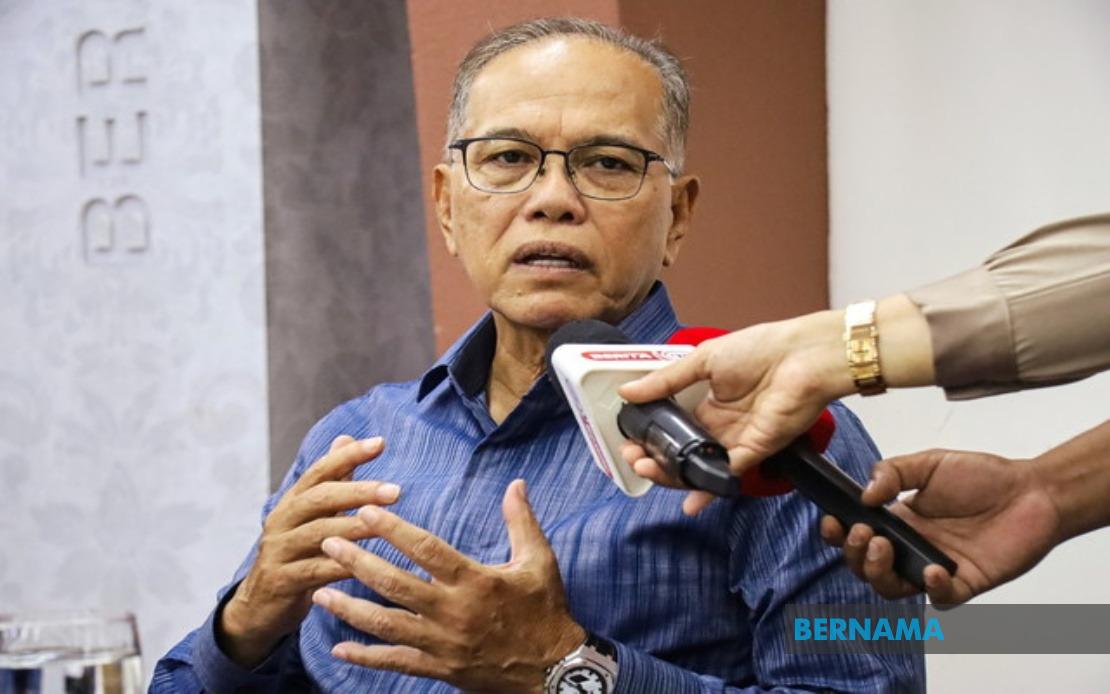
Pahang's Barisan Nasional leadership has signalled its intention to preserve the Unity Government arrangement with Pakatan Harapan through the 16th General Election, marking a significant statement of continuity in the state's political landscape. Datuk Seri Wan Rosdy Wan Ismail, who serves as both the party's chairman in Pahang and the state's Menteri Besar, made the announcement while overseeing a scholarship ceremony in Kuantan, underscoring the BN's focus on delivering public services alongside its political commitments. The declaration comes at a time when Malaysian political coalitions remain fluid, with various state governments grappling with balancing competing interests and maintaining parliamentary stability.
The partnership between BN and PH in Pahang represents a pragmatic response to the electoral outcome in the 2022 general election, when neither coalition secured a decisive majority in the 42-seat state assembly. BN and Perikatan Nasional each managed to secure 17 seats, while PH's eight representatives proved crucial in determining the government's composition. In November 2022, following the Pahang Regent's consent, a government was formed combining BN and PH, with Wan Rosdy appointed to lead the administration. This arrangement has functioned as a miniature expression of the national Unity Government framework, though state-level politics often operate under different pressures and incentives than federal politics.
Wan Rosdy's explicit commitment to maintaining the coalition until GE16 provides a measure of political certainty for Pahang, where the stability of the state government directly impacts the delivery of development projects and public services. The Menteri Besar emphasised that the state leadership would concentrate on fulfilling its obligations to the people's welfare, a messaging strategy that frames political cooperation as subordinate to governance outcomes. For a state like Pahang, which encompasses diverse districts from urban Kuantan to rural hinterlands, maintaining a stable coalition reduces the risk of mid-term government collapse that could disrupt development initiatives and bureaucratic continuity.
Yet the Pahang BN's statement carries a note of flexibility that merits scrutiny. While expressing commitment to PH, Wan Rosdy simultaneously announced openness to cooperating with other parties in preparation for GE16. This dual positioning reflects the strategic calculus of coalition politics in Malaysia, where parties must balance loyalty to existing partners against the possibility of more advantageous arrangements. In Pahang's context, such pragmatism acknowledges that the political landscape could shift significantly before the next election, particularly if Perikatan Nasional, which holds the equivalent number of seats as BN in the state assembly, emerges as a more competitive force nationally or regionally.
The timing of this announcement, coupled with Wan Rosdy's focus on the state's Makmur Pahang Initiative scholarship programme, reflects a calculated approach to demonstrating effective governance. The initiative, which has allocated RM118,000 to 118 students for further studies in Egypt and New Zealand during the current month, represents the kind of tangible benefit delivery that strengthens political legitimacy. Additionally, the state government has channelled USD1,000 through Yayasan Pahang to students studying in Jordan and Morocco, extending the scholarship initiative's reach to multiple jurisdictions and religious contexts.
The Menteri Besar's remarks about the scholarship programme offer insight into the values prioritised by the state administration. Wan Rosdy highlighted the programme's consideration of courses with Islamic elements alongside fields of study deemed relevant to Pahang's development needs. This emphasis suggests a deliberate effort to align educational investment with both religious considerations important to Pahang's constituencies and practical skill requirements for the state's economy. Such targeted spending on education represents a politically advantageous investment, as it benefits specific families and constituencies while building human capital for the state's long-term prosperity.
For Malaysian federalism, the Pahang arrangement illustrates how coalition politics operates at state level in ways that sometimes diverge from national patterns. While the federal Unity Government emerged from necessity after no coalition achieved a parliamentary majority in GE15, the Pahang configuration resulted from a similar arithmetic but in a different political context. The state's experience demonstrates that multi-party coalitions can function administratively, though they require ongoing negotiation and compromise. The sustainability of such arrangements often depends less on ideological alignment and more on whether participating parties perceive mutual benefit in continuing the partnership.
Regionally, Pahang's political developments hold significance for Southeast Asia's largest Muslim-majority democracy. The state's willingness to bring together traditionally opposing coalitions signals a maturation in Malaysian political culture, moving beyond winner-takes-all approaches that have characterised much of the country's post-independence history. However, this evolution also introduces complexity and unpredictability into state governance, as coalition partners must constantly renegotiate their positions and interests. The Pahang experience provides valuable lessons for neighbouring countries grappling with similar coalition dynamics and challenges to political stability.
The emphasis Wan Rosdy placed on advising scholarship recipients to uphold Pahang's reputation and return home with excellent achievements reveals underlying anxieties about brain drain and human capital retention. Many developing states in Malaysia face challenges attracting and retaining skilled professionals, making overseas education initiatives a double-edged investment. The state government's investment in sending students abroad implicitly acknowledges the limitations of domestic educational institutions while hoping that recipients will eventually contribute to Pahang's development. This tension between enabling opportunity and risk of permanent emigration represents a constant challenge for state administrators seeking to balance educational access with retaining talented populations.
Looking toward GE16, Pahang's political configuration will merit close observation. The BN-PH arrangement in the state could either strengthen as parties recognise mutual benefits in continued cooperation or fracture if national political dynamics shift dramatically. The continued expansion and enhancement of programmes like Makmur Pahang, which Wan Rosdy pledged to pursue, will constitute a tangible measure of the coalition government's effectiveness. For Malaysian and regional observers, Pahang represents a significant experiment in pragmatic coalition governance, with outcomes that could influence political calculations across other Malaysian states and beyond.

