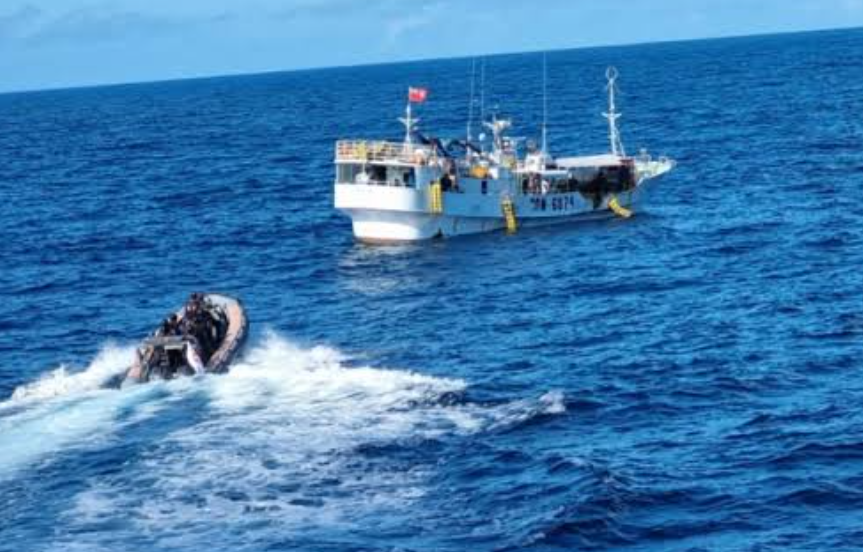
Authorities across the Pacific have ramped up enforcement actions against illegal fishing operations, with four vessels from China and Indonesia detained or brought to port during August as part of a sweeping regional initiative. The Pacific Islands Forum Fisheries Agency confirmed the detentions involved breaches ranging from unlicensed fishing to violations of existing licensing agreements, signalling intensified scrutiny of long-distance fishing fleets operating in the region's exclusive economic zones.
The enforcement surge reflects growing frustration among Pacific island nations over their inability to capture adequate economic benefit from vast marine resources. Operation Island Chief, the coordinated campaign running from 3 to 14 August, deployed surveillance assets across 28 million square kilometres of ocean, with authorities boarding and inspecting more than 100 vessels in total. The operation represented an unusual show of unity among 11 island nations determined to protect their fisheries jurisdiction and revenues. Australian military aircraft provided aerial surveillance capabilities while a United States Coast Guard vessel and Pacific maritime police forces conducted sea patrols, demonstrating the logistical scale required to monitor such expansive waters effectively.
The economic stakes driving this enforcement push are substantial. Pacific island economies depend heavily on fishing revenues, with tuna stocks generating approximately US$500 million annually in access fees—payments foreign vessels pay for rights to fish in territorial waters—and a further US$1.2 billion in export earnings. These revenues prove critical for roughly a third of Pacific island households, many in remote and economically vulnerable communities with limited alternative income sources. Yet the distribution of these benefits remains deeply inequitable. Although the region produces approximately half of the world's tuna supply, Pacific island nations only process or handle 15 per cent of this catch domestically. Most fish is instead shipped directly to Asian markets by the long-distance fleets that dominate the fishing industry, limiting opportunities for local value-addition and employment.
The detention of Chinese and Indonesian vessels touches on a diplomatically complex issue within the region. Chinese fishing companies operate substantial long-distance fleets throughout the Pacific and have established joint venture partnerships with several island governments, creating economic interdependencies that complicate enforcement actions. The reluctance of some authorities to publicly name offending vessels reflects these delicate relationships. However, previous incidents demonstrate that enforcement does occur. In July, Tuvalu authorities arrested a Chinese fishing vessel operating illegally within Tuvalu's waters while broadcasting false location data to evade detection. The vessel was subsequently fined and released after 24 days in detention, a relatively brief period that critics argue fails to deter persistent violators.
The broader compliance patterns reveal systemic challenges in fisheries management across the Western and Central Pacific region. Records from the Western and Central Pacific Fisheries Commission show that between 2008 and 2026, Chinese fishing boats accumulated 278 penalty notices—the second-highest tally globally, trailing only Taiwan's 319 infringements. This persistent pattern suggests that despite enforcement actions, Chinese vessels continue engaging in practices that violate regional fisheries regulations with concerning frequency. The disparity highlights how large-scale industrial fishing operations often treat fines as a predictable business cost rather than a genuine deterrent.
Tuvalu's enforcement action against the Chinese vessel carries particular significance given Tuvalu's diplomatic alignment with Taiwan rather than mainland China. This decision to pursue enforcement despite economic pressures and potential diplomatic friction demonstrates that some Pacific governments remain willing to prioritise sovereignty and fisheries governance over commercial relationships. Peter Hammarstedt, captain of the conservation vessel Sea Shepherd, which supported Tuvalu's maritime patrols, documented the incident and the subsequent detention, bringing international attention to the operation and highlighting how civil society organisations complement government enforcement efforts in resource-constrained Pacific nations.
The timing of this enforcement campaign aligns with growing regional anxiety about fisheries sustainability and governance. An annual meeting of 18 Pacific island leaders scheduled for late August in Palau is expected to address comprehensive strategies for protecting fishing rights and maximising revenue capture as climate change increasingly threatens fish stocks. Rising ocean temperatures and changing current patterns already reduce tuna populations in some traditional fishing grounds, intensifying competition among fishing nations and making governance more contentious. Pacific leaders face pressure to develop positions that both defend their sovereign rights and establish themselves as responsible stewards of global fisheries resources.
The operation's decision to withhold details about 16 additional vessels flagged as "of interest" reflects the operational sensitivity surrounding such enforcement. Authorities in Palau and Papua New Guinea declined to comment on their roles, while Kiribati's maritime police similarly avoided public statements. This discretion suggests that while enforcement occurs, Pacific governments carefully manage transparency to avoid antagonising major fishing nations whose vessels generate significant access fee revenues. The balance between deterrence and diplomacy remains precarious, particularly for smaller island nations economically dependent on fishing licence payments.
For Malaysia and other Southeast Asian nations with regional fishing interests, the Pacific enforcement trend carries implications. As ASEAN economies expand maritime commerce and fishing operations, the precedent of coordinated regional enforcement and the increasing sophistication of fisheries surveillance technology suggest that Southeast Asian waters may similarly experience enhanced monitoring. The Pacific's experience demonstrates that small nations can coordinate effective enforcement if they maintain political will and secure external technical support. Malaysia's significant fishing industry and the ongoing negotiations within ASEAN on maritime resource management suggest regional leaders should monitor how Pacific solutions develop and potentially adapt successful models for Southeast Asian contexts.

