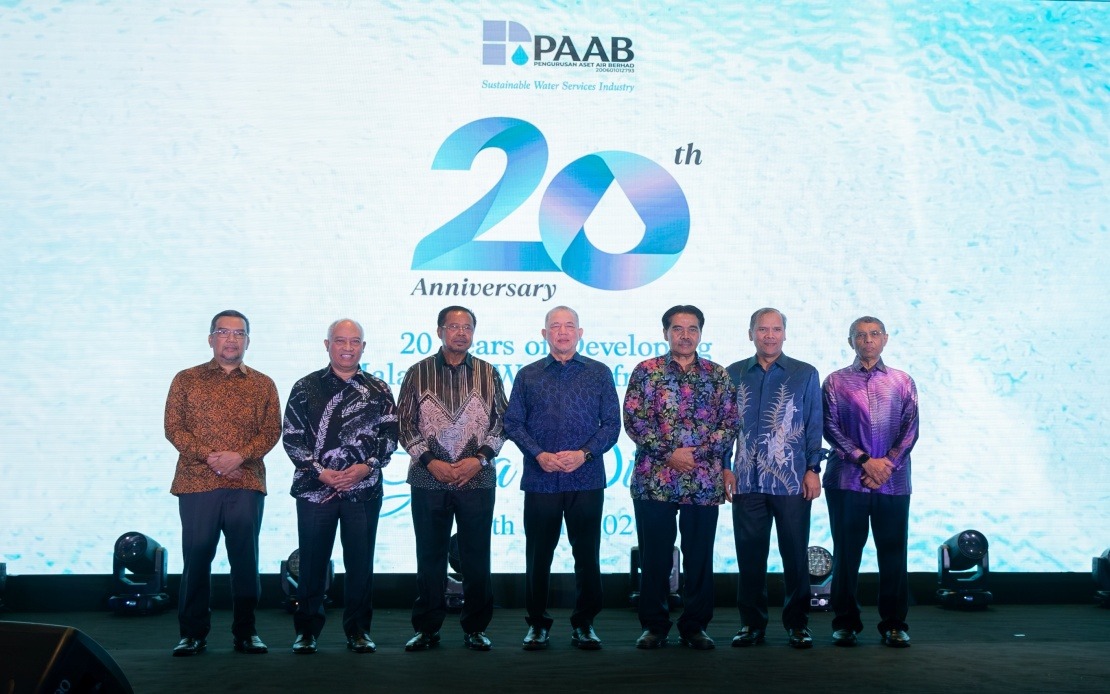
Malaysia's state-owned water asset manager, Pengurusan Aset Air Berhad (PAAB), reached a significant milestone this week as it commemorated two decades of catalysing the country's water services transformation. Established on May 5, 2006, the organisation has emerged as a backbone institution for public infrastructure development, channelling massive capital into water treatment, storage, and distribution systems across the nation. The milestone celebration, presided over by Deputy Prime Minister Datuk Seri Fadillah Yusof on June 25, underscored PAAB's pivotal role in securing Malaysia's water supply amidst growing national demands and evolving infrastructure challenges.
Since inception, PAAB has orchestrated the takeover of water industry debt totalling RM23.04 billion while simultaneously investing RM23.84 billion into capital projects. Combined, these figures represent RM46.88 billion in total financial commitments—a scale of intervention that reflects the complexity and capital intensity of revamping a fragmented water sector inherited from previous decades. The magnitude of this investment positions water services among Malaysia's most heavily capitalised public infrastructure domains, comparable in scope to major highway and rail development initiatives undertaken over similar timeframes.
The physical manifestation of PAAB's two decades of work is evident in tangible infrastructure gains. As of December 2025, ten states have formally endorsed the National Water Services Industry Restructuring Plan, a comprehensive strategy to modernise water systems across regions. This framework has yielded completion of 21 water treatment plants with combined daily capacity of 2,085 million litres, supplemented by 42 storage facilities holding 783 million litres and expansions totalling 3,263 kilometres of pipeline networks. These figures demonstrate not merely financial deployment but successful project execution across complex implementation environments spanning multiple states with varying administrative capacities.
Yet beneath these impressive aggregates lurks a persistent challenge that Fadillah highlighted as demanding urgent action. Non-revenue water—the portion lost through leakage, theft, and measurement inaccuracies—persists at approximately 40 per cent nationally, meaning nearly two-fifths of treated water never reaches paying customers. This leakage represents both economic waste and operational inefficiency at scale; for every five litres processed, two are lost before generating revenue. Fadillah's comments signalled growing ministerial impatience with timelines that defer aggressive intervention until 2050, particularly as Malaysia positions itself as an attractive destination for water-intensive foreign investments in data centres and advanced manufacturing.
The Deputy Prime Minister's emphasis on immediate action reflects underlying economic pressures. Malaysia's ambitions to attract multinational technology firms hinges partly on reliable infrastructure services. Data centre operations, increasingly critical to global digital economy supply chains, demand continuous, uninterrupted water supplies for cooling systems. Water insecurity—whether from supply disruptions or quality concerns—poses genuine competitive disadvantages when investor decisions involve choosing between Malaysia and neighbouring economies in Thailand, Vietnam, or Indonesia. The infrastructure debate has therefore transcended technical engineering concerns to become a strategic economic competitiveness matter.
PAAB's structural approach to water sector transformation operates across a carefully sequenced multi-decade roadmap termed the Full Cost Recovery initiative. The organisation divides its mission into four successive phases: Migration spanning 2008 to 2020, wherein legacy systems were transferred to new operational frameworks; Stabilisation from 2021 through 2030, intended to consolidate operations and improve efficiency; Consolidation during 2031 to 2040, focused on deepening cost recovery mechanisms; and ultimate Full Cost Recovery from 2041 to 2050, when tariffs theoretically align completely with service provision costs. This phased approach acknowledges political realities around utility pricing whilst gradually restructuring the sector toward financial sustainability.
The RM23.84 billion capital investment breakdown reveals implementation reality across the roadmap. PAAB reports that RM8.33 billion has been deployed toward projects already completed and handed to operational entities, representing the tangible infrastructure stock currently serving Malaysian consumers. Another RM1.84 billion finances active construction projects, indicating ongoing pipeline of work. The remaining RM13.67 billion remains allocated to projects still in design and planning phases, signalling that major infrastructure programmes stretch years into the future. This distribution pattern illustrates the extended timeline required for comprehensive sector transformation and the substantial commitments yet to be realised.
PAAB's chairman, Datuk Seri Jaseni Maidinsa, articulated the organisation's success metrics beyond mere financial figures. Rather than measuring achievement solely by investment volume or asset quantities delivered, PAAB emphasises outcomes for ordinary Malaysians—the stability, cleanliness, and quality of water reaching household and industrial taps. This framing represents a conceptual reorientation from infrastructure-centric to citizen-centric performance evaluation. Yet the persistent 40 per cent non-revenue water loss indicates substantial gap between stated outcomes and operational reality, particularly in regions where ageing pipe networks continue bleeding treated water into soil beneath streets.
The restructuring plan's partial adoption by only ten states as of late 2025 suggests uneven progress across Malaysia's federal structure. State-level variation in water management capacity, political willingness to implement tariff reforms, and technical expertise creates fragmented implementation landscape. Peninsular states more developed or urbanised may progress faster through restructuring phases, while East Malaysian states or less urbanised regions might face different timelines and challenges. This geographic variability complicates national sector coordination and prevents uniform application of best practices across all regions simultaneously.
For Malaysia's broader economic trajectory, water sector transformation carries implications extending beyond utility management. Growing populations, industrial expansion, and climate variability all intensify water demand precisely as ageing infrastructure struggles with efficiency losses. The RM46.88 billion commitment represents substantial public capital allocation that competes with education, healthcare, and other infrastructure priorities. Whether this investment produces sufficient returns—measured by improved service reliability, leakage reduction, and tariff sustainability—will influence public confidence in utility sector restructuring and willingness to accept necessary tariff increases.
The involvement of National Water Services Commission (SPAN) alongside PAAB reflects institutional differentiation designed to separate asset financing from regulatory oversight. SPAN's chairman Datuk Abdul Kadir Mohd Din's attendance signalled coordination between these entities, though sector observers note that fragmented governance structures across federal, state, and local levels remain potential friction points. Effective water sector transformation demands alignment among multiple institutions often operating with competing mandates and budget constraints. PAAB's two-decade track record provides foundation, yet accelerating progress toward Fadillah's urgency timeline will require enhanced coordination extending beyond PAAB's own operational scope to encompass state water authorities and local distribution franchises.
Looking ahead, PAAB enters its third decade facing heightened expectations. Malaysia's economic aspirations, population growth, and potential climate pressures converge to demand water systems performing at efficiency and reliability standards currently unmet. The organisation's ability to drive implementation of remaining RM13.67 billion in planned projects while simultaneously addressing non-revenue water losses will largely determine whether the sector's decades-long transformation ultimately delivers the stable, secure water supplies underpinning national prosperity and international competitiveness.

